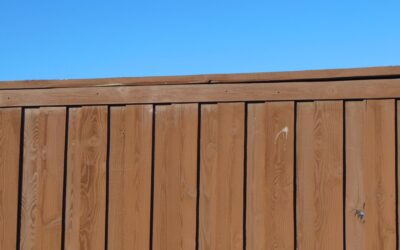
A wood privacy fence is a 15-year purchase on its best day; hurricane country and termite belts shave that to eight. A precast concrete fence is a 50-to-80-year purchase — panels slotted between steel-reinforced posts that shrug off 100-plus-mph wind, rot, fire, and every insect that ever ate a fence line. The trade is upfront cost: two to four times the price of wood per foot. That math has made precast concrete the default perimeter fence across much of the world and a fast-growing niche in the US Sun Belt. Here is how the systems work, what they honestly cost, and when the premium pays.
Part of our Decks & Outdoor guide — explore the full guide →
- How Precast Fence Systems Work
- Styles: Far Past the Gray Slab
- What a Concrete Fence Costs
- Installation: Heavy, Fast, and Unforgiving of Layout Errors
- Where Concrete Fencing Earns Its Premium
- Gates, Corners, and Mixing Materials
- Questions to Ask a Precast Fence Contractor
- Maintenance and the Long Game
How Precast Fence Systems Work
Modern concrete fencing is a kit of two factory-cast parts. Posts — steel-reinforced, typically 8 feet on center — are set in concrete footings and carry vertical channels on each face. Panels, either full-height slabs or stackable horizontal planks 12 to 24 inches tall, slide down into those channels like boards into a bookshelf. No fasteners touch the panels; gravity and the channel do the work, which is also what makes single-panel replacement trivial after an impact. Factory casting is the quality difference over anything site-poured: panels cure in controlled conditions at 4,000-plus psi, often with fiber reinforcement, and come out of molds textured on both faces — so unlike wood, neither neighbor gets the ugly side.
Styles: Far Past the Gray Slab
The commodity image of concrete fencing is a Soviet gray panel, and the current market is nothing like it. Molded systems from US manufacturers (Superior Concrete Products, StoneTree, RhinoRock, AFTEC) replicate ledgestone, stacked flagstone, ranch rail, brick, and board-and-batten wood grain convincingly enough that at 20 feet most people read the wood-grain panels as stained cedar. Panels take integral color in the mix or acid stain and masonry paint after installation. Heights run 3 to 12 feet, with 6- and 8-foot privacy formats dominating residential work. Hybrid systems exist too: RhinoRock’s lightweight panels wrap a foam core in a concrete shell at about 90 pounds per panel — light enough for two-person crews and dramatically cheaper to freight than solid precast at 400 to 800 pounds per panel.
What a Concrete Fence Costs
Installed pricing in 2026 runs $55 to $130 per linear foot for 6-foot-tall precast systems — roughly $40 to $85 for lightweight shell systems, $70 to $130 for solid stone-look precast, and more for 8-foot or engineered wind-zone builds. A 150-foot backyard perimeter therefore lands between $8,000 and $20,000. Compare per-foot installed averages for the alternatives: pressure-treated wood privacy $25 to $45, vinyl privacy $30 to $60, block wall with stucco $60 to $120, poured-in-place ornamental walls higher still. The lifetime math is where concrete wins: wood at $35 per foot replaced twice in 50 years plus staining every 3 years exceeds concrete’s single install with near-zero maintenance. If the budget conversation is really about a landscape or retaining application rather than a property fence, a block wall may fit better — our cinder block retaining wall guide covers that lane, including when engineering is required.
Installation: Heavy, Fast, and Unforgiving of Layout Errors
A professional crew with a mini-excavator and a skid steer or small crane sets 100 to 200 feet a day. The sequence: survey and string the line, auger post footings (typically 24 to 42 inches deep by 12 to 18 inches wide, below frost line), set and plumb posts in concrete at exact 8-foot centers, cure, then drop panels. That “exact” is the whole game — channel systems have an inch of forgiveness, and a post set 2 inches off-center means a panel that will not seat. Sloped yards are handled by stepping panels post-to-post rather than raking them. Solid-panel DIY is realistic only for the lightweight shell systems; a solid 8-foot precast panel outweighs a piano, and rental crane time erases the labor savings fast. Permits are near-universal for fences over 6 feet and anything doubling as a wind or sound wall.
Where Concrete Fencing Earns Its Premium
- Wind country: Engineered systems carry 100 to 150-mph ratings; wood fences are the first casualty of every named storm.
- Fire zones: Concrete is non-combustible — increasingly relevant for WUI (wildland-urban interface) properties in the West, where a burning fence line delivers fire to the house.
- Noise: A solid 8-foot concrete wall cuts traffic noise by 8 to 12 dB — genuine sound-wall performance vinyl and wood cannot approach.
- Livestock and security: No kicking through it, no climbing flex, no rot at the grade line.
- Termite and rot belts: Gulf Coast and Southeast owners replacing a second wood fence are the classic convert.
Skip it when: the budget is tight and the site is calm, the soil is unstable fill (footing costs balloon), or an HOA mandates specific wood or vinyl looks — though stone-look precast now passes many design reviews.
Gates, Corners, and Mixing Materials
Concrete panel systems handle the straight runs; the details need planning. Gates are never concrete — the weight is unworkable on hinges — so systems pair steel or aluminum gate frames with matching infill, hung from reinforced gate posts that are typically larger and deeper-footed than line posts. Order gate hardware with the system rather than improvising, because the post channels and hinge mounts are engineered together. Corners and ends use dedicated post variants (channels on adjacent faces rather than opposite ones), which is why an accurate fence-line drawing matters at ordering time: a miscounted corner post stalls the job for weeks of lead time. Mixed-material designs are also worth pricing — concrete posts and a bottom kickboard with wood or composite infill panels give rot-proof structure at the failure points (grade contact and post rot) for $30 to $50 per foot, a popular middle path where a full concrete wall exceeds the budget or the HOA’s patience.
Questions to Ask a Precast Fence Contractor
The trade is young enough in most US markets that vetting matters more than with wood fencing. Ask which manufacturer’s system they install and how many linear feet they have placed in the last year — dealers certified by the panel manufacturer get factory support and honor the product warranty, which typically runs 10 years to limited lifetime on the panels. Ask for the engineering sheet: reputable systems publish wind-load ratings and footing specs by soil type, and a contractor who shrugs at footing depth questions is improvising with half-ton panels over your property line. Confirm who pulls the permit and whether the quote includes utility locates, haul-off of spoils from post holes, and crane or equipment time. Finally, get the panel lead time in writing — 4 to 10 weeks is normal for colored or textured panels, and the deposit should track materials ordered, not exceed 30 to 50 percent.
Maintenance and the Long Game
Resale math rounds out the case: appraisers treat a precast perimeter wall as a permanent site improvement rather than a depreciating fence, and in storm- and fire-prone markets it shows up in both buyer interest and, occasionally, insurance conversations.
Upkeep is close to nothing: an annual rinse, a pressure wash every few years, and re-sealing stained or colored finishes every 5 to 10 years if you want the color crisp. Hairline crazing in panels is cosmetic; a cracked panel from a vehicle strike lifts out and replaces in an hour for $150 to $400 — try that with a poured wall. Inspect post caps and channel tops occasionally so water is not pooling in the joints in freeze-thaw climates. Against that maintenance ledger, wood demands staining or sealing every 2 to 3 years and picket surgery forever. The honest summary: concrete fencing costs like a wall and lives like one. If you plan to own the property longer than a decade — or the wind, fire, or termites in your county have opinions — the premium is not an indulgence, it is amortization.