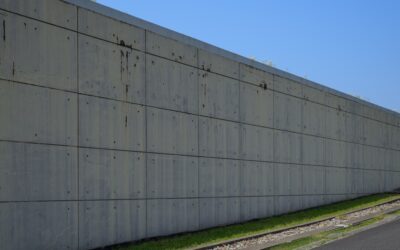
Most concrete you see was poured exactly where it stands — but a growing share of it arrived on a truck, cured and finished, weeks after being cast in a factory form. Precast concrete is exactly that: concrete elements manufactured in a controlled plant, cured under ideal conditions, then delivered and set in place with equipment. For homeowners, precast shows up as porch steps, splash blocks, septic tanks, retaining wall blocks, and increasingly entire basement wall systems. This guide surveys the products you can actually buy, weighs the genuine advantages and limitations against cast-in-place, and covers what the common items cost installed.
- Why Factory Casting Changes the Product
- The Products Homeowners Actually Encounter
- The Pros
- The Cons
- Precast vs Cast-in-Place: The Decision
- Buying Precast Well
- Owning Precast: Setting, Settling, and Upkeep
- Precast Concrete FAQ
- Is precast stronger than poured concrete?
- How long do precast steps last?
- Are precast basement walls as good as poured?
- Can I install precast myself?
- Are precast concrete steps attached to the house?
- Can precast concrete be drilled or cut on site?
- What is a precast concrete culvert used for at home?
Why Factory Casting Changes the Product
Plant conditions solve the three things that plague field concrete. First, mix control: batching indoors with weighed materials and low water-cement ratios yields consistent 5,000+ PSI concrete, versus the 2,500 to 4,000 PSI typical of residential site pours. Second, curing: precast cures in controlled temperature and humidity (often steam-assisted), reaching design strength reliably — no freezing pours, no plastic-shrinkage cracking in a hot wind. Third, forms and finishes: steel factory forms produce crisp edges, tight tolerances, and finishes (exposed aggregate, formliner stone textures, integral color) that field forming can’t economically match. Many products are also prestressed — steel strands tensioned before casting compress the concrete permanently, letting long spans like hollow-core planks carry loads cast-in-place sections of the same depth can’t. The role steel plays in any concrete element is covered in our reinforced concrete guide.
The Products Homeowners Actually Encounter
- Precast steps ($300–$2,000 installed): The classic. One-piece hollow units in 2-to-7-riser sizes, delivered and set on a gravel pad in an hour. They don’t crack apart like site-built masonry steps, and they can be re-leveled or even relocated.
- Septic tanks ($800–$2,500 for the tank): The dominant septic tank material in most of the US — watertight, buoyancy-resistant, and code-standard where plastic tanks need anti-flotation anchoring.
- Lintels and sills ($20–$150 each): Reinforced beams spanning openings in block and brick walls; every masonry supplier stocks standard lengths.
- Segmental retaining wall block and fence systems: Engineered dry-stack systems, plus full precast fence-wall panels between posts — popular for subdivision perimeter walls in the Southwest.
- Pavers, curbs, splash blocks, parking bumpers, pier pads: The commodity end — cheap, uniform, available same-day.
- Basement wall systems (Superior Walls and similar, $30–$45/sq ft of wall): Insulated, studded, reinforced wall panels craned onto a gravel footing in a day — a legitimate alternative to poured walls; compare systems in our concrete wall guide.
- Hollow-core plank: Prestressed floor slabs spanning garages and creating rooms over basements — more custom-build than off-the-shelf, but increasingly seen in residential work.
- Countertops, fire pits, and site furniture: The decorative end of precast, cast upside-down in shops for glass-smooth finishes.
The Pros
- Quality you can’t field-match: Higher PSI, tighter tolerances, factory curing, and QC inspection before anything ships. A precast step never suffered a rained-out finishing job.
- Speed on site: Weather-independent manufacturing plus same-day placement. A Superior Walls basement sets in one day versus a week-plus of form, pour, strip, and cure; there’s no 28-day strength wait because the concrete arrived already cured.
- Winter-proof scheduling: Precast placement happens in weather that would cancel a pour.
- Predictable pricing: A catalog price per unit, versus pour-day variables (short loads, pump fees, weather standby).
- Durability and consistency: Dense, low-permeability concrete resists freeze-thaw and de-icing salts better than typical site mixes — why highway departments precast everything they can.
The Cons
- Joints are the design problem. A cast-in-place wall is monolithic; a precast assembly is pieces plus connections. Every joint needs engineered connectors and sealant, and sealant is a maintenance item on a 10-to-20-year cycle — the same chemistry covered in our concrete caulk guide.
- Weight and access: A 4-foot precast step weighs 600+ pounds; wall panels need a crane. No truck or boom access to your backyard, no precast — this single factor decides many projects.
- Shape freedom is limited: Precast loves repetition and standard sizes. Curved, sloped, or one-off geometry is cast-in-place territory, or custom-form money.
- Lead times: Commodity items are stocked, but panelized systems and custom pieces run 2 to 8+ weeks from a plant that may be hours away — freight is real money on heavy product.
- Repair mismatch: Chip a factory-finish panel and the patch shows; site concrete patches blend easier.
Precast vs Cast-in-Place: The Decision
| Factor | Precast | Cast-in-place |
|---|---|---|
| Concrete quality | 5,000+ PSI, factory-cured | 2,500–4,000 PSI, weather-dependent |
| Site time | Hours to a day | Days plus 7–28 day cure |
| Geometry | Standard/repetitive shapes | Anything you can form |
| Joints | Many, engineered + sealed | Monolithic w/ control joints |
| Access needed | Truck/crane reach | Chute, pump, or wheelbarrow |
| Typical winner | Steps, tanks, lintels, panel walls | Footings, slabs, custom walls |
The practical residential split: anything below grade and continuous — footings, slabs — belongs to cast-in-place (see our concrete foundation guide for that build sequence), while discrete, standard-shaped elements with equipment access increasingly favor precast. Basement walls are the genuine toss-up, decided by local crew availability and crane access.
Buying Precast Well
For commodity items, buy from masonry suppliers and precast yards, not big-box stores — selection and delivery equipment are better and prices usually lower. For steps and tanks, confirm the delivery truck’s boom reach against your site before ordering; a second handling charge for hand-moving 800 pounds erases any savings. For panelized systems, vet the installer as hard as the product: precast performance lives in the bedding, connections, and joint sealing, all field work. Ask what sealant the joints get and what the reseal interval is — a supplier who answers crisply is a supplier who has thought about year fifteen. And on any engineered item (lintels, planks, tall retaining systems), match the load tables to your actual spans; the catalog rating assumes the bearing and backfill details in the fine print.
Owning Precast: Setting, Settling, and Upkeep
Precast elements are nearly maintenance-free, but the interface between the factory part and your yard is where problems start. Steps are the instructive case: a precast stair unit bears on a compacted gravel pad (4 to 6 inches of crushed stone on undisturbed soil), and when it tilts years later, the concrete hasn’t failed — the pad has. The fix is refreshingly un-dramatic: the unit is hollow and liftable, so a crew (or a determined owner with a toe jack and cribbing) re-levels the pad and resets it in an afternoon, something impossible with cracked site-built masonry steps. Prevent the settling in the first place by keeping downspout discharge away from the pad and sealing the joint where the step meets the house so water can’t wash fines out from underneath.
General precast upkeep is a short list. Inspect and renew joint sealants on a roughly 10-to-15-year cycle — the sealant, not the concrete, is the consumable. Keep de-icing salts modest in the first two winters on steps and pavers while the surface densifies, and use calcium chloride rather than the harsher blends. Watch anchor points: railings bolted into precast should be re-torqued occasionally and their penetrations kept sealed, since a rusting anchor is the most common way water gets inside otherwise dense factory concrete. Address chips with a polymer-modified patching mortar tinted to match, accepting that a perfect color match on factory finishes is rare — which is one more argument for placing units carefully the first time.
Precast Concrete FAQ
Is precast stronger than poured concrete?
The concrete itself usually is — higher PSI and better curing. Assembly strength depends on connections, which is where engineering and installation matter.
How long do precast steps last?
30 to 70 years. They typically outlast the railings bolted to them and can be re-leveled if the pad settles.
Are precast basement walls as good as poured?
Comparable when installed to spec on proper gravel footings with sealed joints — and dramatically faster. Local installer quality is the deciding variable.
Can I install precast myself?
Splash blocks and small pads, sure. Steps, tanks, and panels are equipment jobs — the products are DIY-priced, the placement isn’t.
Are precast concrete steps attached to the house?
Usually not. Precast steps rest on their own compacted gravel pad so they can move slightly as the ground freezes and thaws without pulling on the foundation. The gap where the step meets the house is filled with a flexible sealant to keep water out. Railings may be bolted to the step, but the step itself sits independently.
Can precast concrete be drilled or cut on site?
Small holes for railings or anchors can be drilled with a hammer drill and masonry bit, keeping clear of edges. Cutting is a different matter: prestressed products such as hollow-core plank contain tensioned steel strands, and cutting or coring them without an engineer’s approval can seriously weaken the piece. Ask the supplier before modifying any engineered precast element.
What is a precast concrete culvert used for at home?
On residential property, a precast culvert most often carries a ditch or stream under a driveway so water passes beneath instead of washing out the drive. Pipe size depends on how much water the ditch carries, and in many areas the local road or public works department sets the size and requires a permit for culverts at the road edge.
Precast trades formwork mud and weather risk for factory precision and crane logistics. Where the shape is standard and the truck can reach, it’s usually the better product at a comparable price; where the geometry is custom or the access is a garden gate, the site pour keeps its job.