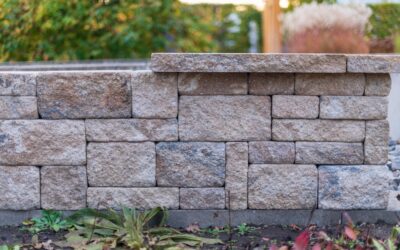
Most homeowners buy a pallet of wall block for one project and end up with forty leftovers stacked by the shed. That is a waste, because concrete landscape blocks are some of the most versatile materials in the yard. The same units that build a low wall can edge a bed, ring a tree, form a step, frame a fire pit or turn a slope into terraced planting beds. The trick is matching the block shape to the job and setting it on a firm, level base.
Every one of these projects follows the same rule underground: a compacted gravel base and a level first course. Get those right and even simple cement landscaping blocks look professional for years.
Types of Concrete Landscape Blocks
Before choosing a project, know the main families of block you will find at a yard or home center:
- Edging blocks: Small, often scalloped or straight units about 2 to 4 inches thick, made to sit partly buried along bed lines.
- Garden wall blocks: Light units around 4 inches tall and 12 inches wide, many with a rear lip that sets each course back slightly. Good for low walls, raised beds and tree rings.
- Segmental retaining wall blocks: Heavier units, often 6 inches or taller and 40 to 80 pounds each, with pins or lips for structural walls.
- Cap units: Flat, wide pieces that finish the top of a wall or seat.
- Step blocks: Large, solid units about 6 to 7 inches tall made as stair treads.
- Solid concrete cubes and tumbled stone-look blocks: Decorative blocks for landscaping that mimic split stone, sandstone or weathered rock in their texture and color.
Sandstone landscaping blocks in the natural sense are quarried stone, but many concrete products copy their warm tan and layered look at a lower price and with more consistent sizing.
9 Uses for Concrete Landscape Blocks
1. Bed edging
Edging is the simplest use and the one that makes the biggest visual difference. Set edging units or garden wall blocks on 2 to 3 inches of compacted base so their tops sit an inch or two above the mulch. The firm edge keeps mulch in, grass out and gives a mower wheel something to ride.
2. Tree rings
Tapered garden wall blocks form circles easily. Keep the ring at least a few feet away from the trunk, and do not pile soil or mulch against the bark inside the ring. One or two courses are plenty. Higher rings that bury roots can harm the tree.
3. Raised planting beds
Two to four courses of garden wall block make a durable raised bed that will not rot like lumber. Line the bottom with hardware cloth if burrowing pests are a problem, and leave the bottom open to drain.
4. Terraced beds on a slope
Short, stepped walls of 1 to 2 feet turn a slope into level planting shelves. Keep each terrace low and set back from the one below by at least twice the height of the lower wall, so they do not load each other. Taller walls and multi-tier walls near structures are engineering territory.
5. Garden steps
Step blocks or stacked wall blocks with caps make sturdy steps on a gentle slope. Keep riser heights consistent, ideally 6 to 7 inches, and treads deep enough for a full foot, at least 12 inches. Inconsistent risers are a common trip hazard.
6. Seat walls
A freestanding seat wall about 18 to 20 inches tall with a cap that overhangs slightly gives a patio built-in seating. Use double-faced blocks so both sides look finished, and glue the caps with masonry adhesive.
7. Fire pit rings
Wall blocks make an attractive fire pit ring, but standard concrete block is not designed for direct flame. Use a steel fire ring insert inside the block ring, set the pit on gravel rather than grass and keep it well away from structures, fences and overhanging branches. Check local burn rules first.
8. Mailbox and lamp-post planters
A small square or round planter of three or four courses around a mailbox post dresses up the curb. Call 811 before digging near the street to locate buried utilities.
9. Paths and stepping pads
Large flat caps and step units can serve as stepping pads through a bed. Set them flush with the soil on a compacted base so they do not rock.
Tools and Materials
- Flat shovel, garden spade and string line with stakes or marking paint
- Hand tamper or plate compactor for the base
- Crushed gravel base (often 3/4 inch minus) and coarse sand for leveling
- 4-foot level, torpedo level and rubber mallet
- Masonry adhesive for caps
- Wet-cutting masonry saw or a diamond blade on a saw with water feed, if blocks must be cut
- Work gloves, safety glasses, hearing protection and an N95 or P100 respirator
A simple hand tamper is enough for edging, tree rings and short bed walls. For longer runs or steps, renting a plate compactor speeds things up and gives a firmer base.
Step by Step: Setting Blocks on a Proper Base
- Lay out the shape. Mark lines with string, a garden hose or marking paint. Call 811 at least a few business days before digging so buried lines get marked.
- Dig the trench. Make it about twice the block depth wide and deep enough for 3 to 4 inches of base plus enough block buried to hold it in place (often half the first course).
- Add and compact the base. Spread gravel in 2-inch layers, dampen it lightly and tamp each layer until it is firm.
- Level the first course. Set each block on a thin layer of sand and tap it level front to back and side to side. Take your time here. Every course above copies the first.
- Stack and stagger. Offset joints by half a block on each course. Backfill behind walls with gravel to help drainage.
- Cap and finish. Glue caps with masonry adhesive and backfill soil or mulch.
Cutting Blocks Safely
Cutting concrete releases crystalline silica dust, which can cause serious lung disease. Cut with a wet saw or a saw with an integrated water feed, work outdoors, wear an N95 or P100 respirator, eye and hearing protection and keep bystanders away. Clean up with water or a HEPA vacuum rather than dry sweeping. Whenever possible, plan layouts to use whole and half blocks so you cut less.
Blocks are heavy. A garden wall unit can weigh 20 to 30 pounds and a retaining unit 60 pounds or more. Lift with your legs, keep the load close, use a dolly or wheelbarrow and get a second person for heavy units. Wear gloves and sturdy boots.
Troubleshooting
Edging heaves after winter. The base was thin or held water. Reset on a deeper gravel base with better drainage.
Blocks rock or tip. The base was not compacted or leveled. Lift, re-tamp and reset.
White haze appears. That is efflorescence, salts carried by moisture. It usually fades with time and can be scrubbed with water and a stiff brush.
The wall leans. Short garden walls lean when soil behind them stays wet. Add gravel backfill and check that water is not draining toward the wall.
Cost Ranges
Basic edging and garden wall blocks commonly cost a few dollars each, while textured retaining units, step blocks and caps cost more. A 30-foot run of edging can often be done for a couple of hundred dollars including base, and a small fire pit ring or raised bed for a few hundred. Landscapers usually charge more for steps and seat walls because of the base work and fitting.
When to Call a Pro
Call a landscaper or hardscape contractor for steps on steep slopes, any wall that holds back soil near a driveway, house or property line, and walls over about 3 to 4 feet, which often need permits and an engineered design. Professionals also bring compaction equipment and wet saws that make large projects safer and faster.
Frequently Asked Questions
What are concrete landscape blocks used for?
They build edging, tree rings, raised and terraced beds, steps, seat walls, fire pit rings, planters and stepping pads, as well as retaining walls.
Do landscape blocks need a gravel base?
Yes. A compacted gravel base keeps blocks level, drains water and reduces frost heave. Setting blocks directly on soil leads to tipping and settling.
Can I use landscape blocks for a fire pit?
You can build the outer ring from wall blocks, but use a steel fire ring insert so flames do not contact the block directly, and follow local burn rules.
Should I glue landscape blocks together?
Glue caps and the top course with masonry adhesive. Lower courses in most garden walls rely on weight and lips, not glue.
How do I cut concrete blocks without dust?
Use a wet saw or a saw with a water feed, work outdoors and wear an N95 or P100 respirator plus eye and hearing protection.