Pull the forms off a slab poured without release and you will chisel concrete crumbs out of your form boards for an hour — or worse, tear the surface of a green wall. Concrete release agents are the thin chemical layer that lets forms strip clean and lets stamping mats pull away without sticking, and the product category splits into two very different jobs: form release for formwork, and powdered or liquid release for decorative stamping. Using the wrong one, or the wrong amount, shows up permanently in the finished surface. Here is how the chemistry works and what to buy.
Barrier vs Reactive: The Two Chemistries
Every form release product works one of two ways.
Barrier release agents are simply a physical film — mineral oil, diesel-based form oils, waxes, or silicones — that sits between form and concrete so cement paste cannot bond to the form face. They are cheap and forgiving, but excess product transfers to the concrete surface, causing bugholes, dusting, staining, and adhesion problems for any coating, sealer, or paint that comes later.
Reactive (chemically active) release agents contain fatty acids that react with the calcium in fresh cement paste to form a thin, water-insoluble soap film right at the interface. The release layer is created by the chemistry, not by film thickness, so surfaces come out cleaner — fewer bugholes, more uniform color, and better paintability. Architectural and tilt-up work specs reactive agents almost exclusively. They cost more per gallon but cover further because you apply them thinner.
Rule of thumb: if the concrete surface will be seen, coated, or stained, use a reactive release. If you are forming a footing nobody will ever look at, a barrier product is fine.
Form Oil for Formwork
For plywood, steel, and aluminum forms, mainstream options include:
- Conventional petroleum form oils — e.g., WR Meadows Duogard, Nox-Crete Nox-Crete Form Coating, Unitex Farm Fresh style products. Typical coverage on plywood is 400-800 sq ft per gallon; steel forms stretch to 1,000-2,000 sq ft per gallon. Expect $15-$35 per gallon in 5-gallon pails.
- Water-based/bio-based reactive releases — Nox-Crete Bio-Nox, Cresset Crete-Lease 880-VOC-Xtra, SpecChem Bio Strip WB. These meet low-VOC rules (many states cap form release at 250 g/L or lower), clean up with water, and avoid petroleum staining. Pricing runs $20-$45 per gallon.
- Water-based vs solvent-based: solvent and straight-oil products tolerate rain and cold better and wet out steel forms easily, but carry VOC limits, odor, and staining risk. Water-based products are the default for architectural work and indoor pours; just apply them to dry forms and let them tack up before placing concrete.
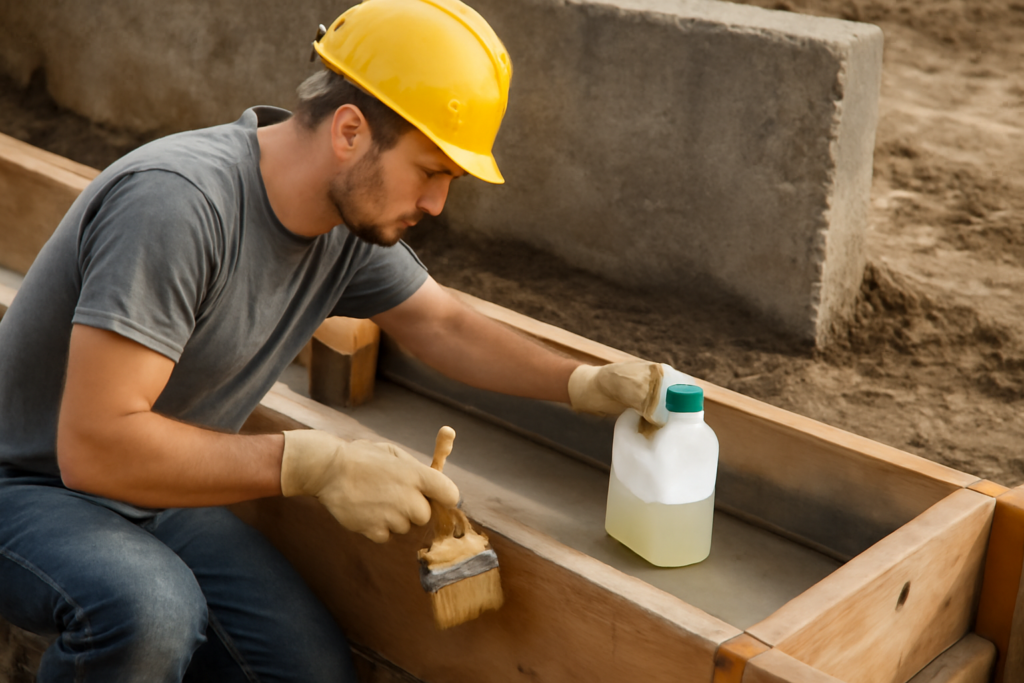
Application matters as much as product. Spray a thin, uniform coat with a pump sprayer and wipe or brush out puddles — the most common mistake is over-application, which is what causes bugholes and the greasy layer that ruins sealer adhesion. One thin coat on sealed plywood or steel; new raw plywood drinks release, so pre-treat it once before first use. ICF and foam forms need products rated foam-safe, since solvents attack EPS.
Antiquing Release for Stamped Concrete
Stamped concrete uses a completely different product doing two jobs at once: preventing the polyurethane stamp mats from sticking to the wet, color-hardened surface, and depositing a contrasting accent color in the texture’s low spots — the “antiquing” that makes stamped slate or stone look real.
- Powdered release is a pigmented, hydrophobic powder (calcium stearate based) broadcast over the slab just before stamping — brands include Brickform, Butterfield, Solomon/Scofield, and Direct Colors. Standard rate is roughly 3-4 lbs per 100 sq ft; a 30-lb pail ($45-$90) covers 800-1,000 sq ft. Thrown by hand in a low arc, it settles into an even dust film. After curing, most of it washes off in the pressure-rinse, leaving color lodged in the grout lines and texture valleys. Choose a release color two to three shades darker than the base color hardener — charcoal over gray, walnut over sandstone are classic pairings.
- Liquid release is a clear evaporating solvent sprayed on the mats or slab (about 200 sq ft per gallon, $30-$60/gal). It releases without adding color — used where a monotone look is wanted or when spraying colored liquid release tinted on site. It is cleaner to work with (no powder cloud, no washoff day) but you give up the two-tone depth unless you antique afterward with a tinted wash.
Pro tip on washoff: wait 24-48 hours, then pressure wash gently and evenly. Stripping too much release leaves flat color; leaving too much prevents sealer bond. Aim to keep accent color in the recesses only, then seal with a solvent-based acrylic once fully dry.
Application Rates Cheat Sheet
- Form oil on plywood: 400-800 sq ft/gal (thin coat, no runs)
- Form oil on steel/aluminum: 800-2,000 sq ft/gal
- Reactive water-based release: 600-1,200 sq ft/gal typical
- Powdered antiquing release: 3-4 lbs/100 sq ft (roughly one 30-lb pail per 800-1,000 sq ft)
- Liquid stamping release: ~200 sq ft/gal, or misted onto mats each placement
The Diesel Debate: Why DIY Substitutes Backfire
Old-school crews swear by diesel fuel, used motor oil, or a diesel/motor-oil blend brushed on forms. It does release — but stop before you copy them. Diesel and waste oil are barrier films with zero chemistry, and they cause real problems: they stain and darken the concrete face, retard cement hydration at the surface (leaving a soft, dusty skin), wreck adhesion for sealers, paints, and patches, and they are an environmental violation on most sites — used oil on forms is regulated, and runoff into soil or storm drains can bring genuine fines. The cost argument barely holds either: proper form oil at $20-$30 per gallon covering 500+ sq ft costs pennies per square foot. Vegetable oil and cooking sprays fare no better; they turn rancid, feed surface retardation, and go gummy on stored forms. Household options that are actually acceptable in a pinch for small craft molds: a thin paste wax coat or a purpose-made mold release aerosol ($8-$12 a can) — not the fryer oil.
Troubleshooting Release Problems
When release goes wrong, the symptom tells you the mistake. Bugholes and a dusty, chalky surface mean over-application of a barrier oil — the excess film trapped air and retarded the paste; switch to a reactive agent and cut your application rate in half. Concrete stuck to the form in patches usually means missed coverage or rain washing water-based release off before the pour; re-coat within 24 hours of placing concrete and tarp coated forms overnight. Stamped mats pulling surface paste means the powdered release film was too thin or the slab was stamped too wet — wait until the slab takes a thumbprint with only slight indentation, and throw release generously ahead of the mats. Sealer peeling off a stamped patio months later traces back to residual release left in the texture; strip, pressure wash with a degreaser, and reseal. Almost every failure in this category is an application-rate error, not a product defect, which is why reading the coverage number on the pail matters more than the brand on it.
Buying Guide and Bottom Line
For a DIYer forming footings, curbs, or a small slab: a gallon of conventional or bio-based form release ($20-$40) from a concrete supply house — Nox-Crete, WR Meadows, Cresset, SpecChem, BonWay — will outlast years of projects; a cheap pump sprayer applies it correctly. For visible or coated concrete, spend up for a reactive, water-based product. For a stamped patio, buy powdered antiquing release matched by the color-hardener manufacturer’s chart, at 3-4 lbs per 100 sq ft, plus a small jug of liquid release for touch-up stamping at edges. Apply everything thin, keep diesel in the truck’s tank, and your forms will strip clean while the surface stays paintable, sealable, and evenly colored.