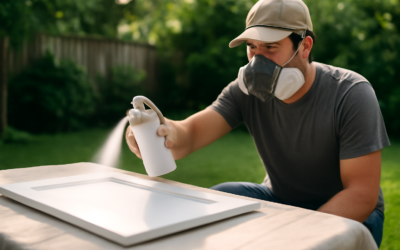
Nothing ruins a resin project faster than a casting that refuses to let go of its mold. A quality epoxy mold release spray is the cheap insurance that separates a clean, glossy demold from a torn silicone mold and a chipped part. Whether you are pouring river tables, casting coasters, or making countertop samples, understanding release agents will save you money and hours of frustration. Skip this step on a fresh mold and you may find yourself prying, cursing, and replacing a $40 mold after two uses.
Part of our Epoxy, Concrete & Garage Floors guide — explore the full guide →
- What a Release Agent Actually Does
- The Main Types of Release Spray
- When You Need It and When You Do Not
- How to Apply It Correctly
- Avoiding Fisheyes and Surface Defects
- Safety and Ventilation
- Cost, Coverage, and Value
- Choosing the Right Product for Your Project
- Storing Molds Between Projects
- The Bottom Line
What a Release Agent Actually Does
A release agent creates a thin barrier film between the curing epoxy and the mold surface. Epoxy is aggressively adhesive by nature, which is exactly why it works so well as a glue and a coating. That same stickiness works against you inside a mold, where the resin wants to bond to whatever it touches. The spray sits in the microscopic pores and imperfections of the mold and prevents a mechanical or chemical lock from forming.
The payoff is twofold. You get a cleaner surface finish on the finished piece, and you dramatically extend the life of the mold itself. Silicone molds are forgiving, but rigid molds made of MDF, HDPE, acrylic, or metal almost always need help letting go.
The Main Types of Release Spray
Not every release agent behaves the same way, and matching the product to your mold material is the whole game. Here are the categories you will encounter on the shelf.
- Silicone-based sprays: The most common general-purpose option. They lay down a slick film, release easily, and cost around $10 to $18 a can. The tradeoff is that silicone residue transfers to the part, which can interfere with painting, gluing, or top-coating later.
- Wax-based (paste and spray): Carnauba or paste wax buffed onto the mold gives a durable, reusable barrier that produces a high-gloss surface. It takes more elbow grease but is favored for fiberglass and composite work.
- PVA (polyvinyl alcohol): A water-soluble film brushed or sprayed on, often over wax as a belt-and-suspenders approach. It washes off the finished part with warm water, leaving a paintable surface.
- Specialty resin-safe sprays: Formulated specifically for epoxy and polyester casting, these leave minimal residue and are the safest bet for artistic pieces you plan to finish.
When You Need It and When You Do Not
Flexible platinum-cure silicone molds are naturally release-friendly, and many casters pour into them dozens of times without any spray at all. That said, a light application still reduces surface tack and helps preserve fine detail over the mold’s life. For anything rigid, treat release agent as mandatory.
Think of it this way. If the mold flexes and peels back easily, you often have some margin. If the mold is stiff and unforgiving, epoxy will find every pore to grab onto, and an epoxy mold release spray becomes non-negotiable. Deep undercuts and intricate geometry raise the stakes further, because a stuck part in a complex mold usually means destroying one to save the other.
How to Apply It Correctly
Application technique matters as much as product choice. Too little and you get sticking; too much and you get pooling that mars the finish. Follow a consistent routine.
- Clean the mold first. Wipe away dust, cured resin flakes, and old residue with isopropyl alcohol and let it dry fully.
- Spray in thin, even passes. Hold the can 8 to 10 inches away and mist the surface. Two light coats beat one heavy coat every time.
- Let it flash off. Give the solvent carrier a few minutes to evaporate before pouring. A wet, glossy puddle of release agent will telegraph into your casting.
- Reach every surface. Rotate the mold and hit vertical walls and undercuts, not just the flat bottom.
- Reapply between pours. Even reusable molds shed a little film with each demold, so a quick refresher coat keeps releases consistent.
Avoiding Fisheyes and Surface Defects
The most common complaint with release sprays is fisheyes, those little craters where the epoxy pulls away from a spot on the surface. Silicone contamination is the usual culprit. If you spray too heavily, or if overspray drifts onto the working face of a part you plan to coat, the resin will crawl away from it.
The fix is discipline. Apply thin, let it flash off completely, and keep silicone sprays out of the room when you are doing a finish coat. For pieces you intend to paint or top-coat, lean toward PVA or a dedicated resin-safe release that leaves the least residue, and always test on a scrap first.
Safety and Ventilation
Aerosol release agents contain solvents and propellants that you do not want to breathe. Work in a garage or shop with the door open, or run a fan to move air across your bench. A basic organic-vapor respirator is cheap protection for anyone spraying regularly.
Keep the can away from open flames and heat, since the propellants are flammable. Wear nitrile gloves, because getting release agent on your hands and then handling the mold reintroduces the very oils and contaminants you are trying to control. Store cans upright in a cool spot, and shake them well before each use so the active ingredients stay suspended.
Cost, Coverage, and Value
Release spray is one of the cheapest line items in any casting project. A standard aerosol can runs $10 to $20 and covers a lot of ground, often 20 or more square feet per can depending on how heavily you apply it. Paste waxes cost a little more up front, around $15 to $25 for a tin, but a single tin lasts through many projects because you use so little per application.
Weigh that against the cost of a ruined mold or a scrapped pour. A detailed silicone mold can run $30 to over $100, and premium epoxy resin costs $50 or more per gallon. Spending a few dollars per session to protect those investments is an easy call.
Choosing the Right Product for Your Project
Match the release agent to what you are making. For quick hobby castings in silicone molds, a general silicone spray is fast and effective. For fiberglass, composites, and glossy show surfaces, paste wax plus PVA delivers the best finish. For artistic pours you will sand, paint, or top-coat, a resin-specific spray with minimal residue keeps your options open.
Read the label to confirm compatibility with epoxy, since some automotive silicone sprays are formulated for lubrication rather than mold release and can leave stubborn residue. When in doubt, buy a product marketed for casting and mold making rather than a generic lubricant.
Storing Molds Between Projects
The release agent you choose also affects how you store molds between pours. Silicone molds treated with a light film hold up best when kept flat, out of direct sunlight, and away from dust that can embed in the surface and telegraph into your next casting. UV exposure degrades silicone over time, turning it brittle and tacky, so a closed drawer or bin beats an open shelf by a window.
Wipe rigid molds clean of any leftover release film before long storage, since some agents attract dust or slowly break down plastics and finishes. A quick inspection before each session, checking for cured resin flecks, tears, or a tacky surface, tells you whether the mold needs a fresh cleaning and a new coat of release before you pour again. Molds that are cleaned and stored properly routinely deliver 50 or more clean releases.
The Bottom Line
A good epoxy mold release spray is a small purchase that pays for itself the first time a complicated part pops out clean. Clean your mold, apply thin and even coats, let the carrier flash off, and reapply between pours, and you will get consistent releases and molds that survive dozens of cycles. Choose the formula that fits your material and your finishing plans, respect the ventilation and fire warnings, and this humble aerosol can becomes one of the most reliable tools on your casting bench.