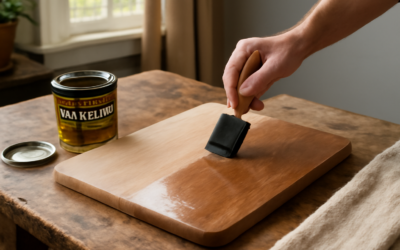
Aerosol polyurethane gets a bad reputation because most people use it like spray paint, which guarantees runs, fish-eyes, and a finish that peels off in two years. Used correctly, Minwax spray polyurethane delivers a finish that rivals brushed or sprayed-gun polyurethane on small projects — picture frames, jewelry boxes, repaired chair legs, refinished cabinet doors. The trick is technique, environment, and applying many more coats than the can suggests.
What’s in the Can
Minwax sells two aerosol polyurethanes. Fast-Drying Polyurethane Aerosol is oil-based, amber in color, and dries to recoat in 4 hours. Water-Based Polycrylic Aerosol is water-clear, dries to recoat in 2 hours, and emits far fewer fumes. Both come in 11.5 oz cans for $9-$13. Oil-based gives deeper warmth on stained wood; water-based stays crystal clear and resists yellowing over time.
Each can covers roughly 12-15 square feet at proper film thickness — much less than the label claims because the label assumes ultra-thin coats that nobody actually achieves.
Choosing Gloss vs. Satin vs. Semi-Gloss
Gloss is the toughest finish because no flatting agent is mixed in. Satin shows the fewest dust nibs and brush marks. Semi-gloss is the compromise. For high-touch surfaces like tabletops and trim, professionals often use two coats of gloss as a base for hardness, then a final coat of satin for the appearance you want. With aerosols, applying two different sheens means buying two cans.
Surface Prep That Actually Matters
The single biggest predictor of finish quality is what is under it. Skip these steps and the spray won’t save you:
- Sand the bare or stained wood to 220 grit with the grain
- Vacuum thoroughly, then wipe with a tack cloth — dust under the first coat is the most common defect
- If staining, let the stain cure 24 hours minimum before the first poly coat
- Wipe with mineral spirits (for oil-based poly) or dampen with water (for water-based) to raise the grain, then very lightly sand with 320 grit
Spray Technique for No-Drip Coverage
Hold the can 8-10 inches from the surface. Closer and you build film too fast (runs). Farther and you get dry spray that lays down rough. Move the can in a steady horizontal pass, starting motion before you press the nozzle and releasing after you pass the far edge. Overlap each pass by 30%.
Apply light coats. The first coat should look almost translucent. You are not trying to cover in one pass — you are building four to six thin coats that fuse into one durable film.
Recoat Schedule and Sanding Between Coats
The label says recoat in 4 hours (oil) or 2 hours (water). Wait the full time, then run your hand over the surface — it should feel dry, not tacky. Knock down dust nibs with 320 or 400 grit sandpaper or a fine sanding sponge. Wipe with a tack cloth before the next coat.
If you skip sanding between coats, the layers do not mechanically lock together and the finish can peel later. Even if it looks smooth, a quick scuff is non-negotiable.
Recommended Coat Counts
- Picture frames, decor pieces: 3 coats
- Cabinet doors, trim, furniture: 4 coats
- Tabletops, desks, anything with hot drinks: 5-6 coats with a 320-grit sanding between each
- Floor or stair tread repairs: Brush-grade product instead — aerosol cannot build enough film
Environment Matters More Than You Think
Spray polyurethane is sensitive to temperature and humidity. The ideal window: 65-75°F and below 70% relative humidity. Below 60°F the finish dries with a milky cast (blushing). Above 80% humidity, water-based products take twice as long to recoat and trap moisture that fogs the finish. Garage work in summer Florida or winter Minnesota is a losing battle — bring the project inside.
Dust Control
Wipe the work area with a damp microfiber towel 10 minutes before spraying. Close windows. Hang a damp sheet near the spray area to catch airborne dust. Spray downward when possible so falling dust lands on the back of the piece, not the show face. Even with all that, expect to nib-sand between every coat.
Common Defects and Fixes
- Runs: Sprayed too thick. Let cure 24 hours, sand flat with 320, recoat lighter
- Orange peel: Sprayed too far away or in cold air. Sand with 400 and try again at correct distance
- Fish-eyes: Silicone contamination on the wood. Wipe with naphtha and start over with a barrier-coat shellac
- Cloudy or blush: Trapped moisture. Sand back and recoat in lower humidity
- Yellow tint on white paint: Oil-based poly is yellowing the underlying paint — switch to water-based Polycrylic
Cleanup and Storage
Invert the can and press the nozzle for 2-3 seconds at the end of each session to clear the tip. Skipping this clogs the can and effectively wastes the rest of the product. Store at room temperature. A half-used can typically stays usable for 6-12 months if the nozzle is kept clear.
Used with patience, the right environment, and proper coat counts, Minwax spray polyurethane finishes a small project to a level most people associate with professional shops. The aerosol form is genuinely good for anything under 4 square feet — beyond that, switch to a foam brush or HVLP gun for efficiency.