
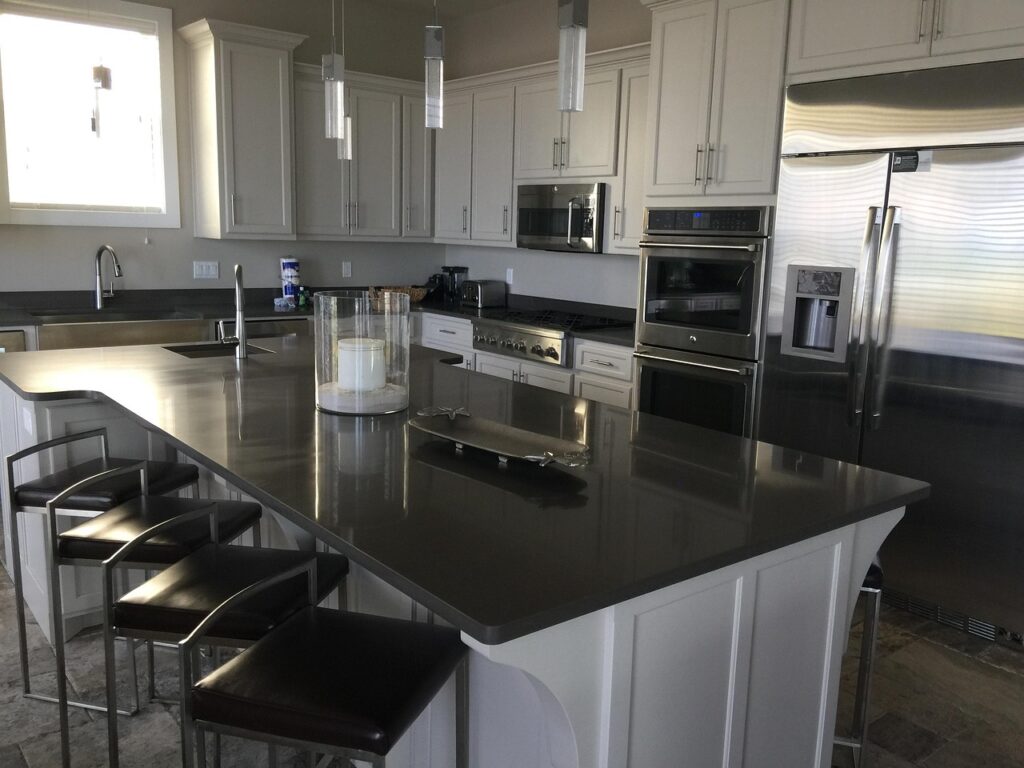
The island is the heart of most modern kitchens, and the lighting above it is one of the first things the eye lands on when you walk into the room. Getting contemporary modern kitchen island lighting right means balancing three things at once: enough task light to work safely, a clean sculptural look that fits a modern space, and correct sizing and spacing so the fixtures feel intentional rather than random.
Part of our Kitchen Remodeling guide — explore the full guide →
This guide walks through fixture styles, how many lights to use, sizing and spacing formulas, mounting height, and finishing details so your island lighting looks designed, not guessed.
- Defining the Contemporary Modern Look
- Popular Fixture Styles for Islands
- How Many Pendants Do You Need?
- Sizing Each Fixture Correctly
- Spacing and Placement
- Getting the Hanging Height Right
- Lighting Function and Bulbs
- Layering With the Rest of the Kitchen
- Common Mistakes to Avoid
- Coordinating Finishes Across the Kitchen
- Bulb Type, Color, and Dimming in Depth
- Bringing the Design Together
Defining the Contemporary Modern Look
Contemporary modern lighting favors clean geometry, restrained ornamentation, and honest materials. Think slim metal stems, matte black or brushed brass finishes, simple glass globes, linear bars, and minimalist cylinders. The goal is a fixture that feels like a piece of sculpture without competing with the rest of the kitchen.
Rather than ornate crystal or heavy traditional shades, modern island lighting leans into simplicity—one bold linear fixture or a tidy row of matching pendants that echo the clean lines of flat-panel cabinets and quartz countertops.
Popular Fixture Styles for Islands
Several fixture types suit a modern island, each creating a slightly different mood:
- Cluster of pendants: Two or three matching pendants spaced evenly—the most common and flexible choice.
- Linear suspension: A single long horizontal bar of light, ideal for large islands and a very clean look.
- Globe pendants: Simple glass or opal spheres that read soft and sculptural.
- Cylinder or drum pendants: Crisp geometric forms for a tailored, architectural feel.
- Exposed-bulb minimalist fixtures: Slim stems with a single bulb for an airy, understated statement.
Matching Metals and Finishes
Tie the fixture finish to other metals in the kitchen—faucet, cabinet hardware, and appliance accents. Matte black, brushed brass, and brushed nickel all read modern; the key is consistency so the lighting looks coordinated with the rest of the room.
How Many Pendants Do You Need?
The number of fixtures depends on island length and the style you choose. A simple rule works well for pendant clusters:
- Islands up to 4 feet: one larger pendant or a small linear fixture.
- Islands 4 to 7 feet: two pendants, evenly spaced.
- Islands 7 to 10 feet: three pendants, or one long linear suspension.
- Islands over 10 feet: three to four pendants or a large linear fixture sized to the run.
Odd numbers of pendants often look more balanced than even numbers, but two well-spaced pendants over a medium island is a timeless arrangement.
Sizing Each Fixture Correctly
Individual pendants should be proportional to the island, not lost above it or crowding it. A useful guideline: the combined width of your pendants should be roughly one-half to two-thirds the length of the island, leaving generous space at each end.
For a linear fixture, aim for a length around one-half to three-quarters of the island length so it visually anchors the surface without overhanging the edges. When in doubt, size up slightly—undersized fixtures are the most common island-lighting mistake.
Spacing and Placement
Even spacing is what separates a designed look from a haphazard one. For a cluster of pendants:
- Center the whole arrangement along the island’s length and width.
- For two pendants, place each about one-quarter of the way in from either end.
- For three pendants, center one and space the other two evenly, typically 24 to 36 inches apart center to center.
- Keep the fixtures centered over the countertop, not the seating overhang, so light falls on the work surface.
Getting the Hanging Height Right
Mounting height affects both function and looks. Hang pendants so the bottom of the fixture sits roughly 30 to 36 inches above the countertop. This clears sightlines across the island, keeps bulbs out of your eyes when seated, and puts light where you need it.
For taller ceilings, you can raise fixtures slightly, but avoid going so high that they lose their connection to the island. If anyone tall regularly uses the space, err toward the higher end of the range so no one ducks around the lights.
Lighting Function and Bulbs
Island lighting is both decorative and functional, so do not neglect brightness. The island is a prime prep zone, so you want strong, clear task light:
- Choose bulbs in the 3000K to 3500K range for a clean, modern white that still feels welcoming.
- Ensure combined output is bright enough for chopping and prep—supplement with recessed cans if needed.
- Put the pendants on a dimmer so the same fixtures can shift from task-bright to soft ambient for entertaining.
- Use bulbs with a high color rendering index so food and finishes look true.
Layering With the Rest of the Kitchen
Island lighting should not carry the whole room on its own. The best kitchens layer three types of light, and the island pendants are just one layer. Planning all three together keeps the space both functional and inviting:
- Ambient: Recessed cans or a flush ceiling fixture that lights the room evenly.
- Task: Island pendants and under-cabinet lighting focused on work zones.
- Accent: Toe-kick or in-cabinet lighting that adds depth and mood.
When these layers are on separate switches and dimmers, you can run bright task light for cooking and then dim everything to a soft glow for dining, all from the same fixtures. The island pendants become the visual anchor, but the surrounding layers keep the whole kitchen balanced.
Common Mistakes to Avoid
A handful of predictable errors undermine otherwise good island lighting. Watch for these:
- Choosing fixtures too small for the island, so they look lost above a large surface.
- Hanging pendants too high or too low, blocking sightlines or leaving weak task light.
- Spacing pendants unevenly or centering them over the seating overhang instead of the counter.
- Mixing clashing metal finishes that fight with the faucet and hardware.
- Skipping the dimmer, which locks you into one brightness for every occasion.
Most of these come down to measuring and planning before you buy, rather than choosing a fixture you like and hoping it fits.
Coordinating Finishes Across the Kitchen
In a modern kitchen, the metal finishes read as a deliberate design decision, and the island lighting is one of the most visible places that decision shows. Rather than matching every metal exactly, aim for an intentional palette that feels cohesive:
- Matte black: Crisp and graphic, pairing well with white or wood cabinets and black hardware.
- Brushed brass or gold: Warm and current, adding richness against both light and dark cabinetry.
- Brushed nickel and chrome: Cool and understated, blending quietly into a minimalist scheme.
- Mixed metals: Combining two finishes deliberately—black fixtures with brass accents, for instance—can look designed when done with restraint.
The simplest rule is to echo the faucet and cabinet hardware in the pendant finish so the eye reads the metals as a coordinated family rather than a random assortment.
Bulb Type, Color, and Dimming in Depth
The fixtures set the style, but the bulbs determine how the island actually feels to work and gather around. A few decisions make a real difference in daily use:
- LED bulbs: The default for efficiency and long life, staying cool over a food-prep surface.
- Color temperature: Around 3000K gives a clean, welcoming white that flatters both food and finishes.
- High CRI: A color rendering index of 90 or above makes ingredients and countertops look true.
- Dimmable drivers: Ensure both the bulbs and the fixture support dimming so you can shift from bright prep light to a soft dinner glow.
- Consistent bulbs: Use identical bulbs across all pendants so the light looks uniform rather than mismatched.
Exposed-bulb fixtures deserve special attention here, since the bulb itself becomes part of the design—choose an attractive filament-style LED that looks intentional when lit and unlit alike. Pairing the right bulb with a quality dimmer turns a single set of pendants into lighting that works for cooking, homework, and entertaining without any change of fixture.
Bringing the Design Together
Well-executed contemporary modern kitchen island lighting comes down to a few disciplined decisions: pick a clean fixture style that echoes the kitchen’s lines, use the right number and size of fixtures for the island length, space them evenly, and hang them 30 to 36 inches above the counter. Add a dimmer and coordinated finishes, and the result is lighting that works hard for prep, looks sculptural from across the room, and pulls the whole modern kitchen together.


