
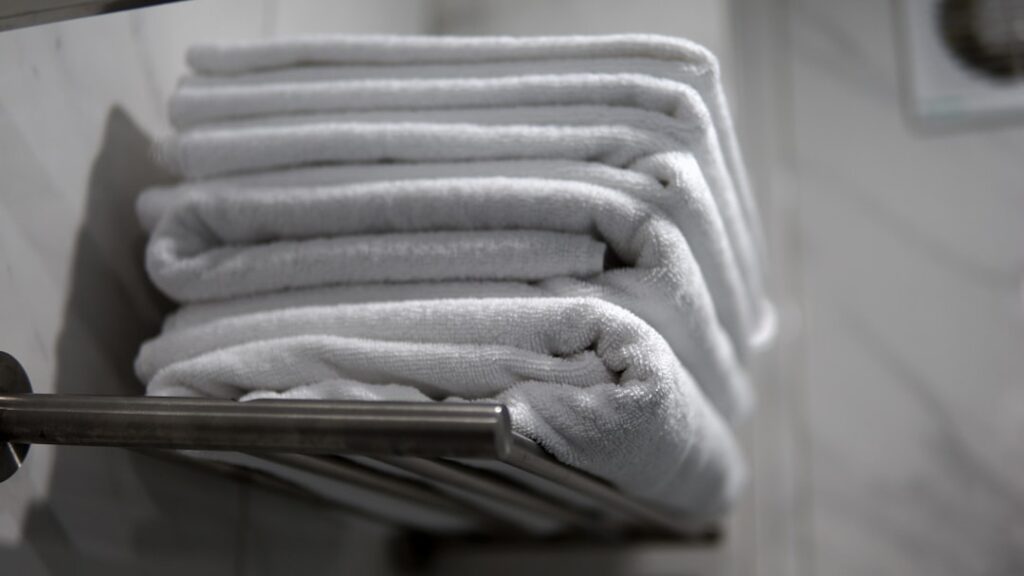
There’s nothing quite like stepping out of the shower and wrapping up in a warm, dry towel, and a cordless towel warmer gets you that hotel-spa feeling without hiring an electrician or drilling into your walls. A common question is whether the cordless route is actually any good. The short answer is yes, for the right person, and a cordless towel warmer solves a real problem for renters and anyone who doesn’t want a wiring project.
Here is how these work, what to look for, and where they fall short so you buy the right one the first time.
How a Battery-Powered Warmer Works
A cordless towel warmer is basically a heated rack or a folding frame with a rechargeable lithium-ion battery pack built in. You charge it with a USB-C cable or a small dock, then set it wherever you want, no outlet required nearby. Heating elements run through the bars, warming and drying your towel over 20 to 45 minutes depending on the model.
Because they run on battery instead of a 120-volt wall circuit, they put out gentle, low-wattage heat rather than the aggressive warmth of a plug-in or hydronic unit. That’s the trade-off in a nutshell: total freedom of placement in exchange for less raw heating power.
Runtime and Recharging
Battery life is the single most important spec, and it’s where cheap units disappoint people. Read the runtime carefully before you buy.
- Most quality cordless warmers deliver 2 to 6 hours of heat per full charge.
- Charging from empty typically takes 3 to 5 hours over USB-C.
- Battery capacity usually lands between 5,000 and 10,000 mAh.
- Many models include an auto-shutoff timer at 30, 45, or 60 minutes to protect the battery and save power.
Be realistic about the math. If a unit runs 3 hours and you warm a towel for 30 minutes each morning, that’s roughly six days between charges. A large family sharing one warmer will be recharging every couple of days, so factor that into your daily routine before you commit.
How Warm Do They Actually Get?
Temperature is where cordless models earn their reputation, good and bad. Because they’re low-wattage, don’t expect them to scald.
Most cordless towel warmers reach a surface temperature between 95 and 130 degrees Fahrenheit. That’s warm and comforting, plenty to take the chill off a towel and dry light moisture, but it’s noticeably gentler than a hardwired unit, which can hit 140 degrees or more. Some premium models offer two or three heat settings, letting you trade lower heat for longer runtime. If your main goal is a cozy warm towel rather than fully drying a soaked one, this heat range is exactly right.
Capacity and Size
Think about what you actually need to warm. These units come in a few form factors:
- Folding frames: Hold one standard bath towel, fold flat for storage, and travel well. Best for one person or small bathrooms.
- Freestanding racks: Bigger footprint, can hold a bath towel plus a hand towel, and often look like furniture.
- Bucket or basket style: You roll the towel and drop it in; compact but limited to one towel.
Measure your space before ordering. A typical folding unit spans about 22 to 28 inches wide, while freestanding racks can be 30 inches or more. If your bathroom is tight, the folding style is the practical pick.
Cordless vs. Hardwired: The Honest Comparison
This is the decision that trips people up, so here it is plainly. Both have a place; it depends on your situation.
A hardwired or plug-in towel warmer gives you unlimited runtime, higher heat, and larger capacity, and it’s the right call in a bathroom you own and plan to keep. But it costs $150 to $600 installed, may require an electrician for a hardwired version ($200 to $500 in labor), and it’s permanent.
A cordless towel warmer, by contrast, usually runs $60 to $200, needs zero installation, and moves anywhere, including to your next apartment. You give up heat intensity and deal with recharging, but for renters, small bathrooms, or anyone who wants flexibility, that’s a fair swap. If you can’t drill walls or add a circuit, cordless is often your only realistic option.
Brands and Prices to Know
The cordless category is newer, so the field is a mix of established heating brands and direct-to-consumer startups. A few names worth putting on your list:
- Budget tier ($50 to $90): Generic USB-C folding warmers from Amazon-native brands. Fine for occasional use; check reviews for battery longevity.
- Mid tier ($90 to $150): Better batteries, multiple heat settings, and sturdier frames. The sweet spot for most buyers.
- Premium tier ($150 to $220): Larger capacity, longer runtime, and nicer finishes that look intentional in a well-designed bathroom.
Whatever tier you pick, prioritize a replaceable or well-reviewed battery. A warmer is only as good as its cell, and a dying non-replaceable battery turns the whole unit into e-waste.
Getting the Best Results From Yours
How you use a cordless warmer changes how well it works, and a few tricks help you get more heat out of a limited battery. Here’s what actually moves the needle:
- Pre-heat before you shower. Switch it on when you step in, and your towel is toasty by the time you step out. Ten to fifteen minutes is usually enough.
- Wring your towel well first. A cordless unit is designed to warm and lightly dry, not to dry a soaking-wet towel. Give it a good squeeze and hang it fully open.
- Don’t bunch the fabric. Drape the towel flat across the bars so heat contacts as much surface as possible. A wadded towel warms unevenly.
- Charge on a schedule. Topping it off every few nights keeps lithium cells healthiest, rather than running them to zero and back repeatedly.
If your bathroom runs cold and humid, a warm towel that’s slightly damp will still feel great; the heat is the point. Just set expectations: this is a comfort device, not a laundry dryer.
Battery Life Over the Long Haul
Every rechargeable device loses capacity over time, and a towel warmer is no different. Lithium-ion cells typically hold up well for 300 to 500 full charge cycles before you notice meaningfully shorter runtime. If you charge twice a week, that’s several years of service before the battery starts fading.
That’s exactly why replaceable batteries matter so much. On a unit with a sealed, non-replaceable cell, a worn-out battery means the whole warmer heads to e-waste in a few years. On a model where you can order a fresh battery pack for $20 to $40, you effectively reset the clock and keep the frame you already own. Before buying, dig into the product listing or ask the seller directly whether the battery can be swapped. It’s the difference between a disposable gadget and a lasting fixture.
Safety Considerations
Any battery-powered heating device deserves a little caution, though quality units are built with the right protections. Look for these features and habits:
- An auto-shutoff timer so it never runs unattended for hours
- UL or ETL safety certification on the product listing
- Overheat and overcharge protection built into the battery management
- Charging on a hard surface, not buried under towels, since lithium batteries need airflow while charging
Never leave any lithium-ion device charging overnight unattended if you can help it, and stop using a unit if the battery swells, gets unusually hot, or won’t hold a charge. Those are your warning signs to retire it.
Who Should Actually Buy One
A cordless towel warmer is a great fit if you rent and can’t modify the bathroom, if you have a small or windowless space, if you want to move it between rooms, or if you simply want a warm towel without a wiring project. It’s an ideal gift for exactly those reasons.
It’s the wrong choice if you need to fully dry heavy, soaked towels every day, if you want continuous all-day heat, or if you’re renovating and can add a hardwired unit anyway. In those cases, spend the extra money on a plug-in or hydronic model and enjoy the higher output.
For most people, though, the cordless option delivers 90 percent of the cozy payoff at a fraction of the hassle. Charge it, set it, and enjoy that warm towel without ever calling an electrician.


