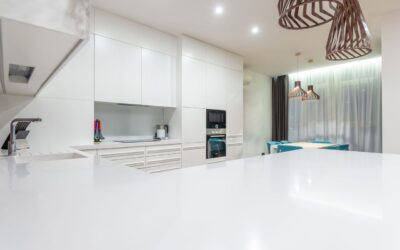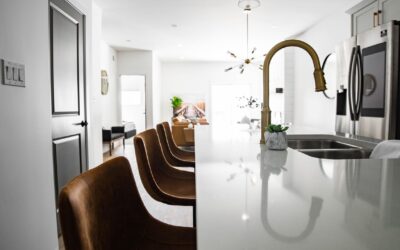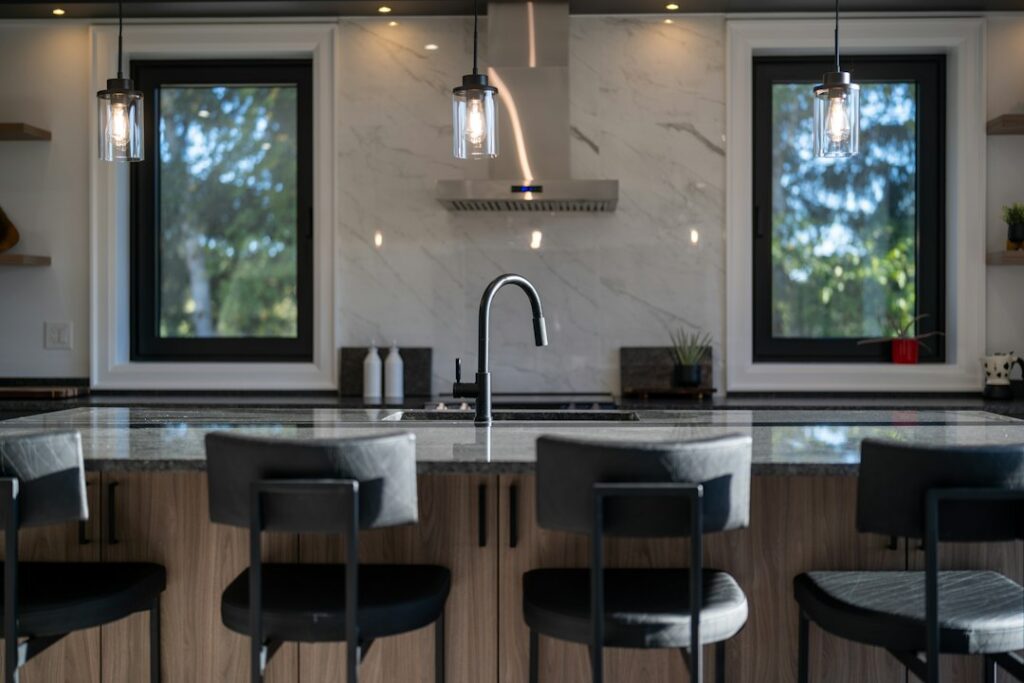
Most people picture Corian as a plain white or speckled beige counter from a 1990s kitchen, then find a current palette of roughly a hundred options, from bright solid whites to marble-look veining and deep, near-black tones. Corian colors now cover two separate materials: Corian Solid Surface, the original acrylic-based sheet that can be joined with nearly invisible seams and integrated sinks, and Corian Quartz, an engineered stone line sold under the same name.
Part of our Countertops guide — explore the full guide →
The quick answer: the most requested solid surface whites include Glacier White, Designer White, Cameo White, White Jasmine and the veined Cirrus White. Neutrals like Rain Cloud and deep tones such as Deep Nocturne round out the core range, and spice-themed launches added hues such as Blue Spice.
- Corian Colors at a Glance: Popular Solid Surface Shades
- How the Corian Palette Is Organized
- Corian Quartz Colors vs Solid Surface Colors
- How to Choose a Corian Color Step by Step
- Care, Repair and Troubleshooting by Color
- Cost Ranges for Corian Countertops
- When to Call a Pro
- Frequently Asked Questions
Palettes change every year or two, with new aesthetics added and slow sellers retired. Use this as a shortlist, then ask a fabricator for physical samples of the current line.
Corian Colors at a Glance: Popular Solid Surface Shades
Each name in the table appeared in Corian’s North American product information or the brand’s color announcements. Descriptions are general; color on a screen never matches a sample in your kitchen light.
| Color | Look | Good for | Status note |
|---|---|---|---|
| Glacier White | Clean, solid bright white | Integrated sinks, bath vanities, commercial tops | Long-running core color, offered in every listed sheet format |
| Designer White | Plain solid white, no particles or veins | Modern kitchens wanting a flat white | Listed in fewer sheet formats than Glacier White |
| Cameo White | Plain solid white; compare its warmth to Glacier White on samples | Kitchens with cream or painted cabinets | Listed in most sheet formats |
| White Jasmine | White with large, randomly scattered particles | Bathrooms, light kitchens that need to hide crumbs | Listed in North American and European portfolios |
| Cirrus White | White with subtle glistening particles and flowing, cloudlike veins | Marble look without stone upkeep | Part of the Atmosphere collection |
| Rain Cloud | Soft neutral with random veining | Kitchens wanting gentle movement | Veins may vary and can highlight seams |
| Deep Nocturne | Deep, heavily pigmented dark tone | Dramatic islands and accent tops | Brand notes it may need extra maintenance |
| Blue Spice | Blue-toned shade from a spice-inspired launch | Accent counters, bath tops | Introduced with Hickory Smoke, Clove and Basil; confirm it is current |
The brand flags colors containing large, randomly distributed particles with a note that a small sample may not represent the full look of a finished top. For these, ask the fabricator to show you a full sheet or a photo of an installed counter in the same color.
How the Corian Palette Is Organized
Rather than one flat list, the solid surface range is grouped into collections and color families: solid whites and neutrals, particle patterns that mimic granite or terrazzo, veined aesthetics that echo marble and concrete, and deep tones. Recent launches have leaned toward nature themes. In 2026 the brand introduced a collection called Nature in Motion with seven new solid surface aesthetics, including travertine looks, plus two new quartz colors.
Color charts also carry maintenance notes: heavily pigmented colors are flagged as possibly needing additional maintenance, veined colors as having veins that vary in intensity and can highlight seams, and some colors as containing reflective pigments that look lighter or darker depending on viewing angle. Two technologies show up as well. Deep color designs are engineered to keep dark shades looking richer and to resist the light, chalky scratch marks dark solid surface is known for. Some colors are also marked for a resilience or fire-rated grade aimed at commercial projects. If you are choosing a dark top for a family kitchen, ask whether the color uses the deep color technology.
Sheet sizes and thicknesses
Corian’s North American product information lists sheets in 1/4 inch, 1/2 inch and 3/4 inch thicknesses. Standard sheets are 30 inches wide in 98 inch and 144 inch lengths, and some colors come in a wide sheet about 36.6 inches wide. Not every color comes in every thickness or width, which matters for deep islands or long runs. Kitchen counters are typically fabricated from 1/2 inch sheet with a built-up edge, so the counter looks thicker than the sheet.
Corian Quartz Colors vs Solid Surface Colors
Corian Quartz is engineered stone, mostly crushed quartz bound with resin. It is harder and more heat tolerant than solid surface, but seams show and scratches cannot be sanded out at home. The quartz palette is smaller, roughly 50 to 55 colors in recent product guides, grouped into collections such as iconic stone (calacatta and classic marble looks), quartzite looks with multidirectional veining, and elegant neutrals. Some quartz colors are offered in a leathered or low-sheen matte finish.
- Choose solid surface for integrated sinks, curved shapes, invisible seams and a top you can renew by sanding.
- Choose quartz for higher scratch and heat resistance and bold marble veining with depth.
- Check names carefully. A color name can exist in one material but not the other, so confirm whether a sample is solid surface or quartz.
How to Choose a Corian Color Step by Step
- Start with use. Heavy cooking and kids favor particle patterns and mid-tone neutrals that hide scratches. Bathrooms and low-use bars can go solid white or deep color.
- Match undertones. Hold samples against cabinet doors, flooring and backsplash tile. Warm whites like Cameo White suit cream and wood; brighter whites like Glacier White suit gray and white cabinets.
- View in your light. Look at samples in the morning, evening and under your actual fixtures.
- Ask about sheet options. Confirm the color comes in the thickness and width your layout needs, and whether matching integrated sinks are available.
- Request an installed reference. Veined and large-particle designs vary across a sheet; ask for photos or a showroom top.
- Confirm current status. Ask the fabricator to verify the color is in production before you sign, especially for older or regional names.
Care, Repair and Troubleshooting by Color
Solid surface is non-porous, so it does not need sealing. Daily care is warm water and mild dish soap or a non-abrasive kitchen cleaner. The difference between colors shows up in wear.
- Dark tops look scratched: fine scratches show as light lines on deep colors. A solid surface polishing kit with graded abrasive pads lets you blend them out, working in overlapping circles across a wide area so you do not create a shiny or dull patch.
- Matte top has shiny spots: heavy rubbing in one place burnishes the surface. Re-blend the whole area with the same pad grade used for the original finish.
- White top has stains: most lift with a mild abrasive cleaner and a soft pad. Rinse well.
- Heat mark or crack: solid surface can scorch or crack under hot pans. Always use trivets; repairs that need a patch should go to a certified fabricator who can match the color.
- Color looks different from the sample: lighting and sheet variation are the usual causes. Compare under the same lamp before assuming a wrong color was delivered.
Quartz behaves differently. Do not sand it, avoid harsh chemicals such as oven cleaner, and use trivets because resin can discolor from high heat.
Cost Ranges for Corian Countertops
Color affects price less than people expect, though premium veined and deep color designs usually cost more than basic solid whites. As a general guide, installed solid surface countertops commonly run about $50 to $100 per square foot, and engineered quartz from a name brand often lands in a similar or higher range of about $60 to $120 per square foot installed. Integrated sinks, thicker built-up edges, backsplashes, cutouts and tear-out of old tops add to the total.
Small projects such as a bath vanity top can be quoted per piece, and remnants in popular colors sometimes cost less. Get at least two quotes from fabricators certified by the brand, since a poor seam or edge job affects the look more than the color choice.
When to Call a Pro
Solid surface fabrication needs specific adhesives, routers and training to make seams disappear, so countertop installation belongs with a certified fabricator. Call one for any crack, burn, deep gouge or seam separation, for adding an integrated sink, and before cutting a new hole for a faucet or appliance. Plumbing reconnections for sinks and dishwashers should follow local code; hire a licensed plumber if you are unsure.
Frequently Asked Questions
How many Corian colors are there?
Recent counts put the solid surface palette at roughly 100 colors, and the quartz line at around 50 to 55. The exact number changes as the brand adds new collections and retires older shades.
What is the most popular white Corian color?
Glacier White is one of the most widely specified solid whites, while Cirrus White is a common pick for a marble-like look. Designer White and Cameo White offer slightly different white tones.
Is Ice White still a Corian color?
Ask a certified fabricator whether it is still made, available in your region or replaced by a similar white such as Glacier White.
Is Pompeii Red discontinued?
Pompeii Red was not found in the current manufacturer materials reviewed. It may be discontinued or regional, so confirm with a dealer and ask to see the current red and warm accent options.
Do dark Corian colors scratch more easily?
All solid surface scratches about the same, but scratches show more on dark colors. Deep color designs are engineered to reduce this, and fine scratches can be buffed out with a polishing kit.
Is Corian Quartz the same as Corian Solid Surface?
No. Corian Quartz is engineered stone, while Corian Solid Surface is an acrylic-based material. They have separate palettes, care rules and fabrication methods.