Most people hear “cork” and picture wine stoppers or a bulletin board, not a kitchen work surface. But cork countertops are a real, installable, surprisingly livable option that almost nobody in the mainstream countertop conversation talks about — which is exactly why they count as a sleeper pick. The countertop version shares the same virtues as cork flooring: warm underhand, quiet, renewable, and unlike anything else in the showroom. It also shares cork’s honest limitations, and if you’re considering it, you deserve the unvarnished version of both.
Part of our Countertops guide — explore the full guide →
What a Cork Countertop Actually Is
Countertop cork isn’t the soft, crumbly stuff on a pin board. It’s made from granulated cork — the bark of the cork oak, harvested every nine years or so without killing the tree — compressed with binders under heat and pressure into dense blocks or slabs. The density is the key variable. Bulletin-board cork runs light and spongy; countertop-grade cork composite is compressed to roughly 30–45 pounds per cubic foot, which feels closer to a dense hardwood than to a coaster.
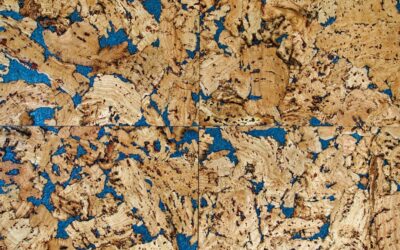
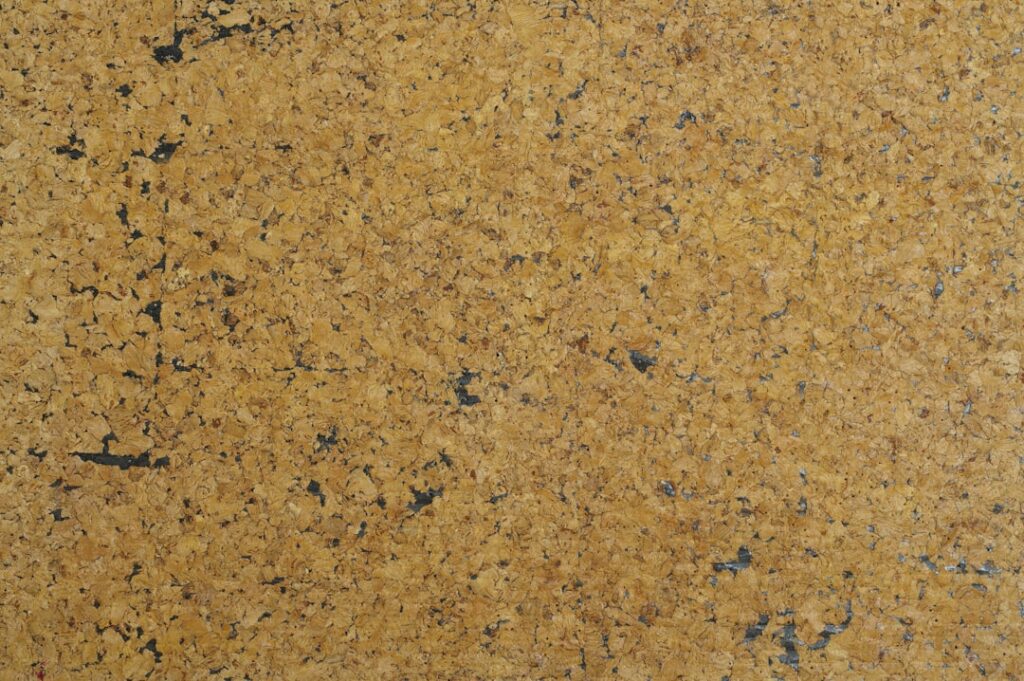
Manufacturers slice these blocks into slabs typically 1 to 2 inches thick, and the granule size determines the look: fine granules give a speckled, almost terrazzo-like uniformity; coarse chunks read rustic and organic. Some products laminate a thick cork wear layer over a plywood or MDF core to control cost and improve screw-holding for undermount hardware. A few specialty fabricators build solid cork butcher-block-style tops in full slab dimensions up to 8 or 10 feet.
The Case For Cork: Why It Deserves the Look
- Genuine sustainability. Cork oak bark regenerates; the trees live 200+ years through dozens of harvests, and cork forests in Portugal and Spain are protected carbon sinks. If a low-impact kitchen is the brief, cork beats quartz (energy-intensive, resin-bound) and imported granite (quarried, shipped heavy) by a wide margin. Many cork products also carry recycled content from wine-stopper punch-out waste.
- Warmth and forgiveness. Cork’s cellular structure — millions of air-filled cells — makes it warm to the touch year-round and slightly cushioned. Set a wine glass down carelessly and it doesn’t ring or chip. Dropped dishes survive on cork at a rate no stone can match.
- Quiet. The same cells that cushion also absorb sound. A cork-topped island changes the acoustics of a kitchen noticeably; there’s no clatter.
- Naturally antimicrobial-ish. Cork contains suberin, a waxy substance that resists mold and inhibits some bacterial growth. It’s not a sanitation license — you still seal and clean — but it’s a better starting point than open-grained wood.
- Comfortable pricing. Slab cork countertop material typically runs $40–$90 per square foot fabricated, with laminated cork-over-core products starting closer to $30. That’s mid-range territory — above laminate, comparable to butcher block, below most quartz.
The Case Against: Where Cork Makes You Pay
Now the honest half. Cork is soft relative to every conventional countertop material. Compressed countertop cork resists dents far better than you’d guess — the cells compress and rebound — but a serrated knife, a dragged cast iron pan, or a dog’s claws will scar it. You will never cut directly on cork; it’s a cutting-board-always surface.
Heat is a mixed report. Cork is a natural insulator and won’t crack from thermal shock the way granite can, and it’s surprisingly resistant to brief heat contact — cork trivets exist for a reason. But a genuinely hot pan (400°F+) parked directly on the surface can scorch the binder and darken the cork permanently. Trivets, always.
Moisture is the make-or-break variable. Sealed properly, cork sheds water fine. Unsealed or worn cork absorbs liquids, and red wine, beet juice, or turmeric will stain the pale natural tones. The seal is a maintenance commitment: expect to recoat with a water-based polyurethane or hardwax oil every two to four years on a working kitchen counter, more often around a sink. This is the same rhythm as butcher block, so wood-counter people won’t blink; quartz people will.
Cost and Sourcing Reality
| Product Type | Material Cost (per sq ft) | Installed (typical) |
|---|---|---|
| Laminated cork over plywood/MDF core | $25–$45 | $50–$80 |
| Solid compressed cork slab, 1.5 in | $40–$70 | $75–$120 |
| Custom thick-slab or end-grain-style cork | $70–$110 | $110–$160 |
The bigger obstacle isn’t price — it’s supply. Cork countertops are a specialty product in the US. You won’t find slabs at Home Depot; you’re ordering from cork specialists (several Portuguese manufacturers export slab material), green-building suppliers, or custom fabricators who work with cork composite. Lead times of four to eight weeks are normal, and your local countertop shop may never have fabricated one. Ask pointed questions before hiring: cork cuts with woodworking tools, not stone tools, so a wood-savvy fabricator or a good finish carpenter is often the right installer.
Fabrication and Installation Notes
Cork works almost exactly like dense softwood. It cuts clean with a track saw and a fine-tooth blade, routs beautifully for eased or bullnose edges, and sands fast — be gentle, because you can dish it with an aggressive belt sander. Undermount sinks are possible, but drop-in or farmhouse-front sinks are the better match for cork, keeping the vulnerable cut edge away from standing water and giving the silicone joint a fighting chance.
Seams join with wood glue or polyurethane adhesive and clamp pressure, and a skilled fabricator can make them nearly vanish thanks to the speckled pattern — cork hides seams better than veined stone ever will. Attach tops to cabinets the way you’d attach butcher block: screws through slotted or oversized holes, because cork composite moves a little with humidity, less than solid wood but not zero.
Seal every surface — top, edges, and critically the underside and sink cutout — before or immediately after installation. Three coats minimum of a waterborne polyurethane, or two saturating coats of a hardwax oil if you prefer the natural low-sheen look and accept slightly more frequent renewal.
Where Cork Countertops Make Sense
After weighing all of it, here’s where cork actually makes sense:
- Bars, coffee stations, and butler pantries. Lower abuse, high touch, and the warmth and quiet shine. This is cork’s best room in the house.
- Baking centers. Cork’s slight give and warmth make it pleasant for dough work with a board or pastry slab on top.
- Kids’ craft counters, laundry folding counters, home office worktops. Forgiving, quiet, and comfortable for forearms — genuinely better than stone for a desk-height surface.
- Whole kitchens for the right owner. If you’re the person who already wanted butcher block, keeps cutting boards out, and cares about embodied carbon, cork is a legitimate full-kitchen surface. If you want set-it-and-forget-it, buy quartz and don’t look back.
Cork vs. the Obvious Alternatives
Against butcher block, cork wins on sustainability, water forgiveness (sealed cork handles sink zones better than oiled maple), warmth, and seam invisibility; it loses on cut-on-ability and resale familiarity. Against laminate, cork wins on repairability — you can sand out damage and reseal cork, while damaged laminate is done — and loses slightly on price. Against quartz, they’re barely the same product category: quartz wins every durability metric, cork wins warmth, acoustics, ecology, and character.
Resale deserves one straight sentence: cork is unfamiliar, and unfamiliar reads as risk to some buyers, so a cork kitchen is a choice you make for your own years in the house, not for the listing photos.
Repairability deserves its own sentence in that comparison, because it’s cork’s quiet superpower: scratches and shallow scars sand out with 150-grit and a palm sander, gouges fill with a paste of cork dust and wood glue that vanishes into the speckle, and the whole top can be refreshed and resealed in an afternoon for the cost of a can of finish — a maintenance loop closer to butcher block than to anything mineral.
If you’re intrigued, order a sample slab section — most suppliers sell 12-inch squares for $10–$25 — and live with it on your existing counter for a month. Oil half, poly the other half, set your coffee mug on it, splash wine on it, scratch it deliberately. Cork sells itself to the right person within a week, and tells the wrong person just as fast. That cheap experiment is the best countertop research you’ll ever do.