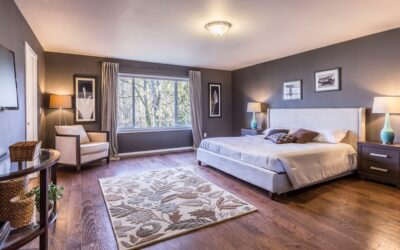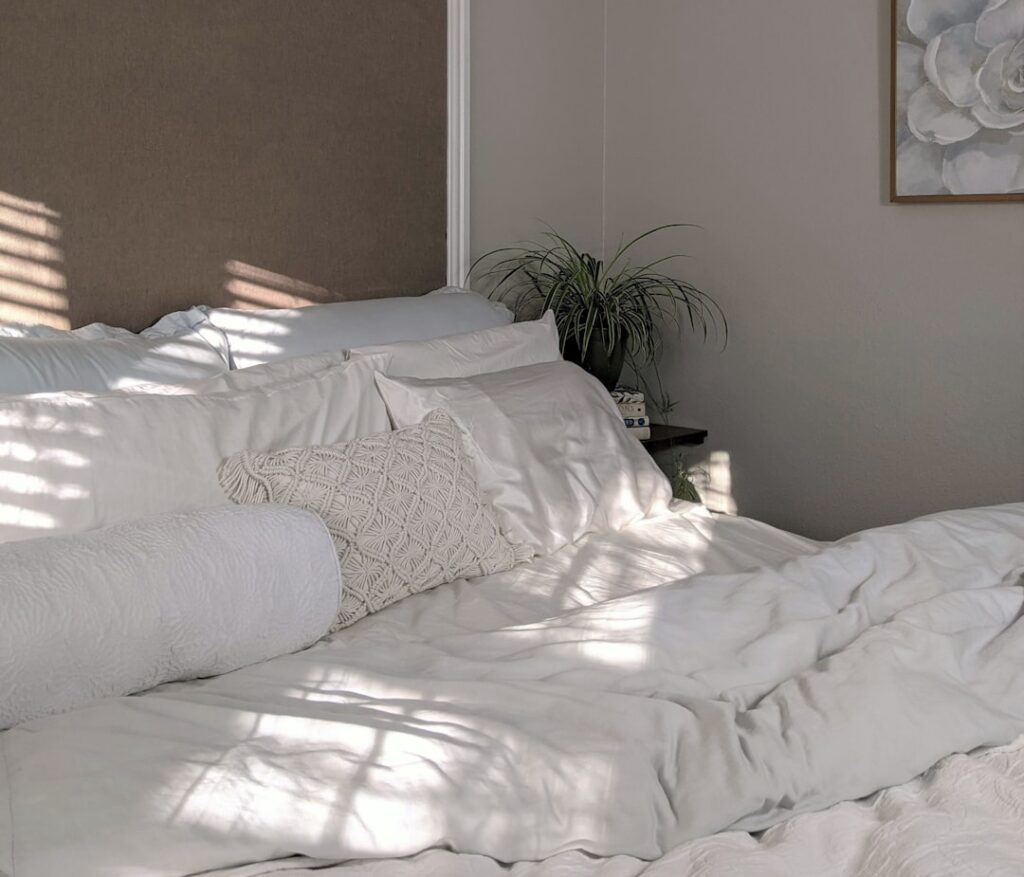
Color researchers keep landing on the same finding: people report sleeping better and winding down faster in rooms painted in muted, low-contrast, nature-adjacent colors — soft greens, dusty blues, warm earth neutrals — than in bright or high-energy shades. The best cozy calm bedroom paint colors share a technical signature: low-to-mid lightness, heavily muted chroma (plenty of gray in the mix), and warm or neutral undertones that flatter lamplight. Below are the specific shades from Sherwin-Williams, Benjamin Moore, and Behr that designers reach for again and again, organized by mood, plus how to test them before you commit.
Part of our Paint & Walls guide — explore the full guide →
- What Makes a Color Feel Calm
- Muted Greens: The Consensus Calmers
- Warm Neutrals and Earthy Clays: Cozy First
- Dusty Blues and Blue-Grays: The Sleep Classics
- Moody Darks: Cocooning Done Right
- Testing Before You Paint
- Matching the Color to Your Light
- Five No-Regret Combinations
- Pulling the Room Together
What Makes a Color Feel Calm
Two numbers on the paint chip do most of the work. The first is LRV — light reflectance value, 0 to 100 — which tells you how much light a color bounces back. Calm bedrooms usually live between LRV 15 and 60: dark enough to feel enveloping at night, light enough not to go cave-like by day. The second is saturation: pure, vivid colors stimulate; the same hue grayed down recedes and soothes, which is why sage beats kelly green and dusty denim beats royal blue. Undertone is the tiebreaker — north-facing rooms lean cold, so choose colors with warm undertones there; bright south rooms can handle cooler, grayer picks. Finish matters too: matte or flat sheens drink light and make any color feel softer, and dark colors especially look richer without shine.
Muted Greens: The Consensus Calmers
Gray-green is the closest thing to a universally calming bedroom color — it reads as organic, pairs with every wood tone, and shifts gracefully from daylight to lamplight.
- Sherwin-Williams Evergreen Fog (SW 9130), LRV 30: A sophisticated gray-green sage, mid-depth, one of the most-specified bedroom colors of the past few years.
- Sherwin-Williams Clary Sage (SW 6178), LRV 40: Lighter, slightly warmer sage for smaller rooms.
- Benjamin Moore October Mist (1495), LRV 46: A gentle sage-gray that behaves almost like a neutral.
- Behr Laurel Tree (N400-5): Deeper botanical green for an accent or a moody full wrap.
Pair muted greens with warm white trim, natural linen, and walnut or oak furniture; brass and aged bronze hardware warm them further, and plants double down on the biophilic effect.
Warm Neutrals and Earthy Clays: Cozy First
If “cozy” outranks “serene” on your list, go warm: greiges, mushroom taupes, and soft terracotta-adjacent clays make a bedroom feel wrapped rather than airy.
- Sherwin-Williams Accessible Beige (SW 7036), LRV 58: The reliable warm greige — calm, light, never sterile.
- Benjamin Moore Shaker Beige (HC-45), LRV 47: A classic warm sand.
- Sherwin-Williams Virtual Taupe (SW 7039), LRV 27: Deep mushroom for an enveloping, hotel-suite mood.
- Behr Wild Mustang (N170-5) or Benjamin Moore Chippendale Rosetone: Muted clay-rose territory — warm, adult, surprisingly restful with cream bedding.
Whites deserve a mention here: a soft warm white like SW Alabaster can absolutely be a calm bedroom color when layered with texture. Our warm white paint colors guide and Sherwin-Williams white paint colors guide cover those picks in depth.
Dusty Blues and Blue-Grays: The Sleep Classics
Blue keeps topping sleep-and-color surveys, but the bedroom-right blues are the grayed, powdery ones — bright blues energize. The reliable picks all carry enough gray to read almost neutral in low light, which is exactly how a bedroom is seen most of the time.
- Benjamin Moore Quiet Moments (1563), LRV 60: A whispery blue-green-gray that lives up to its name; excellent in bright rooms.
- Sherwin-Williams Upward (SW 6239), LRV 59: Soft denim-sky blue, breezy without being cold.
- Behr Light Drizzle (N480-1): Barely-there misty blue for near-neutral schemes.
- Benjamin Moore Hale Navy (HC-154), LRV 8: The deep-end option — a full navy wrap with matte finish turns a bedroom into a cocoon, best with generous lamplight and warm brass accents.
Moody Darks: Cocooning Done Right
Dark bedrooms are not a trend accident; low-LRV walls kill glare, absorb visual noise, and make evening light feel candlelit. Beyond Hale Navy, consider SW Cyberspace (SW 7076) — a soft charcoal with a blue undercurrent — or BM Knoxville Gray (HC-160), a historic deep gray-green. Three rules make darks work: commit to all four walls (a single dark accent wall often reads unfinished), keep bedding and curtains light for contrast, and use matte sheen so the color reads as depth rather than shine. Small rooms take dark colors better than people expect — the corners disappear and the room reads larger at night.
Testing Before You Paint
Calm colors are undertone-sensitive, and undertones lie under store lighting. Buy sample quarts ($6 to $10) or peel-and-stick samples (Samplize, about $6 each), and put two coats on poster boards you can move around the room — check each candidate on the darkest wall, next to the bedding, and under your actual lamps at night, since a 2700K warm bulb shifts greens yellower and blues grayer. Live with the finalists for three days minimum before ordering full gallons, checking them morning, noon, and lamplit night. And test against your fixed elements: carpet, curtains, and headboard fabric drag undertones out of a wall color faster than any chip predicts. For the wall finish itself, matte or eggshell are the bedroom defaults — the full trade-offs are in our paint sheen chart.
Matching the Color to Your Light
The same chip becomes three different colors in three different exposures, so pick from the right shortlist for your window direction. North-facing bedrooms receive cool, flat light all day and turn gray-greens muddy and cool blues icy — favor the warm side of every family there: Accessible Beige, Clary Sage, a clay tone, or a warm white. South-facing rooms get abundant warm light that can push beiges yellow by afternoon; they handle the coolest picks on this list — Quiet Moments, Upward, deeper blue-grays — beautifully. East rooms glow warm at dawn and cool by evening, which flatters greens; west rooms do the reverse and can turn any warm color hot at sunset, so lean quieter and grayer. Artificial light finishes the job: 2700K bulbs deepen warmth, 3000K stays truer, and anything above 3500K fights the cozy brief entirely. If the bedroom doubles as a home office, split the difference with a mid-LRV green or greige that stays professional on camera and calm at night.
Five No-Regret Combinations
- Modern organic: Evergreen Fog walls, SW Alabaster trim and ceiling, oak furniture, ivory bedding
- Soft and bright: BM Quiet Moments walls, BM Simply White trim, white linen, rattan accents
- Warm minimal: Accessible Beige walls, matching trim one step lighter, walnut and brass
- Full cocoon: BM Hale Navy on walls and trim, warm white bedding, aged brass lamps
- Earthy calm: Virtual Taupe walls, cream trim, terracotta and olive textiles
Pulling the Room Together
Calm is a low-contrast game, so extend the palette past the walls: paint the ceiling either a flat white with a warm cast or, for full-cocoon effect, the wall color cut 25 to 50 percent. Budget helps here — a bedroom takes just one to two gallons ($40 to $180 depending on line), making it the cheapest room in the house to repaint if the first choice misses. Prep still matters even in a moody room: fill nail holes and sand patches, because matte paint hides texture but not craters, and dark colors cast shadows into every divot. Match trim within a step or two of the wall (bright white trim against a moody wall injects contrast you may not want). Layer texture — linen, wool, rugs over hardwood — because muted colors need tactile interest to avoid going flat. One quart of sample paint and one weekend of testing is cheap insurance on the room where you spend a third of your life; choose the shade that makes you exhale when you walk in at 10 p.m., not the one that photographs best at noon.