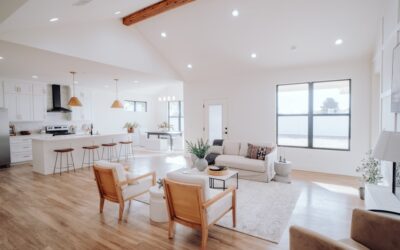
If you searched “Danville hardwood flooring,” you may be looking at two different things: hardwood retailers in Danville, Virginia (or Danville, California, Kentucky, or Illinois — there are several), or the boutique Danville plank product line carried by some regional showrooms. Danville hardwood flooring in either sense lands in the mid-premium tier — solid build quality, classic wide-plank profiles, and pricing that sits above big-box options but below custom-milled work.
The Danville Brand Lineup
The Danville-branded hardwood lines sold through select dealers focus on wide-plank engineered oak in widths from 5 inches to 7.5 inches, with thicknesses between 1/2 and 5/8 inch. The top wear layer is typically 3 to 4 mm sawn-face white oak — thick enough for one full sand-and-refinish cycle, sometimes two with conservative sanding. Plywood cross-laminated core provides dimensional stability for slab installation over concrete subfloors.
Finishes lean traditional and earthy: natural matte, fumed oak, weathered gray, smoked walnut. Polyurethane and UV-cured oil-finish options are both available depending on the SKU.
Wear Layer and Refinish Potential
Wear layer thickness on engineered hardwood is the single most important spec for long-term value. A 3 mm wear layer allows roughly one full sand cycle; a 4 mm wear layer allows one to two cycles. Danville’s premium lines typically ship 4 mm sawn-face, which puts the product in line with Hallmark Floors, Mirage, and Mullican Nature Plank at similar price points.
By comparison, big-box engineered oak from house brands often ships a 1 to 2 mm wear layer — beautiful when new, but functionally non-refinishable. If you plan to keep a floor for 30-plus years and refinish at 15 to 20 years, the wear layer math becomes the dominant purchase consideration.
Pros That Justify the Premium
Build quality is the headline. Aluminum oxide topcoats sit at 8 to 10 layers on most Danville SKUs, which delivers Taber abrasion resistance roughly double a 4-coat budget product. Janka rating on white oak hardwood lands around 1,360 pounds — soft enough to feel comfortable underfoot and warm in tone, hard enough to survive rolling chairs and pet claws.
Wide-plank profiles read more luxe than the 3 to 5 inch widths that dominate big-box inventory. A 7-inch plank in a 14-by-18-foot room reduces seam count by roughly 40 percent versus a 4-inch plank, which makes the room look bigger and more contemporary.
The finish color range targets current design trends. Weathered gray and fumed oak — particularly in matte hard-wax oil finishes — pair beautifully with modern farmhouse, Scandinavian, and transitional interiors.
Cons Worth Knowing
Pricing sits in the premium tier. Expect $5.50 to $9.50 per square foot for material, depending on width, wear layer thickness, and finish complexity. Installed cost lands $11 to $17 per square foot turnkey including subfloor prep, glue or staple, and transitions.
Dealer network depth is limited. Boutique hardwood brands route through smaller regional showrooms rather than national chains. If you live in a major metro, you will find a dealer; in smaller markets, the closest showroom may sit 60 to 120 minutes away.
Color-matching for future repairs is the third concern. A small water-damaged area may require replacing 30 to 50 board feet, and matching the original lot 5 to 10 years later is often impossible. Buy 15 percent overage at install, not 5 to 10 percent, and store boxes flat in a climate-controlled space.
Species and Finish Selection
For mainstream installs, white oak is the right call. Janka 1,360, dimensionally stable, accepts stains evenly, and color-trends well with modern aesthetics. Red oak (Janka 1,290) suits traditional homes and accepts deep stain colors beautifully but reads more dated against current design preferences.
Hickory (Janka 1,820) is a strong choice for high-traffic households with pets and kids — the additional hardness translates to fewer dents and longer finish life. Maple (Janka 1,450) is harder than oak but stains unevenly, so reserve it for clear or natural finishes.
For finish, hard-wax oil (Rubio Monocoat, Pallmann Magic Oil, Bona Craft Oil 2K) delivers a matte hand-rubbed look and allows spot-repair without full-floor sanding. Polyurethane delivers higher-gloss aesthetics and superior scratch resistance but requires full-room refinish when worn.
Install Considerations for Engineered Wide Plank
Subfloor flatness is the make-or-break spec. Wide planks — anything over 6 inches — telegraph subfloor variation more than narrow strip flooring. Self-level the slab or sand the plywood to within 3/16 inch over 10 feet before any install. ASTM F2170 relative humidity testing on slabs should read under 80 percent and ASTM F1869 calcium chloride under 5 pounds per 1,000 square feet per 24 hours.
Glue-down installation with a moisture-control adhesive (Bostik MVP, Mapei Ultrabond Eco 980) is the industry standard for engineered wide plank over slab. Floating installations are possible but less common because the rigid plank-to-plank lock can transmit movement noises in larger rooms.
Acclimate boxes flat in the install room for 5 to 7 days at 65 to 75°F and 35 to 55 percent relative humidity.
Real-World Cost for 1,200 Square Feet
Engineered 6-inch white oak at $7.50 per square foot totals $9,000 plus 15 percent overage at $1,350 — call it $10,350 in product. Adhesive, moisture testing, and transitions add $1,800. Labor at $4 to $7 per square foot lands $4,800 to $8,400. Subfloor prep ranges $500 to $2,000 depending on slab condition. Realistic turnkey total: $17,500 to $22,500 for a mid-size first floor.
Care That Preserves the Wear Layer
Dust mop daily, damp mop weekly with Bona Hardwood Cleaner, Pallmann hardwood maintenance products, or the specific cleaner recommended for hard-wax oil if that is the finish. Place felt pads on every chair and table leg. Use entry rugs to capture grit before it reaches the finish. Maintain indoor humidity at 35 to 55 percent year-round. With this discipline, Danville hardwood flooring delivers 40 to 60 years of service before the first refinish is required.
Prefer to explore on your own?
See how new flooring looks in your actual room in seconds — free, no signup.
Try the free Floor Studio →