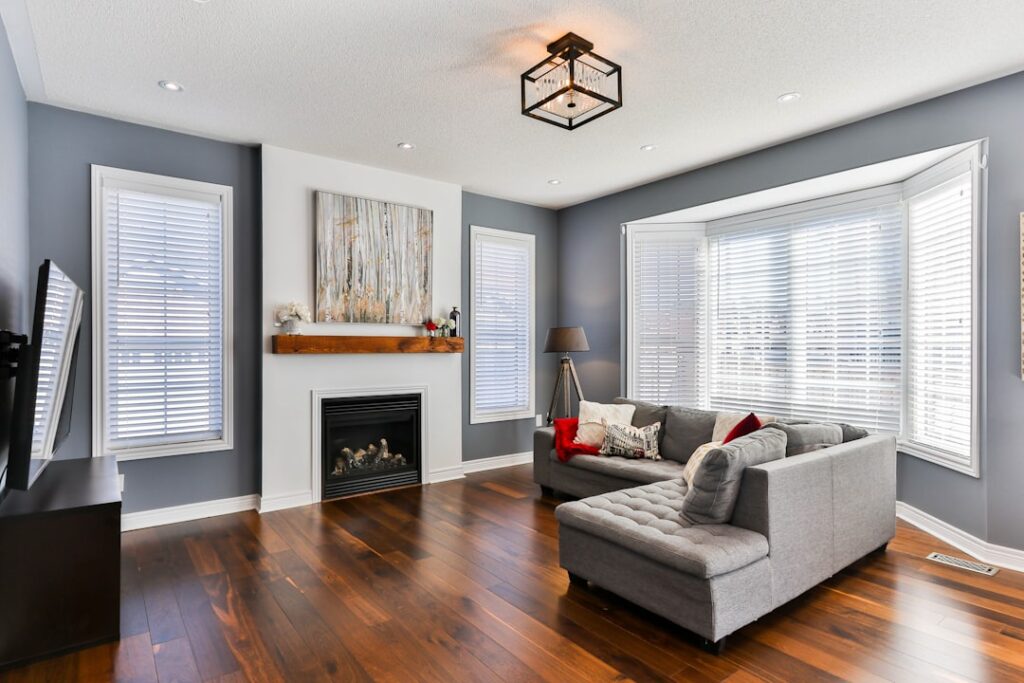
Strip flooring at 2.25 inches looks dated to most buyers under 50. Designers and homebuilders have moved to wider planks for over a decade, and the trend shows no sign of reversing. Wide hardwood flooring refers to planks 5 inches or wider, with current design favoring 7 to 10 inch widths. Wider planks read as luxurious, expand the visual sense of a room, and showcase wood grain better than narrow strip. They also cost more, move more with humidity, and demand a flatter subfloor. This guide unpacks the trade-offs so you can choose width with full information.
What Counts as Wide
The flooring industry breaks plank width into three categories:
- Strip: Under 3 inches wide, the original American standard
- Plank: 3 to 5 inches wide, the most common width sold today
- Wide plank: 5 to 12 inches wide, premium design tier
True wide plank starts at 6 inches and runs as wide as 12 inches in custom mills. Carlisle Wide Plank and Sawyer Mason sell up to 20 inch widths in special order.
Why Wide Plank Looks So Different
Walk into a 400 sq ft room with 2.25 inch strip flooring and you will count roughly 150 visible plank lines. The same room in 8 inch plank shows about 40 lines. Fewer seams make the floor look like a continuous surface, which expands the sense of space and lets the wood grain become the visual focus.
Designers also pair wide plank with current trends in cabinetry and wall paneling that favor uninterrupted surfaces. Narrow strip starts to look fussy by comparison.
Real-World Cost Premium
Width adds cost in three ways. The mill yield per log drops because wider planks require larger, knot-free sections. Quality control rejects more boards. Shipping rates climb because longer wider planks need protective crating. Pricing comparison for white oak prefinished engineered:
- 3 inch plank: $5.50 to $7 per sq ft
- 5 inch plank: $6.50 to $8.50 per sq ft
- 7 inch plank: $8 to $11 per sq ft
- 9 inch plank: $10 to $14 per sq ft
- 12 inch plank: $14 to $22 per sq ft
Solid wide plank runs 20 to 40 percent more than engineered at the same width.
Stability and Movement Concerns
Wood expands and contracts across its width. A 2 inch strip plank moves about 1/64 inch with seasonal humidity. A 9 inch plank moves over 1/16 inch in the same conditions. Multiply that across a 20-foot room and the floor breathes nearly an inch between summer and winter.
Solid wide plank in widths over 5 inches almost always requires both glue and nails to control movement. Engineered wide plank is more stable because the plywood core resists humidity-driven movement.
Subfloor Demands
Wide plank shows subfloor imperfections that strip flooring hides. The standard flatness tolerance for strip flooring is 1/4 inch over 10 feet. Wide plank requires 3/16 inch over 10 feet or better. On older homes with sagging joists, this often means a self-leveling underlayment ($1.50 to $3 per sq ft) before installation.
Acoustic underlayments also become more important. Wider planks transmit footfall sound more than narrow strip, so basement units below installations benefit from 3mm IIC-rated underlayments.
Species and Width Pairings
Some species adapt to width better than others:
- White oak: Most stable, widely available in 7 to 12 inch widths
- European oak: Slightly denser, premium wide plank market, $10 to $18 per sq ft
- Walnut: Beautiful in wide plank but moves more, glue-down recommended
- Hickory: Stable in wider widths but visually busy due to color variation
- Maple: Difficult in widths over 6 inches because it cups easily
Installation Methods
Three approaches work for wide plank:
- Nail-and-glue solid: Standard cleat or staple nailing plus a continuous bead of urethane adhesive (Bostik Best or Sika MB Premium). Required for 5 inch and wider solid hardwood.
- Full glue-down engineered: Trowel-on adhesive over plywood or concrete. Most stable installation for wide engineered plank.
- Floating click-lock engineered: Possible up to 9 inch widths with quality products like Mirage Engineered or Kahrs Original Wide Plank. Not recommended for planks wider than 9 inches.
The Real Pros
Wide hardwood flooring elevates a room visually in a way no other floor change does. Open-concept spaces benefit the most because the long sight lines emphasize the unbroken plank pattern. Resale return is also strong. Listings featuring 7 inch or wider planks in white oak command 5 to 12 percent premiums in luxury markets according to NAR member surveys.
Maintenance is identical to standard hardwood, so there is no long-term cost penalty beyond the initial price difference.
Honest Drawbacks
Cost is the first hurdle. A 1,500 sq ft installation in 9 inch white oak runs $25,000 to $35,000 installed. The same room in 3 inch oak might be $12,000 to $16,000.
The second hurdle is movement. Even properly acclimated and installed wide plank shows occasional gapping in winter. Owners who notice 1/16 inch gaps between boards in February sometimes call back the installer, but this is normal seasonal behavior, not a defect.
Third, wide plank limits species choices. The premium wood market focuses on oak, walnut, and a handful of European imports. Hickory, ash, and cherry are less commonly available in wide formats.
Acclimation and Climate Control
Plan for 7 to 14 days of in-room acclimation before installation. Solid wide plank needs the longer end of that range. Run the HVAC during acclimation at the temperature and humidity you will maintain after the install (68 to 72 degrees F, 35 to 50 percent RH). A whole-house humidifier is almost mandatory in northern climates to prevent winter gapping.
Top Brands for Wide Plank
Carlisle Wide Plank Floors, Sawyer Mason, Mirage, Kahrs, Bona, Owens Plank Hardwood, and Hallmark all sell wide plank in production volumes. Custom mills like Goodwin Heart Pine offer reclaimed wide plank for projects where authenticity matters. Expect 4 to 12 week lead times for custom widths in less common species.
Prefer to explore on your own?
See how new flooring looks in your actual room in seconds — free, no signup.
Try the free Floor Studio →