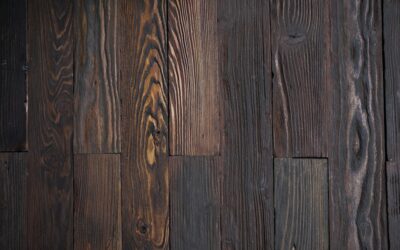
Plank width has quietly become the biggest style shift in wood flooring in a generation — the skinny 2-1/4 inch strip floors that defined American homes for decades have given way to planks twice and three times that width. Wide plank engineered hardwood is the product that made the trend practical, because engineered construction solves the physics problem that always limited wide solid boards: the wider the plank, the more dramatically it swells, shrinks, cups, and gaps with the seasons. This guide covers what actually counts as “wide,” why the engineered core changes the math, what you will pay, and how width transforms the look of a room — for better and occasionally worse.
What Counts as Wide Plank
There is no regulatory definition, but the industry consensus is consistent: anything 5 inches and up qualifies as wide plank, with the market now clustered in distinct tiers.
- Standard/strip: 2-1/4 to 4 inches — the traditional look, increasingly a special order.
- Entry wide: 5 to 6-1/2 inches — the current mainstream default; most big-brand engineered lines center here.
- True wide: 7 to 9 inches — the designer sweet spot, especially in European oak lines.
- Extra-wide: 10 to 12+ inches — statement floors, usually long-length European oak at premium prices.
Length rides along with width. Wide planks look wrong in short lengths — a 9-inch-wide, 2-foot-long board reads as a tile — so quality wide-plank lines ship longer boards, commonly 6 to 8 feet with some European product hitting 10+ feet. When you compare products, check the length spec and the percentage of short boards in the box, not just the width on the label.
Why Engineered Construction Wins at Width
Wood moves. A solid sawn board swells across its width as humidity rises and shrinks as it falls — roughly proportional to how wide it is. A 2-1/4 inch solid strip might move a hair over a season; a 9-inch solid plank moves four times as much, which shows up as summer cupping (edges higher than centers) and winter gaps wide enough to lose a credit card in. Historic homes managed this with face nails and tolerance for movement. Modern homes with forced air, low winter humidity, and concrete slabs do not.
Engineered construction attacks the problem structurally. A wide engineered plank is a sandwich: a real hardwood wear layer (the “lamella,” typically 2 to 6 mm) bonded to a core of cross-laminated plywood plies or, in some lines, a dense wood-fiber core. Because each ply’s grain runs perpendicular to its neighbors, the layers restrain each other — the core simply refuses to let the face layer expand and contract freely. The practical result: engineered planks exhibit a fraction of the seasonal movement of solid boards of the same width. That is why manufacturers will warranty a 7-1/2 inch engineered plank glued to a slab or floated over radiant heat, while very wide solid wood in those settings gets no warranty at all.
Construction quality still varies, and at width it matters more. Look for a plywood core with 7+ plies or a proven multi-layer European construction, a wear layer of at least 3 mm if you ever want to refinish (4 to 6 mm allows two or more refinishes), and total thickness of 1/2 to 5/8 inch for stiffness across the wide face. Thin 3/8 inch product in a 9-inch width can feel hollow and flex over minor subfloor dips.
What Width Does to a Room
This is the reason people pay the premium. Fewer seams change how a floor reads: a 12-foot-wide room needs 64 rows of 2-1/4 inch strip but only 19 rows of 7-1/2 inch plank. The eye registers calm, continuous planes of grain instead of busy linear stripes. Three practical visual effects follow:
- Rooms feel larger and quieter. Fewer lines means less visual noise, which is why wide plank dominates open-concept layouts where the floor is the biggest single surface in view.
- The wood itself becomes the feature. A wide face displays full cathedral grain, mineral streaks, and knots that a narrow strip crops out. Character-grade oak in particular needs width to make sense.
- Scale matching. In a great room with 10-foot ceilings, 7 to 10 inch planks feel proportionate. In an 8×10 bedroom, extra-wide boards can overwhelm — a 5 to 6-1/2 inch width often suits smaller rooms better. As a rule of thumb, the fewer walls interrupting the floor, the wider you can go.
Color and finish interact with width, too. Light, matte, wire-brushed finishes emphasize the plank-width trend’s relaxed European look; glossy dark stains on wide boards show dust and every seam shadow, and are less forgiving.
Cost: What the Width Premium Looks Like
Expect to pay a meaningful but not brutal premium for width. Typical 2026 material pricing for engineered hardwood: $4 to $7 per sq ft for entry 5-inch domestic lines, $6 to $10 for quality 7 to 7-1/2 inch European oak, and $10 to $18+ for extra-wide, long-length, thick-lamella premium product. Installation runs $3 to $8 per sq ft regardless of width — glue-down at the higher end, float and staple at the lower — so an installed wide-plank floor commonly lands between $9 and $18 per sq ft. Two budget notes: wider planks install slightly faster (fewer rows), which occasionally trims labor, and subfloor flatness requirements are stricter at width (typically 3/16 inch over 10 feet), which can add $1 to $2 per sq ft in leveling on older homes. Budget the leveling; a wide plank rocking on a high spot telegraphs hollow clicks with every footstep.
Installation and Stability Best Practices
Even with an engineered core, width demands discipline. Acclimate cartons in the conditioned space for 3 to 5 days at the humidity level the house will actually live at (30 to 50 percent RH is the standard target). On concrete, test the slab for moisture and use the adhesive or vapor barrier the manufacturer specifies — glue-down is the premium method for wide planks because full adhesive contact eliminates the slight hollow feel floated floors can have at width. Floating installations work when the product is rated for it, but keep runs within the manufacturer’s maximum and use the specified expansion gaps at all walls. Over radiant heat, verify the rating (most quality engineered lines allow surface temperatures up to about 80 to 85°F) and ramp temperatures gradually each season. Year-round humidity control — a humidifier in winter, dehumidification in muggy summers — is the single best thing you can do for any wide floor, engineered or not.
Honest Drawbacks
Width has costs beyond dollars. Individual board replacement is more disruptive when each board covers more floor. Seasonal micro-gapping, while far smaller than solid wood’s, is still slightly more visible per joint on wide boards in dry winter climates. Thin-lamella budget product (under 2 mm wear layer) cannot be refinished at all — a dent is forever, so match wear layer to your time horizon. And trends cut both ways: today’s 7-1/2 inch European oak is a safe, established look, but 12-inch statement boards are a stronger stylistic bet that may date, the way 2-1/4 inch red oak strip now dates a 1990s build.
The Bottom Line
If you love the wide look — and most current buyers do — wide plank engineered hardwood is not just the practical choice over wide solid boards, it is usually the only sane one in a modern climate-controlled home or on a slab. Aim for 5 to 6-1/2 inches in ordinary rooms and 7 inches and up where sightlines are long, insist on a 3 mm+ wear layer and a real multi-ply core, budget $9 to $18 per sq ft installed, and control your indoor humidity. Do those four things and you get the calm, expensive-looking floor the photos promised, with the seasonal behavior of a floor half its width.
Frequently Asked Questions
Which direction should wide plank engineered hardwood run?
Run wide planks parallel to the longest wall or the main line of sight from the entry, which makes the room look longer and shows off the grain. Over a wood subfloor, planks are usually laid perpendicular to the floor joists for stiffness, so when the two rules conflict, joist direction normally wins for nail-down or glue-assist installs. Floating floors give more freedom to follow the room.
Can wide plank engineered hardwood go in a basement or kitchen?
Yes, in most cases. Engineered planks are rated for below-grade and on-slab use, which solid wide boards are not, as long as the concrete passes a moisture test and the manufacturer’s vapor barrier or adhesive is used. In kitchens, wide engineered plank performs well if spills are wiped up quickly. It is not a waterproof product, so a basement with any history of flooding needs a different floor.
Is wide plank white oak a good choice for engineered flooring?
Yes. White oak is the most common species for wide engineered plank because its tight, closed grain resists moisture better than red oak and takes light, matte and wire-brushed finishes well. European white oak is especially popular in 7 to 10 inch widths and long lengths. Hickory and maple are also sold in wide formats, with hickory being harder and more varied in color, and maple showing a smoother, more uniform face.
Do hand-scraped or distressed wide planks hide scratches better?
Yes. Hand-scraped, wire-brushed and distressed surfaces break up light, so everyday scratches and small dents blend into the texture instead of standing out on a flat, glossy face. That makes them a practical pick for homes with dogs and kids. The trade-off is that textured faces collect a little more dirt in the grain and are harder to sand flat if a full refinish is ever needed.
Prefer to explore on your own?
See how new flooring looks in your actual room in seconds — free, no signup.
Try the free Floor Studio →