
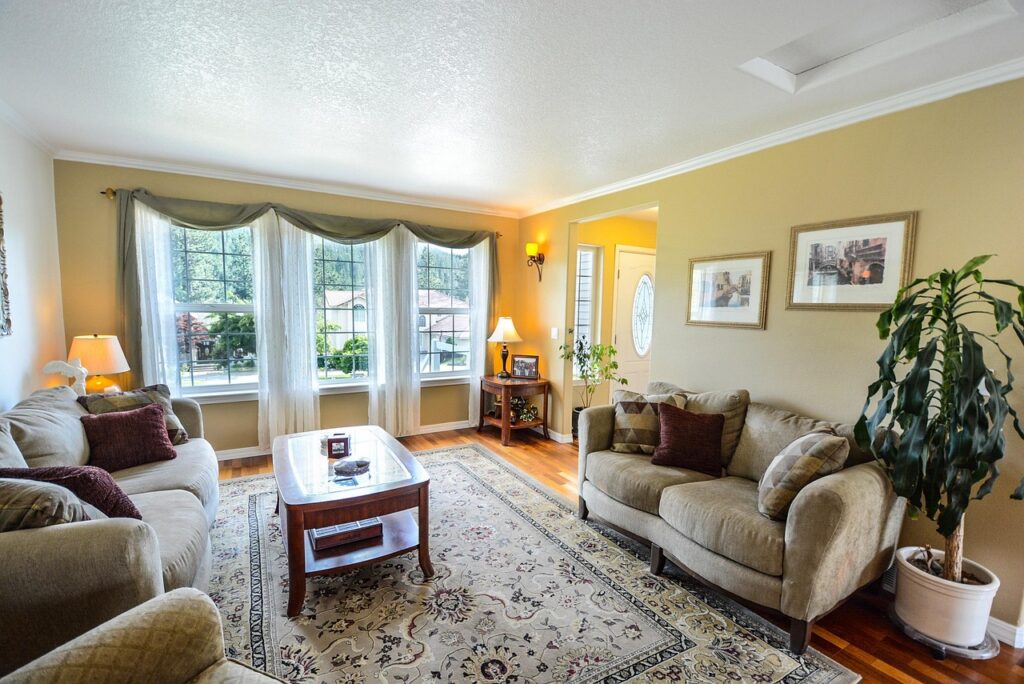
Walk into any flooring aisle and you’ll find dozens of products claiming a “wood look,” which makes it surprisingly hard to know what counts as real hardwood. The distinction matters because it affects price, lifespan, resale value, and how you care for the floor. This guide cuts through the marketing, shows you how to tell genuine wood from convincing imitations, and covers species, finishes, costs, maintenance, and refinishing so you can buy with clear eyes.
- What “Real Hardwood” Actually Means
- Solid vs. Engineered Hardwood
- How to Tell Real Hardwood From Look-Alikes
- Popular Hardwood Species
- Finishes and Their Trade-Offs
- Pros and Cons of Real Hardwood
- What Real Hardwood Costs
- Caring for and Refinishing Your Floors
- Where Real Hardwood Works Best
- Final Thoughts
What “Real Hardwood” Actually Means
Real hardwood is flooring made from genuine wood, and it comes in two legitimate forms: solid and engineered. Solid hardwood is milled from a single piece of lumber, typically 3/4 inch thick. Engineered hardwood has a real-wood veneer bonded to a multi-ply plywood or HDF core, which gives it better dimensional stability against humidity.
Both are real wood. What is not real wood are look-alikes such as laminate and luxury vinyl plank, which print a wood image onto a synthetic surface. They can look great, but they are fundamentally different products.
Solid vs. Engineered Hardwood
Choosing between the two comes down to your subfloor and climate.
- Solid hardwood can be sanded and refinished many times, often 4 to 10 over its life, making it a multi-decade investment. It performs best on above-grade wood subfloors in climates without extreme humidity swings.
- Engineered hardwood resists expansion and contraction better, so it suits basements, concrete slabs, and humid regions. Its thinner veneer limits refinishing to once or twice, depending on wear-layer thickness.
If you want the longest possible lifespan and plan to stay in the home for decades, solid wins. If stability and versatility matter more, engineered is the smarter pick.
How to Tell Real Hardwood From Look-Alikes
Distinguishing genuine wood from laminate or LVP is easier than you think once you know what to check.
- Look at the edge: Real wood shows continuous grain through the thickness; laminate reveals a brown or gray fiberboard core.
- Check for grain repetition: Printed floors repeat the same plank image every several boards. Real wood never repeats.
- Feel the texture: On real wood, the grain texture aligns with the visual grain. On many fakes, embossing is generic and does not match the printed pattern.
- Tap and listen: Solid wood sounds warmer and more solid; hollow synthetics can sound tinny over a pad.
- Read the spec sheet: Terms like “wood-look,” “laminate,” “WPC,” or “SPC” mean it is not real hardwood.
Popular Hardwood Species
Species affects hardness, color, and price. Hardness is measured on the Janka scale, where higher numbers resist dents better.
- Red and white oak: The classic choices, durable and widely available, taking stain beautifully.
- Hickory: Very hard and dramatic in grain, great for busy households.
- Maple: Hard and smooth-grained, popular for a clean, modern look.
- Walnut: Rich and dark, but softer, so it dents more easily.
- Exotics like Brazilian cherry: Extremely hard and richly colored, often at a premium price.
Finishes and Their Trade-Offs
The finish protects the wood and sets the look. Prefinished floors arrive sealed from the factory with durable aluminum-oxide coatings and install faster. Site-finished floors are sanded and sealed in your home, allowing seamless custom stain matching but adding days and dust to the project.
Surface sheen matters too. Matte and satin finishes hide scratches and dust better than high-gloss, which is why they dominate modern installs. Oil finishes give a natural, low-sheen look that is easy to spot-repair, while polyurethane offers a tougher, more water-resistant film.
Pros and Cons of Real Hardwood
Genuine wood earns its reputation, but it is not flawless.
Pros
- Adds lasting resale value buyers recognize and want.
- Can be refinished to erase years of wear rather than being replaced.
- Offers warmth, character, and natural variation no print can fully match.
Cons
- Higher upfront cost than laminate or vinyl.
- Sensitive to moisture, so it is a poor choice for bathrooms and wet areas.
- Can dent, scratch, and react to humidity swings if not maintained.
What Real Hardwood Costs
Budget is often the deciding factor. Installed real hardwood typically falls in the range of $8 to $18 per square foot, including material and labor. Common domestic species like oak sit toward the lower and middle of that band, while exotics, wide planks, and intricate patterns push toward the top. Prefinished material usually costs less to install than site-finished, since you skip days of sanding and sealing labor.
Order roughly 5 to 10 percent extra to cover cuts, defects, and future repairs, and keep a few unopened boxes in case you ever need to patch a section.
Caring for and Refinishing Your Floors
Real hardwood rewards simple, consistent care. Sweep or vacuum regularly to keep grit from scratching the finish, and clean with a barely damp mop using a cleaner made for wood. Avoid steam mops and standing water, which can swell boards. Place felt pads under furniture legs and rugs in high-traffic spots.
The great advantage of real wood is renewal. When the finish dulls or scratches accumulate, a full sand-and-refinish can make decades-old floors look new again. Solid hardwood handles this many times; engineered handles it once or twice depending on its wear layer. A lighter “screen and recoat” can refresh the surface without a full sanding when wear is minor.
Where Real Hardwood Works Best
Placement is as important as product. Real wood shines in living rooms, dining rooms, bedrooms, hallways, and home offices, where foot traffic is steady but moisture is low. These spaces let the floor’s warmth and grain take center stage without the constant water exposure that wood dislikes.
Avoid solid hardwood in full bathrooms, laundry rooms, and entryways that catch rain and snow. In those zones, splashes and humidity swings invite cupping and gaps over time. If you love the wood look in a bathroom or basement, engineered hardwood with a moisture-tolerant core is the safer route, and a quality wood-look tile or vinyl can stand in where genuine wood simply will not last. Matching the right product to the right room is the single biggest factor in how long your floor stays beautiful.
Final Thoughts
Real hardwood remains one of the few flooring choices that can outlast the home it sits in. By understanding the difference between solid, engineered, and synthetic look-alikes, you can shop confidently, match the right species and finish to your lifestyle, and protect your investment with smart care. Pay a bit more upfront, maintain it well, and a genuine wood floor will pay you back in beauty and resale value for generations.
Prefer to explore on your own?
See how new flooring looks in your actual room in seconds — free, no signup.
Try the free Floor Studio →

