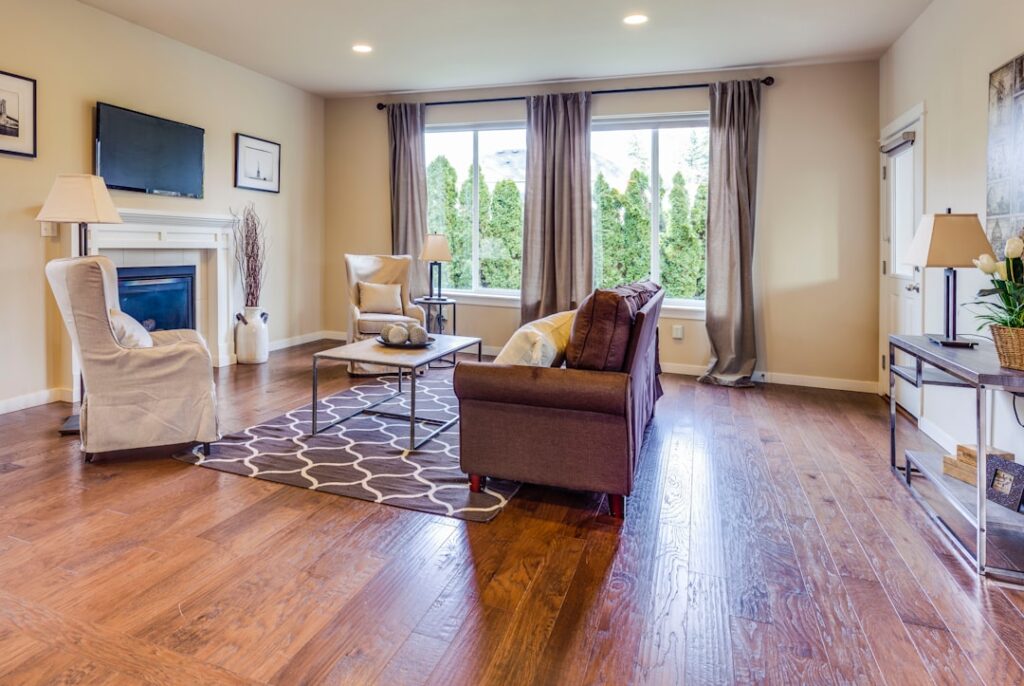
The narrow 2 1/4-inch oak strips that defined 20th-century floors have quietly given way to something broader and calmer underfoot. Wide plank engineered hardwood flooring uses boards 5 inches wide and up, layered over a dimensionally stable plywood core, to deliver the open, high-end look designers love without the seasonal cupping that plagues wide solid wood. If you want fewer seams, a more contemporary feel, and a floor that behaves over concrete or radiant heat, this is the category to understand. Here is how the widths, wear layers, cores, costs, and installation really work.
- What Counts as Wide Plank?
- Why Engineered Wins at Wide Widths
- Wear Layer: The Number That Matters Most
- Species, Grain, and Finish
- What Wide Plank Engineered Hardwood Costs
- Installation Methods
- Subfloor Prep and Acclimation
- Radiant Heat and Basement Use
- Maintenance and Longevity
- Frequently Asked Questions
What Counts as Wide Plank?
The industry loosely defines wide plank as any board 5 inches or wider. In practice you will see three tiers: 5 to 6 inches, which reads as a modern standard; 7 to 8 inches, the sweet spot for that spacious, magazine-ready look; and 9 inches and beyond, which makes a real architectural statement and carries a premium price. Length matters too. Better wide-plank lines run boards 6, 7, even 8 feet long, and mixed-length cartons let you avoid a choppy, short-seam appearance.
Wider and longer boards show off the wood grain and minimize the number of joints across a room, which is exactly why they feel so calm. The trade-off is that wide boards magnify any subfloor unevenness, so flatness prep becomes more important than with narrow strips.
Why Engineered Wins at Wide Widths
Solid hardwood expands and contracts across its width with humidity. At 2 1/4 inches that movement is trivial; at 7 or 8 inches it becomes visible cupping and gapping. Engineered construction solves this by bonding a real hardwood wear layer to a multi-ply plywood or HDF core whose cross-laminated grain resists movement in every direction. That is what makes wide plank practical and why nearly all wide-plank floors sold today are engineered.
Engineered planks also handle environments solid wood cannot. They install below grade, over concrete slabs, and over hydronic radiant heat, none of which solid hardwood tolerates well.
Wear Layer: The Number That Matters Most
The wear layer is the slice of genuine hardwood on top, and its thickness determines how long the floor lasts and how many times you can refinish it.
- 0.6 mm to 1 mm: Entry-level. Cannot be sanded; treat as wear-and-replace. Found on the cheapest imports.
- 2 mm: Mid-range. Good for one light sand-and-refinish over its life.
- 3 mm: Premium. Refinish once or twice, comparable real-wood surface to many solid floors.
- 4 mm to 6 mm: Top tier. Refinish two or three times, 40 to 80 years of realistic service.
For wide plank you are already investing in the look, so do not undercut it with a paper-thin veneer. A 2 mm wear layer is a sensible floor for the value tier; 3 mm or thicker is the smart long-term buy.
Species, Grain, and Finish
White oak dominates wide plank for good reason: it is hard at 1,360 on the Janka scale, stable, and its tight grain suits both light Scandinavian and rich smoked finishes. European oak is prized for wider, longer boards and a slightly more open grain. You will also find hickory for durability, walnut for dark warmth, and maple for a clean pale look.
Finishes range from UV-cured aluminum-oxide urethane, the toughest and lowest-maintenance option, to matte hardwax oils that show the wood’s texture and can be spot-repaired. Wire-brushed and hand-scraped textures hide scratches and dents better, which is worth considering in homes with dogs or kids.
What Wide Plank Engineered Hardwood Costs
Prices span a wide range depending on wear layer, species, and origin.
- Value 5 to 6 inch, 2 mm wear layer: $3.50 to $6 per square foot for material.
- Mid-range 7 inch European oak, 3 mm wear layer: $6 to $10 per square foot.
- Premium 8 inch or wider, 4 mm wear layer, designer finishes: $10 to $16 per square foot.
- Ultra-premium reclaimed or extra-long planks: $16 to $25 and up per square foot.
Installation labor typically adds $3 to $8 per square foot depending on method and subfloor. A 300-square-foot living room in mid-range 7-inch white oak commonly totals $4,000 to $6,500 installed. Order 7 to 10 percent extra for cutting waste and future repairs.
Installation Methods
Glue-Down
The preferred method for wide plank, especially over concrete. A full-spread urethane adhesive bonds every board flat, eliminating hollow spots and the slight movement that makes wide floating floors feel loose. It is the quietest, most solid-feeling install and the top choice for radiant heat.
Floating Click-Lock
Fast and DIY-friendly, floating boards click together over an underlayment pad without adhesive. It works, but at widths above 7 inches a floating floor can feel slightly hollow and is more prone to edge movement. Use a quality pad and keep the subfloor dead flat.
Nail or Staple-Down
An option over plywood subfloors for thicker engineered planks, though many wide-plank makers actually recommend glue for the flattest result. Never nail directly over concrete.
Subfloor Prep and Acclimation
Flatness is everything with wide boards. Bring the subfloor to within 3/16 inch over 10 feet, and closer for glue-down. Test concrete moisture and stay under the manufacturer’s threshold. Acclimate boxes in the room for the time the maker specifies, usually 48 hours or more, and always leave a 3/8-inch to 1/2-inch expansion gap at every wall and fixed object, since even engineered wood moves a little.
Radiant Heat and Basement Use
One of the strongest arguments for wide plank engineered hardwood is where it can go. Over hydronic radiant heat, a glued-down engineered floor spreads warmth evenly and stays dimensionally stable as long as you follow the maker’s temperature limits, typically keeping the surface below 82 degrees Fahrenheit and raising the water temperature gradually at the start of the season. Solid wood simply cannot do this reliably. Below grade, engineered planks handle the higher humidity of a finished basement far better than solid boards, provided you test the slab for moisture, install the specified vapor barrier, and run a dehumidifier to hold indoor relative humidity in the target range.
Maintenance and Longevity
Dust-mop regularly, wipe spills promptly, and clean with a pH-neutral hardwood cleaner rather than water and vinegar. Felt pads under furniture and walk-off mats at entries prevent most damage, and area rugs in high-traffic runways cut down on abrasion from grit. With a 3 mm or thicker wear layer, expect 30 to 50 years of service and the ability to refinish when the finish wears rather than replacing the whole floor. A wire-brushed or matte oil finish also lets you spot-repair scuffs without sanding the entire room. Keep indoor humidity between 35 and 55 percent year-round for the most stable results, and use a humidifier in winter if your climate runs dry.
Frequently Asked Questions
Is wide plank engineered hardwood more expensive than narrow?
Yes, generally. Wider and longer boards yield less usable material per log and are milled to tighter tolerances, so expect to pay 20 to 40 percent more than comparable narrow strips.
Does wide plank engineered flooring gap in winter?
Far less than solid wood, but a little seasonal movement is normal. Maintaining indoor humidity around 35 to 55 percent and leaving proper expansion gaps keeps gapping to a minimum.
Can I install wide plank over concrete?
Yes. That is one of engineered wood’s biggest advantages. Glue it down over a moisture-tested slab with the appropriate adhesive, and add a moisture barrier if the product calls for one.
What wear layer should I look for?
Aim for at least 2 mm, and choose 3 mm or thicker if you want the floor to be refinishable and last several decades. Avoid sub-1 mm veneers for a wide-plank investment.
Is glue-down or floating better for wide planks?
Glue-down is generally better for wide plank because it locks every board flat, feels more solid, and avoids the hollow sound that wide floating floors can develop.
Wide plank engineered hardwood flooring gives you the sweeping, refined look of a bespoke wood floor with the real-world stability to install it anywhere in the house. Prioritize a thick wear layer, insist on a flat subfloor, glue it down over concrete, and you will have a floor that anchors your rooms for decades.
Prefer to explore on your own?
See how new flooring looks in your actual room in seconds — free, no signup.
Try the free Floor Studio →