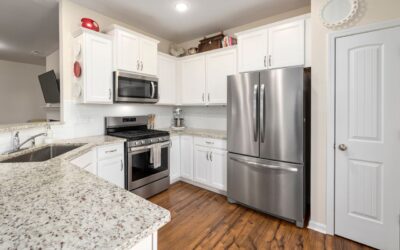
The single feature that makes a kitchen look custom and built-in, rather than thrown together, is a refrigerator that sits flush with the surrounding cabinets and counters. The dimensions of counter depth refrigerator models are specifically engineered to align with standard 24-inch cabinet depth, so the fridge body does not jut awkwardly into the room. Understanding these measurements before you buy saves you from the all-too-common mistake of ordering a unit that does not fit the space or the look you want.
Having sized appliances into dozens of kitchen layouts, I can tell you the depth number is where most homeowners get confused. Here is exactly what those dimensions are and how to measure your space correctly.
- What Counter Depth Actually Means
- Typical Depth Measurements
- Standard Width Dimensions
- Height Considerations
- How to Measure Your Space Correctly
- Counter Depth vs Built-In and Standard Models
- Capacity Trade-Offs to Expect
- Is a Counter Depth Refrigerator Right for You?
- Counter Size Fridge or Counter Length Fridge: What Shoppers Usually Mean
What Counter Depth Actually Means
Counter depth refers to how far the refrigerator extends from the wall. A standard refrigerator is typically 30 to 36 inches deep and sticks out several inches past your countertops. A counter-depth model is built shallower, usually 24 to 30 inches deep including the doors and handles, so the body sits roughly even with your 25-inch-deep countertops.
The result is a clean, integrated look where the doors and handles project only slightly past the counter edge. You trade some interior storage volume for that streamlined appearance, which is the core compromise of the counter-depth design.
Typical Depth Measurements
Depth is the defining dimension, so it deserves the closest attention. Most counter-depth refrigerators break down like this:
- Cabinet/body depth: 23 to 27 inches, excluding doors.
- Total depth with doors: 28 to 31 inches including the door panels.
- Total depth with handles: 30 to 34 inches including protruding handles.
When manufacturers advertise “counter depth,” they are usually referencing the cabinet depth that aligns with your counters, while doors and handles still project a few inches forward. Always check the spec for “depth with handles” to know the true footprint in your kitchen.
Standard Width Dimensions
Width varies most by style and is where capacity is gained or lost. Counter-depth refrigerators come in the same general width range as standard models, but the popular configurations cluster around predictable sizes:
- French door models: Typically 35 to 36 inches wide, the most common counter-depth choice.
- Side-by-side models: Generally 35 to 36 inches wide.
- Compact and apartment units: 24 to 30 inches wide for smaller kitchens.
- Wide built-in style: 42 to 48 inches for larger luxury kitchens.
The 36-inch width is the default for most American kitchens, so cabinet openings are commonly framed for it. Measure your opening width before assuming any unit will slot in.
Height Considerations
Most counter-depth refrigerators stand 67 to 71 inches tall, with many landing right around 70 inches. Some taller built-in and column-style models reach 72 inches or more. The height matters mainly for clearance under upper cabinets or a soffit.
Leave at least an inch of clearance above the unit for airflow and to make installation and removal possible. If you have cabinetry above the fridge opening, measure from the floor to the bottom of that cabinet and compare it against the unit’s height plus that clearance allowance before purchasing.
How to Measure Your Space Correctly
Before you shop, measure the opening in three dimensions and add the right clearances. Measure the width between the cabinets or walls at the narrowest point, the height from the floor to any overhead obstruction, and the depth from the back wall to the front edge of your counter.
Then add breathing room: about half an inch to an inch on each side for width, an inch on top for airflow, and an inch or two at the back for power cord and water line connections. Do not forget to confirm the path to the kitchen; measure doorways and hallways so the refrigerator can physically get into the room. A unit that fits the opening but not the front door is a costly oversight.
Counter Depth vs Built-In and Standard Models
It helps to know where counter depth sits among the alternatives. Standard-depth refrigerators are the deepest, most affordable, and highest-capacity option, but they protrude four to six inches past your counters. Counter-depth models split the difference, aligning roughly with the counter while costing more and holding a bit less.
True built-in refrigerators go a step further, sitting completely flush and even accepting cabinet-front panels for a fully integrated look. They are typically 24 inches deep, taller, and considerably more expensive, often $7,000 and up. For most homeowners, a counter-depth freestanding unit delivers 90 percent of the built-in look at a fraction of the price, which is why it has become the popular middle path.
Capacity Trade-Offs to Expect
The shallower body of a counter-depth fridge means less cubic footage inside. A standard-depth French door model might offer 25 to 27 cubic feet, while a counter-depth version of the same width often lands around 21 to 23 cubic feet. That difference of a few cubic feet translates to roughly one to two grocery bags of storage.
Manufacturers compensate cleverly by going wider or taller, and by designing more efficient interior layouts with flexible shelving and slim door bins. If maximum storage is critical for a large household, weigh that lost capacity against the streamlined look. For many families, the trade is well worth it; for a household that buys in bulk, a standard-depth unit may serve better despite the protrusion.
Is a Counter Depth Refrigerator Right for You?
The decision comes down to looks versus capacity. Counter-depth models deliver that high-end, built-in appearance and keep walkways clear in tight kitchens, but they hold roughly 15 to 25 percent less food than a comparable standard-depth fridge. Counter-depth units also tend to run a few hundred dollars more for the same width.
For open-concept kitchens where the refrigerator is on display, or for galley kitchens where a protruding fridge blocks traffic, the streamlined look is worth it. Once you know the dimensions of counter depth refrigerator models and measure your space carefully, you can choose with confidence and get the seamless, integrated kitchen most homeowners are after.
Counter Size Fridge or Counter Length Fridge: What Shoppers Usually Mean
A search for a counter length fridge or a counter size fridge almost always means a counter-depth refrigerator, a unit whose cabinet lines up with the front of standard 24-inch base cabinets. A smaller group of shoppers actually wants an undercounter fridge that fits beneath the countertop. The two are very different sizes, so it pays to know which one the space calls for.
Counter depth versus undercounter
A counter-depth fridge is a full-height appliance, usually 67 to 71 inches tall, with a body depth of 23 to 27 inches so it sits roughly flush with the counter edge. An undercounter fridge is a short appliance built to slide beneath the countertop, typically about 34 inches tall and 24 inches deep, and most often 15 or 24 inches wide. Undercounter units suit wet bars, kitchen islands and beverage stations, not main food storage.
Common counter-depth sizes by width
Width is the number that most often decides which models fit an existing cabinet opening. The figures in the table are general ranges; always confirm the depth with doors and handles on the model’s own spec sheet.
| Opening width | Typical style | Body depth | Typical capacity |
|---|---|---|---|
| 24 inches | Compact or apartment top-freezer | 23 to 27 inches | About 10 to 13 cubic feet |
| 30 inches | Top-freezer, bottom-freezer or narrow French door | 23 to 27 inches | About 14 to 18 cubic feet |
| 33 inches | Bottom-freezer or French door | 23 to 27 inches | About 16 to 20 cubic feet |
| 36 inches | French door or side-by-side | 23 to 27 inches | About 20 to 23 cubic feet |
Picking the right one for the space
- If the opening runs from floor to upper cabinets, a counter-depth unit is the right search.
- If the opening sits under the countertop, measure height from floor to the underside of the counter and look for undercounter models.
- For a 36-inch opening in a busy kitchen, the larger French door and side-by-side counter-depth models give the most usable space.
Undercounter models that vent from the front can be built in tightly, while some freestanding compact fridges need side and rear airflow, so check the installation clearances before sliding one into a cabinet run.