
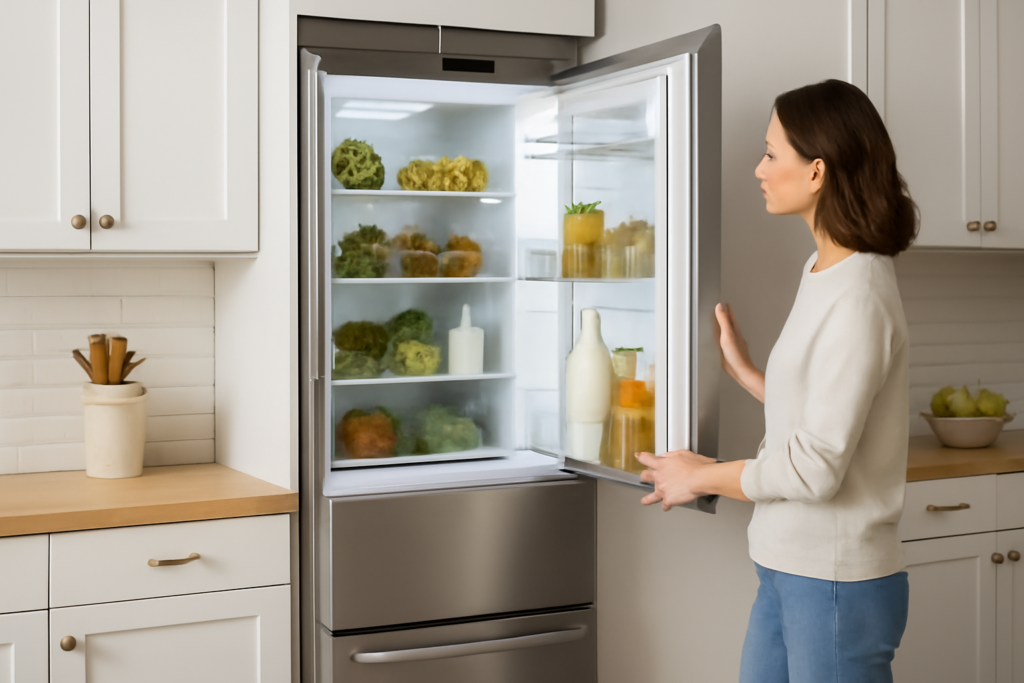
A Bosch counter depth refrigerator is what people buy when they want that flush, built-in look without paying $10,000 for a true built-in. Bosch built its reputation on dishwashers, but their refrigeration has become a genuine contender in the premium mainstream tier, and I get asked about them constantly. Here is the honest rundown from someone who works on them.
- What “Counter Depth” Actually Means
- The Series Breakdown
- Capacity: The Counter-Depth Trade-Off
- Features Worth Paying For
- Reliability: The Tech’s View
- Installation Notes
- Noise: The Underrated Bosch Strength
- Finishes and Handles
- Warranty and What It Covers
- How It Compares
- Maintenance for a Long Life
- Bottom Line
What “Counter Depth” Actually Means
A standard-depth fridge sticks out 6 or more inches past your countertops and cabinet fronts. A counter-depth unit is built shallower — roughly 24 to 30 inches deep including doors and handles — so the box sits nearly flush with a 24-inch base cabinet. You trade interior volume for a cleaner sightline and easier traffic flow. Bosch counter-depth models generally run 21 to 26 inches of cabinet depth, and because the German design philosophy prioritizes the fitted look, they photograph and install beautifully in a modern kitchen.
The Series Breakdown
Bosch sorts refrigeration into numbered series, and knowing them saves you money.
- 500 Series: The entry into Bosch counter depth. French door and bottom-freezer layouts, internal or dispensing ice, recessed handles. Typically $2,500 to $3,200.
- 800 Series: The sweet spot. Better crisper humidity control, a dual-compressor “Dual Compressor Cooling” system on some models, flat panels, and the through-door dispenser done well. Usually $3,200 to $4,200.
- Benchmark: The top tier, closest to built-in feel, with the most refined interiors and quietest operation. $4,000 and up.
The feature I actually steer people toward is the dual-compressor or dual-evaporator system on the 800 Series and Benchmark. Two separate cooling circuits keep the fridge and freezer air isolated, so onion and leftover odors do not migrate to your ice cream, and humidity stays higher in the fresh-food side. Cheaper single-evaporator fridges share air between compartments — Bosch’s split keeps produce crisp noticeably longer.
Capacity: The Counter-Depth Trade-Off
Do not expect a warehouse. A 36-inch Bosch counter-depth French door runs about 20 to 21 cubic feet of usable space, versus 25 to 27 in a standard-depth competitor. For a two-to-four person household that shops weekly, 20 cubic feet is comfortable. If you buy in bulk or feed a large family, measure your current groceries against that number honestly before committing. Bosch offsets the loss with smart shelving, full-extension freezer drawers, and a flat-back interior that wastes less space than boxes with bulging rear ductwork.
Features Worth Paying For
- FarmFresh System: Bosch’s bundle of humidity-controlled crispers, a dedicated air filter, and (on higher models) a produce-preservation liner. It genuinely extends produce life by several days versus a bargain fridge.
- Internal water dispenser: Many Bosch counter-depth models put the water dispenser inside the door rather than through it, preserving the clean exterior. Purists love it; ice-on-demand folks miss the front dispenser.
- Home Connect Wi-Fi: Door-ajar alerts and temperature control from your phone. Useful for the door alarm alone; the rest is optional.
- VitaFresh drawer: A sub-compartment held near 32°F for meat and fish, extending freshness meaningfully.
Reliability: The Tech’s View
Bosch refrigeration is solidly built — thick doors, quiet compressors rated around 42 decibels, tight German tolerances. The catch is parts and service. Bosch is a European-parented brand, and while US parts availability has improved, it is not Whirlpool-deep. When a specialty control board or a proprietary dual-compressor component fails out of warranty, expect a longer wait and a higher part price than a domestic brand. Find out before you buy whether you have a Bosch-authorized servicer within reasonable distance — that single fact matters more than any spec.
The good news: the failure rate is low. The most common calls I get on these are water dispenser and ice maker issues, same as every brand, plus the occasional door-seal replacement. The sealed refrigeration system rarely fails, which is what you want in a premium unit. Any sealed-system or refrigerant work, of course, is EPA-608 territory — not a DIY job.
Installation Notes
Counter-depth means tight, so measure the cabinet cutout precisely, including the depth of your countertop overhang. Bosch specs a minimum clearance at the top and sides for ventilation and for the doors to swing past 90 degrees — skimp on that and the crisper drawers will not clear the adjacent cabinet. These units need a level install and a dedicated 120-volt grounded outlet. If you are adding a water line for the ice maker, run a proper 1/4-inch compression tap, not a saddle valve.
Noise: The Underrated Bosch Strength
If your kitchen opens onto a living space — as most modern floor plans do — refrigerator noise matters more than the spec sheet suggests. Bosch compressors are among the quietest in the mainstream market, many rated around 42 decibels, which is quieter than a soft library murmur. The variable-speed inverter compressors on the 800 Series and Benchmark ramp up and down gently instead of the loud on-off cycling of a conventional compressor, so you rarely hear a hard kick-on. For an open-concept kitchen, this is a genuine daily-quality-of-life feature that cheaper brands cannot match. The dual-compressor models add a second compressor but are still engineered to stay quiet.
Finishes and Handles
Bosch counter-depth models come in a few finish families that affect both looks and upkeep. Standard stainless is the classic; Bosch’s fingerprint-resistant stainless coating stays visibly cleaner on a busy kitchen door and is worth the small upcharge if you have kids. Black stainless suits darker cabinetry but shows scratches more readily. Handle style splits between recessed pocket handles for the most seamless integrated look and traditional bar handles for easier grip — the pocket handles photograph beautifully but can be harder for arthritic hands. On panel-ready Benchmark units, you attach custom cabinet fronts for a fully hidden appliance, the closest you get to a built-in look at this price.
Warranty and What It Covers
Bosch backs its refrigeration with a one-year full warranty on parts and labor, with extended coverage on the sealed refrigeration system (compressor and related components) typically running to five years parts, and longer on some models. Read the terms, because the sealed-system coverage is what protects you from the most expensive possible failure. The gap in coverage — years two through the sealed-system limit — is where an out-of-warranty control board or ice maker becomes your expense, which circles back to why confirming local authorized service before you buy matters so much on a European-brand appliance.
How It Compares
Against a KitchenAid or Café counter-depth in the same $3,000 to $4,000 range, Bosch generally wins on quietness, build feel, and produce preservation, and loses on capacity and US parts availability. Against a true built-in Sub-Zero, the Bosch is a fraction of the price and 80 percent of the look. For most buyers who want European styling and a fitted kitchen without a five-figure invoice, it is the smart middle path.
Maintenance for a Long Life
Bosch counter-depth units reward simple upkeep. Vacuum the condenser coils behind the lower rear or under the grille twice a year — dust-choked coils are the leading cause of poor cooling and higher energy use on any brand. Change the water filter every six months and flush several gallons after each swap. Wipe the door gaskets and check they seat fully; a hardened or torn seal lets warm, humid air in and makes the compressor overwork, which shows up as frost, condensation, and a rising electric bill. Keep the recommended top and side ventilation clearance clear of clutter so the compressor can shed heat. Do these four things and a Bosch will run 12 to 15 years without drama.
Bottom Line
A Bosch counter depth refrigerator is a strong buy if you value a quiet, clean-looking, produce-friendly fridge and you have confirmed local service. Step up to the 800 Series for the dual cooling system — that is the feature that justifies the badge. Accept the capacity trade-off going in, keep the condenser coils clean, change the water filter every six months, and you will have a refrigerator that looks built-in and runs for 12-plus years without drama.


