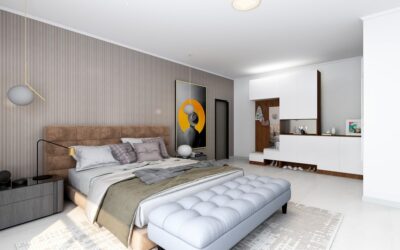
The fastest way to spot a DIY-decorated room is the giveaways: art hung too high, lampshades all the wrong scale, an accent wall painted with a color picked off a tiny chip. Good diy home decor ideas close that gap by borrowing the small details professional designers obsess over — proper proportions, layered lighting, real materials, and a few hours of patience instead of one hurried weekend. The projects below cost between $40 and $400 each and most can be finished in a Saturday.
Wall Treatments That Transform a Room
A blank wall is the single biggest opportunity in most rooms. Three treatments that consistently raise the perceived quality of a space:
- Board-and-batten accent wall: primed 1×3 MDF strips on a painted wall, $90 to $180 in materials for a 12 ft wall, six to eight hours of work
- Picture frame molding: rectangles of half-round or chair rail trim creating panels below a chair rail, $120 to $220 per wall, looks like 1920s craftsmanship
- Limewash or Roman clay paint: Bauwerk, Portola, or Roman Clay applied with a brush, $90 to $150 per gallon, gives walls a soft mineral texture that flat paint cannot replicate
Tape your trim layouts on the wall first using painter’s tape. Live with the layout for 48 hours before nailing anything. Most failed paneling jobs are poorly proportioned, not poorly built.
Lighting Upgrades That Cost Under $200
Builder-grade flush mounts and boob lights drag down nearly every room they sit in. Three swaps that punch above their weight:
- Replace the dining room flush mount with a 24-inch linen drum shade pendant (CB2 Croft, West Elm Mid-Century, or Lamps Plus pendants) — $120 to $250
- Add a plug-in sconce on each side of a bed (Mitzi or Hudson Valley plug-ins) — $90 to $180 each, no electrician needed
- Swap warm white bulbs everywhere for 2700K dimmable LED — $4 each at any home center, instantly reads more expensive
Layered lighting is what designers do that DIYers skip. Aim for at least three light sources in any room: overhead, mid-height (sconce or table lamp), and low (floor lamp). All on dimmers wherever possible.
Gallery Walls That Look Curated
Bad gallery walls cluster too many small pieces, mix every frame style, and hang at the wrong height. The fixes are mechanical:
- Pick one frame finish (matte black, walnut, or natural maple) for 80 percent of the pieces
- Use one or two larger anchor pieces (16 in by 20 in or larger) and surround with smaller works
- Keep 2 to 3 inches of consistent gap between frames
- Center the cluster around eye level — 57 to 60 inches from the floor to the visual center
Lay the entire arrangement on the floor first. Trace each frame on craft paper, tape the paper templates to the wall, then drive nails through the paper. Tear the paper away and the layout is exact every time.
Furniture Flips That Actually Sell the Look
Painting a beat-up dresser is one of the highest-ROI DIY projects in a home. The shortcut that separates good flips from amateur ones:
- Sand to dull the finish — not bare wood, just enough to break the gloss
- Prime with a stain-blocking shellac primer like Zinsser BIN ($28 a quart) — non-negotiable on any oak or pine
- Two thin coats of self-leveling paint (Benjamin Moore Advance, Sherwin-Williams Emerald Urethane) applied with a microfiber 4 in roller
- Replace the original hardware — a pull or knob upgrade ($4 to $12 each) does as much visual work as the paint
Skip the chalk paint for furniture pieces that get used. It scratches and stains within months. Modern enamel paints give a furniture-grade finish that wears for years.
Textile Layering on a Budget
Hard surfaces dominate most American homes — wood floors, painted walls, glass coffee tables. Adding fabric softens rooms instantly. Cheap moves with real impact:
- One 8 ft by 10 ft natural-fiber rug under the main living room seating ($350 to $700 from Loloi or Surya)
- Heavyweight linen curtains floor-to-ceiling, hung 6 inches above the window frame and extended 12 inches past either side ($60 to $120 per panel)
- Two or three pillow covers in mixed textures and one solid Belgian linen sham layered on a sofa
- A throw blanket draped (not folded) across one arm of the sofa
Always go larger on rugs than feels right. A small rug floating in the middle of a living room shrinks the space; a large rug that catches the front legs of every piece of furniture grounds it.
Bookshelf and Shelf Styling
Floating shelves or a built-in bookcase are decorating hotspots. The pro formula:
- Fill 70 percent of each shelf with vertically stacked books — by color or by height
- Use the remaining 30 percent for objects: ceramics, framed art leaning, a small sculpture, plants
- Vary heights — a tall vase next to a short stack of books next to a medium-height object
- Leave breathing room — empty space on a shelf is a feature, not a problem
Source inexpensive ceramics from HomeGoods, T.J. Maxx, and Marshalls. Mix in one or two real vintage pieces from estate sales or Facebook Marketplace for character.
Quick Bathroom Refresh
Three weekend projects that turn a builder bathroom into a designed one:
- Swap the chrome towel bars and toilet paper holder for matte black or unlacquered brass ($90 to $160 for a full set)
- Replace the bath fan grille with a tile-able insert and tile a square panel above the shower (a Saturday and $80 in tile)
- Frame the existing builder mirror with a wood frame glued directly to the glass ($45 in materials)
The framed mirror trick alone makes most powder rooms feel custom, and it takes about 90 minutes from start to finish.
The Mistake to Avoid
The single most common mistake on DIY decor projects is doing too much in too many rooms. Pick one room, finish every project in it before moving on, and let the result give you confidence and momentum. The best diy home decor ideas in the world will not save a house where every room is half-done. Finish what you start, and the cumulative effect over six or twelve months will look like a designer worked on the place.