A pool without a deck means muddy feet, nowhere to set a towel, and a ladder that wobbles on uneven ground. Building a DIY small pool deck solves all three, and a modest 8-by-10 or 10-by-12 platform around an above-ground pool is genuinely within reach for a confident weekend builder. That said, a deck attached to or surrounding a pool carries real safety stakes, so this guide stays honest about what you can tackle yourself and where you should call a pro or check your local code.
Part of our Decks & Outdoor guide — explore the full guide →
Decide on Scope Before You Buy a Single Board
Be clear about what “small” means for your situation. A simple ground-level platform beside an above-ground pool is the most beginner-friendly project. A raised deck that wraps a tall above-ground pool, or any deck around an in-ground pool, involves higher framing, guardrails, and stairs, which pushes the job toward intermediate or professional territory.
Before anything else, contact your local building department. Many jurisdictions require a permit for decks over a certain height (often 30 inches above grade) and almost all require code-compliant barriers and gates around pools. Pool fencing and self-closing, self-latching gates are not optional in most areas; they are a legal and life-safety requirement.
After the flooring is sorted, the right furniture makes all the difference. A set of poolside lounge chairs and a gazebo for shade can turn a basic pool deck into something that actually feels like a backyard retreat.
We may earn a commission when you purchase through our links.
Choose the Right Materials
Your deck lives in a wet, splashy, sunny environment, so material choice matters more than for a typical patio deck.
- Pressure-treated lumber is the budget standard for framing and decking. Use lumber rated for ground contact where posts touch soil, and stainless or hot-dipped galvanized fasteners to resist corrosion from pool chemicals.
- Composite decking costs more up front but resists splinters, fading, and rot, and it stays more comfortable underfoot than some woods. It is a popular choice precisely because pool areas stay wet.
- Concrete footings or deck blocks support the frame. Precast deck blocks suit a low, freestanding platform; poured footings below the frost line are better for anything raised or attached.
Framing Basics for a Low Platform
For a freestanding ground-level platform, the basic sequence looks like this. Lay out and level your deck blocks or footings on a compacted, gravel base. Set pressure-treated beams across them, then attach joists, typically spaced 16 inches on center, with joist hangers. Square the frame by measuring corner to corner diagonally; the two diagonals should match.
Keep the frame from contacting the pool wall directly. Leave a small, consistent gap so the structure does not press against or abrade the pool liner or wall. Double-check that the whole platform is level and that every joist is fully supported; a bouncy or sagging frame is the number one giveaway of a rushed build.
Laying the Deck Boards
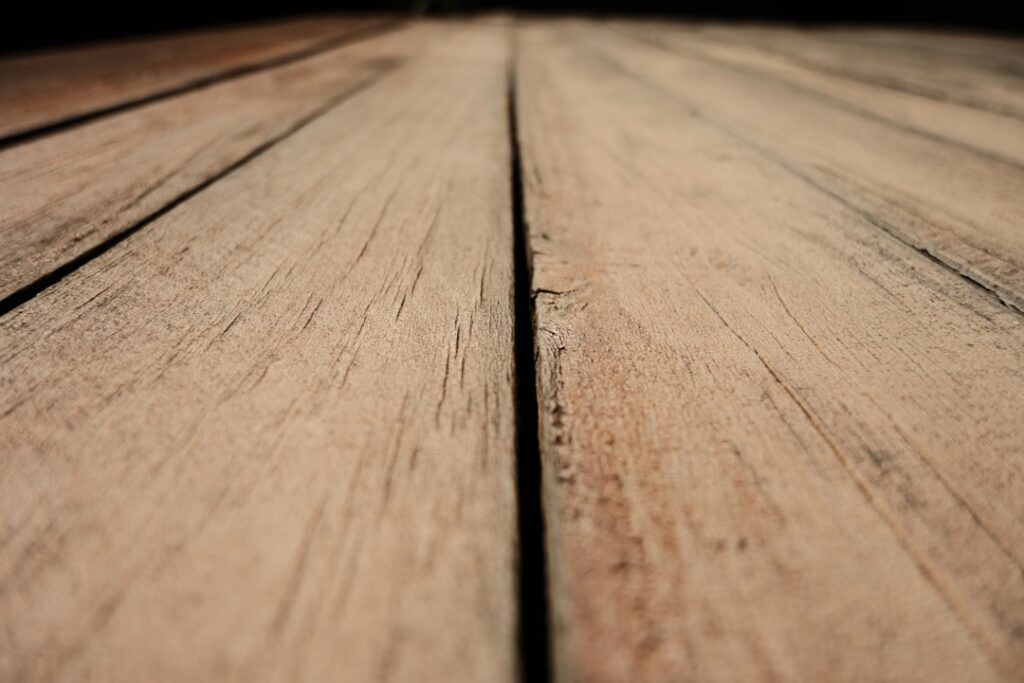
Run boards perpendicular to the joists and leave a gap of roughly 1/8 to 1/4 inch between them for drainage and expansion; this matters even more around a pool where water pools fast. Fasten with deck screws driven flush, two per joist crossing. Stagger end joints over joists and cut the final outer edge clean after the field is laid for a straight, professional border.
For a raised deck, this is where guardrails come in. Code typically requires guardrails at least 36 inches high with baluster gaps no wider than 4 inches so a small child cannot pass through. Do not skip this.
Make It Slip-Safe and Water-Smart
Wet feet plus smooth decking is a fall waiting to happen. Build slip resistance in from the start:
- Choose decking with a textured or grooved surface, or apply a slip-resistant deck finish rated for wet areas.
- Slope the platform very slightly (about 1/8 inch per foot) away from the pool and house so water drains off rather than sitting.
- Round over or sand sharp board edges where bare feet land.
- Add a non-slip strip on stair treads if your deck is raised.
Keep an eye on chemicals too. Splashed chlorinated water can accelerate corrosion on cheap fasteners and bleach untreated wood, which is why stainless or hot-dipped hardware earns its higher price here.
Stairs, Ladders, and the Pool Edge
If your deck meets an above-ground pool, give serious thought to how people get in and out. A gated stair or a removable ladder helps control access so children cannot climb up unsupervised. Any opening from the deck into the pool should be guarded by a barrier or gate that latches automatically. Treat the connection point between deck and pool as the highest-risk zone of the whole project.
Budget and Time Expectations
A simple ground-level platform built from pressure-treated lumber is the cheapest route, while composite materials and a raised, railed design cost considerably more. Most small platforms come together over a weekend or two for someone comfortable with a circular saw, drill, and level. Add time for permit approval, which can take days to weeks depending on your municipality.
Finishing and Maintenance
Once the structure is built, protecting it keeps your investment from rotting or graying out fast. Wood decking around a pool should be sealed or stained with a product rated for wet, high-UV environments, and it will need recoating every couple of years as the finish wears. Composite needs far less upkeep, just regular cleaning, which is part of why many pool owners choose it despite the higher price.
Keep up with simple maintenance throughout the season:
- Sweep off leaves and debris that trap moisture and promote slipperiness.
- Rinse away splashed pool chemicals so they do not break down the finish or corrode fasteners.
- Check for popped screws, soft spots, or loose boards a few times a year and fix them immediately.
- Reapply slip-resistant finish or strips when the surface starts to feel smooth.
A deck that is cleaned and resealed on schedule stays safer underfoot and lasts many more years than one left to weather on its own.
When to Call a Pro
Tackling a low freestanding platform yourself is reasonable. But hire a licensed contractor for a tall raised deck, any deck attached to your house (ledger flashing and attachment are common failure points), or any work around an in-ground pool where barrier requirements are strict. A DIY small pool deck is a rewarding project, but no deck is worth a collapse or a drowning hazard. Build within your skill level, follow your local code to the letter, and your pool area will be safer and far more usable for years.