The color you paint a pool deck does more than set a mood, it decides whether the surface is scorching or walkable on a July afternoon. Choosing the right pool deck paint colors means balancing heat reflection, dirt concealment, slip safety, and how the shade plays against your water, coping, and house. A gorgeous charcoal deck looks sharp in photos and then blisters bare feet by noon. Light, muted tones almost always win around water, but there’s real nuance in picking the exact shade and finish, so let’s walk through what actually matters.
Part of our Decks & Outdoor guide — explore the full guide →
- Why Color Temperature Matters Around Water
- The Best Colors for a Pool Deck
- Hiding Dirt and Wear
- Slip Resistance Is Part of the Color Decision
- Matching the Deck to Your Water and House
- Choosing the Right Product and Finish
- Prep and Longevity Tips
- Popular Color Combinations That Work
- Common Mistakes to Avoid
Why Color Temperature Matters Around Water
Dark colors absorb solar heat and can push a concrete surface 20 to 40 degrees hotter than the surrounding air. On a 95°F day, a dark gray or brown deck can easily exceed 130°F, hot enough to be genuinely painful on bare feet. Light colors reflect more sunlight and stay significantly cooler, which is why the classic pool deck palette runs pale: sandy tans, soft grays, off-whites, and light blues.
If you love a darker look, reserve it for shaded areas, borders, or accents rather than the main walking surface. Some manufacturers also offer “cool deck” coatings engineered with heat-reflective pigments and a textured surface that stays noticeably cooler than standard paint of the same color, worth the premium if your deck bakes in full sun.
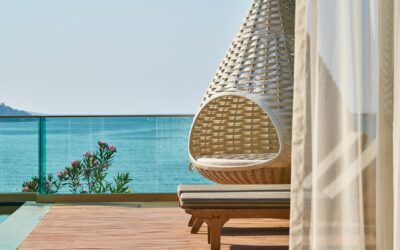
After the flooring is sorted, the right furniture makes all the difference. A set of poolside lounge chairs and a gazebo for shade can turn a basic pool deck into something that actually feels like a backyard retreat.
We may earn a commission when you purchase through our links.
The Best Colors for a Pool Deck
A handful of families consistently perform well around water. Here’s how they stack up:
- Sandy tan and beige: the most popular choice. It stays cool, hides dust and sunscreen smudges, and echoes a beach aesthetic. Pairs with almost any water color and house exterior.
- Soft gray: modern and clean, especially light-to-medium grays. Reads contemporary without absorbing as much heat as charcoal. Coordinates well with gray coping and travertine.
- Light blue and blue-gray: reinforces the water and feels cohesive, though very saturated blues can show wear. Muted, grayed blues age better than bright ones.
- Off-white and cream: the coolest underfoot, but shows every leaf and speck of dirt, so it demands more cleaning.
- Terracotta and warm clay: a Mediterranean look that hides dirt beautifully; runs warmer than tan but cooler than true brown.
Whatever family you choose, lean toward mid-to-light values. A color that looks tastefully muted on a chip will read lighter across a large sun-washed deck, which is exactly what you want here.
Hiding Dirt and Wear
Pool decks take abuse, wet footprints, sunscreen, leaves, pollen, and the occasional spilled drink. Medium tones with a slight speckle or texture hide this traffic far better than a flat, solid light color. A textured tan or a flecked gray coating disguises debris between cleanings, while a pure white deck advertises every smudge.
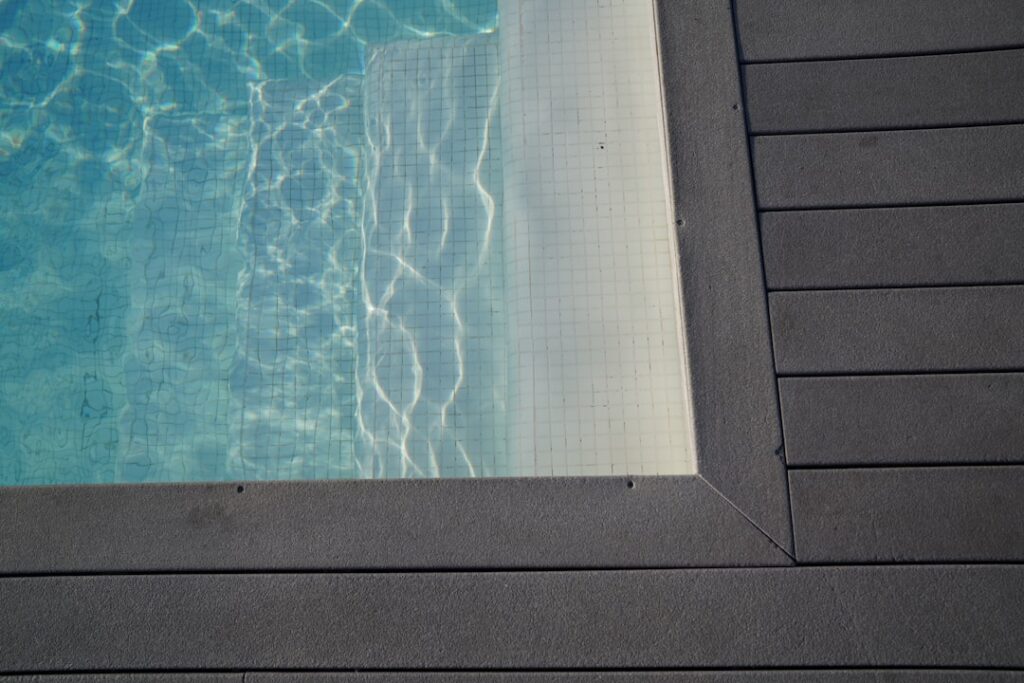
Consider a two-tone approach: a medium field color for the main deck and a lighter or contrasting band around the pool’s edge or steps. This isn’t just decorative, a contrasting border improves safety by visually marking the water’s edge, and it breaks up the surface so dirt is less obvious across the expanse.
Slip Resistance Is Part of the Color Decision
Around a pool, traction is non-negotiable. Many deck coatings come in either smooth or textured formulas, and the textured versions use fine aggregate to create grip when wet. Some paints let you add a slip-resistant additive, essentially a fine polymer or silica grit, that you mix in or broadcast onto the second coat. Choose a textured finish for any surface that stays wet, and remember that texture also affects how the color reads, matte and textured finishes look a shade lighter and less glossy than smooth ones.
Matching the Deck to Your Water and House
Great pool areas feel coordinated, not random. Start with the two fixed elements you can’t easily change: the water color (which is influenced by your pool’s interior finish) and your home’s exterior. A blue-plaster pool with a gray stone house pairs beautifully with a soft gray or tan deck. A pebble-finish pool that reads green or teal often looks best against warm sandy tones that keep the palette grounded.
Coping, the cap around the pool edge, is the third piece. Your deck color should complement the coping rather than match it exactly; a slight contrast between coping and deck adds definition and, again, helps mark the pool’s edge. When in doubt, pull your deck color a shade or two lighter or darker than the coping in the same undertone family.
Choosing the Right Product and Finish
Color is only half the equation, the coating type determines how long that color lasts. For concrete pool decks, acrylic concrete paints and elastomeric coatings are common and budget-friendly, running roughly $30 to $60 per gallon and covering about 100 to 150 square feet with textured products. For heavy sun and chlorine exposure, an acrylic-based deck coating formulated for pools resists fading and chemical splash better than standard porch paint.
Always choose a low-sheen or matte finish. Glossy coatings become dangerously slick when wet and throw harsh glare off the water. A satin-to-matte texture keeps footing secure and softens the color under bright sun. Plan on cleaning and etching the concrete, applying a masonry primer, and laying down two coats, and give each coat the full cure time listed on the label before anyone walks on it.
Prep and Longevity Tips
The paint job only lasts if the prep is right. Pressure-wash the concrete, repair cracks with a concrete patch, and etch the surface with a concrete etcher or muriatic solution so the coating bonds. Skipping etching is the number-one reason pool deck paint peels within a season. Let new concrete cure at least 28 days before painting, and never paint when rain is in the forecast within 24 hours.
Reapply a fresh topcoat every three to five years depending on sun exposure and traffic, and touch up high-wear zones like steps and the pool edge as needed. If you keep the field color light, the texture grippy, and the prep thorough, your chosen pool deck paint colors will stay cool, safe, and good-looking through many summers of use.
Popular Color Combinations That Work
Pulling a whole pool area together is easier when you borrow proven pairings rather than inventing from scratch. A few combinations consistently look polished and stay practical:
- Sandy tan deck with white or cream coping: the classic beach look, cool underfoot and forgiving of dirt, works with blue water and almost any house color.
- Soft gray deck with charcoal border: a modern, spa-like scheme where a darker band marks the pool edge without heating the main walking surface.
- Warm terracotta deck with tan accents: a Mediterranean feel that hides debris beautifully and complements stucco and clay-tile homes.
- Blue-gray deck with white trim: reinforces the water and reads crisp and coastal alongside a light-colored house.
Notice that each pairing keeps the large field color light-to-medium and reserves any darker tone for a narrow border or accent, so the surface stays cool while still getting the definition and contrast that make the space look designed rather than plain.
Common Mistakes to Avoid
The biggest error homeowners make is choosing a dark deck color for looks alone, then discovering it’s too hot to walk on by midday. Always weigh heat before beauty on the main surface, and save darker tones for shade or borders. The second common mistake is picking a glossy finish; it photographs well but turns slick when wet and throws blinding glare off the water, both safety hazards around a pool.
Skipping proper concrete prep is the third pitfall, and it’s the one that ruins otherwise good color choices. Paint applied over a slick, unetched, or dirty slab peels within a season no matter how expensive the product. Finally, don’t judge a color from a small chip: light bounces off water and pale concrete, so a shade that looks tasteful on a sample reads noticeably lighter across a sun-washed deck. Test a two-foot patch in full sun and check it at midday before you commit to gallons, that quick step prevents the most expensive redo of all.