If you have ever leaned your whole body weight into a regular drill, watched the bit smoke, and made almost no progress on a foundation wall, you already suspect the answer. Do you need a hammer drill for concrete depends on how many holes you are making, how hard the concrete is, and how big those holes need to be. For a single small anchor in soft slab, a standard drill with a masonry bit can limp through. For anything more, a hammer drill turns a 20-minute fight into a 30-second job.
Concrete is not like wood or drywall. It is a matrix of cement paste and aggregate, and drilling it is really about pulverizing that material rather than shearing it. That distinction drives every tool decision below. Understanding it will save you a burned-out drill, a fistful of dull bits, and a lot of frustration.
Regular Drill vs. Hammer Drill vs. Rotary Hammer
There are three tools people reach for, and they are not interchangeable. Knowing where each one stops being useful is the key to buying or renting the right thing.
Standard Drill/Driver
A standard cordless drill spins the bit and applies torque. That is perfect for wood, metal, and driving screws. On concrete it relies entirely on the sharp carbide tip scraping material away. It can produce a hole up to about 1/4 inch in soft, aged concrete or cinder block, but it is slow, it heats the bit quickly, and it will stall in hard aggregate. If you own only a drill/driver, expect 5 to 15 minutes per hole and a real risk of overheating the motor.
Hammer Drill
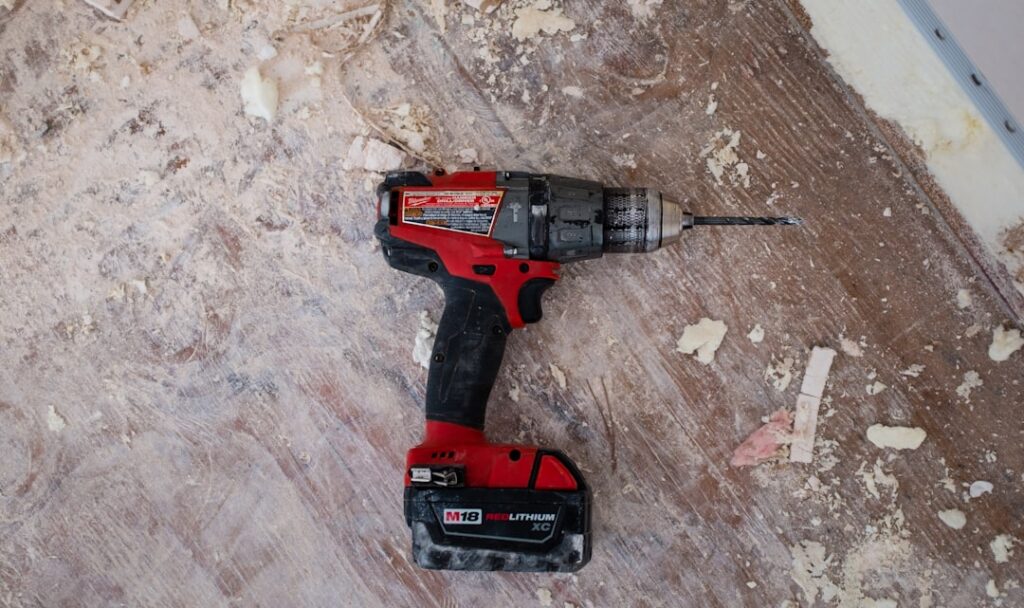
A hammer drill adds a rapid forward pounding action, typically 25,000 to 50,000 blows per minute (BPM), generated by two ridged clutch plates that click past each other. The bit spins and hammers at the same time, chipping the concrete as it rotates. This is the sweet spot for most homeowners: holes from 3/16 inch up to about 1/2 inch in poured concrete, brick, and block. A decent corded hammer drill runs $60 to $120; cordless models from DeWalt, Milwaukee, and Bosch run $130 to $250 as bare tools.
Rotary Hammer (SDS)
A rotary hammer uses a piston-driven mechanism instead of clutch plates, delivering far more energy per blow, often measured in joules (1 to 5 joules is common). It uses SDS-Plus or SDS-Max bits that slide and lock rather than clamping in a chuck. This is the pro tool for holes over 1/2 inch, for drilling dozens of holes, or for punching through 6 inches of cured foundation. Expect to pay $150 to $400, or rent one for $35 to $60 a day.
When a Regular Drill Is Actually Fine
You can skip the hammer drill in a handful of real scenarios. Be honest about which situation you are in before you decide.
- One or two small holes: Hanging a single bracket with a 1/4-inch plastic anchor in a garage slab is doable with a sharp masonry bit and patience.
- Soft masonry: Cinder block, mortar joints, and lightweight aerated concrete are much easier than structural poured concrete. A regular drill often handles these.
- Older, weathered concrete: Concrete from the 1950s or a crumbling walkway may have lost strength and drill more like sandstone.
- Pilot holes only: If you just need a shallow starter mark before switching to another method, a standard drill will scratch the surface.
Even in these cases, use light, steady pressure and pull the bit out every 10 to 15 seconds to clear dust and let the tip cool. Dip the bit in water occasionally to prevent the carbide from overheating and going dull.
When You Truly Need a Hammer Drill
Certain jobs will defeat a standard drill no matter how much muscle you add. Reach for a hammer drill or rotary hammer when any of the following is true:
- You are drilling into hard, modern poured concrete rated 3,000 PSI or higher.
- Holes need to be 3/8 inch or larger.
- You are setting concrete screws (Tapcons), wedge anchors, or sleeve anchors that require a precise, clean hole.
- You have more than three or four holes to make in one session.
- You hit dense aggregate or rebar and the standard drill simply stops advancing.
Mounting a TV bracket, installing a handrail, anchoring a fence post base, securing bottom plates for a basement wall, or hanging heavy shelving into a concrete wall all fall firmly in hammer-drill territory. Trying to force these with a drill/driver usually ends with a wandering hole, a stripped anchor, and a dead tool.
Choosing the Right Bits and Anchors
The tool is only half the equation. The bit and the anchor system matter just as much for a hole that holds.
Masonry Bits
Use carbide-tipped masonry bits for a hammer drill, and SDS-Plus bits for a rotary hammer. Do not use standard twist bits or wood bits; they will dull instantly. Match the bit diameter exactly to your anchor spec. A 1/4-inch Tapcon, for example, calls for a 3/16-inch bit, while a 3/16-inch Tapcon calls for a 5/32-inch bit. Read the anchor packaging; it always states the required bit size.
Drilling Depth
Drill about 1/4 to 1/2 inch deeper than the anchor length so debris has somewhere to sit. Use the depth stop on the tool, or wrap a piece of masking tape around the bit as a visual guide. Vacuum or blow out the dust with a can of compressed air before setting the anchor. A dust-packed hole can cut holding strength by 40 percent or more.
How to Drill Concrete the Right Way
Technique separates a clean, strong hole from a blown-out crater. Follow these steps every time.
- Mark and center-punch: Mark your spot and tap a masonry nail or center punch to keep the bit from wandering on the smooth surface.
- Start slow: Begin at low speed with light pressure to establish the hole for the first 1/8 inch.
- Engage hammer mode: Switch on the hammer function and let the tool do the work. Apply firm but moderate downward pressure; leaning hard actually slows the mechanism.
- Clear the dust: Every 15 to 20 seconds, pull the bit fully out to eject dust and cool the tip.
- Handle obstructions: If you hit rebar, stop. Switch to a masonry bit rated to cut rebar or relocate the hole an inch over. Forcing through rebar with a masonry bit will destroy it.
- Finish and clean: Blow out the hole, insert the anchor, and torque to spec.
Always wear safety glasses and an N95 dust mask. Concrete dust contains crystalline silica, which is a serious long-term respiratory hazard. For more than a few holes, use a drill with a dust-collection shroud or a shop vacuum held near the bit.
Cost Comparison: Buy vs. Rent
If you are a one-time user, renting makes sense. A rotary hammer rents for $35 to $60 per day at most home centers, and that covers even the toughest foundation work. If you tackle concrete a few times a year, buying a $90 corded hammer drill pays for itself after two or three rentals. For heavy or frequent work, invest $200 to $350 in a quality cordless SDS rotary hammer. Weigh the number of holes and the hardness of your concrete against these numbers, and the choice usually makes itself.
Frequently Asked Questions
Can I drill concrete with an impact driver?
No. An impact driver delivers rotational impacts to drive screws, not the forward hammering action needed to pulverize concrete. It will overheat and get almost nowhere. Use a hammer drill or rotary hammer instead.
How deep can a hammer drill go into concrete?
A typical hammer drill comfortably handles holes up to 4 to 6 inches deep in the 3/16 to 1/2 inch diameter range. For deeper or wider holes, step up to an SDS rotary hammer, which can bore 12 inches or more with extension bits.
Why is my masonry bit not going through concrete?
The most common causes are a dull bit, a standard drill with no hammer action, hitting rebar or hard aggregate, or too much heat glazing the carbide tip. Try a fresh sharp bit, engage hammer mode, and clear dust more often.
Do I need a special bit for a hammer drill?
Yes. Use carbide-tipped masonry bits sized to your anchor. Never use wood or metal twist bits in concrete; they dull within seconds and will not cut the aggregate.
The Bottom Line
For a single small anchor in soft or aged concrete, a regular drill with a sharp masonry bit can get by. For hard modern concrete, larger holes, precise anchor holes, or more than a few holes, a hammer drill is the right tool and a rotary hammer is the best one. Match the tool, bit, and anchor to the job, keep the hole clean, and protect your lungs, and drilling concrete becomes routine rather than a battle.