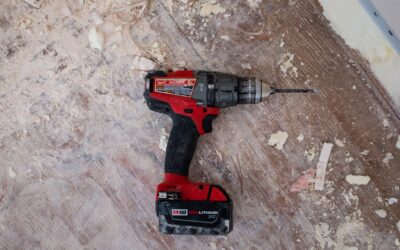
Mounting a TV bracket to a brick wall or anchoring a shelf into concrete with a regular drill is a frustrating exercise that usually ends with a smoking bit and a hole only halfway done. A small hammer drill solves that by adding a rapid pounding action behind the spinning bit, hammering through masonry while a compact body keeps it light and easy to control in tight spots. For the average homeowner who only occasionally drills into hard surfaces, a compact model delivers the power you need without the weight and price of a full-size rotary hammer.
- How a Hammer Drill Differs from a Regular Drill
- Small Hammer Drill vs. Rotary Hammer
- Why Choose a Small Hammer Drill
- Key Specs to Compare
- Top Compact Models to Consider
- How to Drill into Masonry Correctly
- Choosing the Right Anchor
- Common Mistakes to Avoid
- Brushed vs. Brushless Motors
- Essential Accessories
- Is a Small Hammer Drill Enough for You?
How a Hammer Drill Differs from a Regular Drill
A standard drill only rotates the bit, which is fine for wood, drywall, and metal. A hammer drill adds a percussive forward motion, striking the bit thousands of times per minute as it spins. That hammering action, rated in blows per minute (BPM), is what lets a masonry bit chew through concrete, brick, and stone. Most hammer drills include a switch so you can toggle the hammer off and use the tool as a normal drill or driver, giving you two tools in one.
Small Hammer Drill vs. Rotary Hammer
Do not confuse the two. A hammer drill uses a clutch mechanism for light percussion and handles holes up to about half an inch in concrete comfortably. A rotary hammer uses a piston-driven SDS system for far more impact energy, built for repeated heavy drilling and chiseling. For hanging shelves, mounting brackets, and installing the occasional anchor, a compact hammer drill is the right tool. Save the rotary hammer for breaking concrete or drilling dozens of large holes.
Why Choose a Small Hammer Drill
The appeal of a small hammer drill comes down to weight, reach, and price. Compact 12V and brushless 18V/20V models weigh roughly 2 to 4 lbs, compared to 6 lbs or more for full-size units. That lighter weight reduces fatigue and lets you work overhead or in cramped cabinets and corners without straining. For most household masonry jobs, you simply do not need the bulk of a contractor-grade tool, and the compact version costs less to buy.
Key Specs to Compare
- Voltage: 12V models suit light, occasional use; 18V or 20V brushless models offer more power and runtime for tougher jobs.
- Chuck size: A 3/8-inch chuck handles most home tasks; a 1/2-inch chuck accepts larger bits.
- Blows per minute (BPM): Look for 20,000 to 30,000 BPM for efficient masonry drilling.
- Torque: Measured in inch-pounds; higher torque drives larger screws and bits without stalling.
- Battery platform: Stick with a brand whose batteries you already own to save money on chargers and packs.
Top Compact Models to Consider
- Bosch GSB18V-490B12: A brushless 18V compact hammer drill around $100 (tool only more). Light, powerful, and well balanced for overhead work.
- DeWalt DCD709 Atomic: A 20V brushless compact unit near $130 with kit. Roughly 1.9 lbs lighter than DeWalt’s standard models and strong on masonry.
- Milwaukee M12 Fuel 2504-20: A 12V powerhouse around $150 tool-only that punches above its size for a sub-3 lb drill.
- Makita XPH12Z: An 18V LXT brushless compact model, light and capable for the homeowner who wants Makita’s battery ecosystem.
How to Drill into Masonry Correctly
Technique matters as much as the tool. Use a carbide-tipped masonry bit, not a wood or metal bit. Mark your spot and start at a slow speed to keep the bit from wandering. Switch on the hammer function, apply steady firm pressure, and let the tool do the work rather than forcing it. Pull the bit out periodically to clear dust from the hole. For deep holes, a few seconds of cooling prevents overheating the bit. Wear safety glasses, because masonry throws sharp grit.
Choosing the Right Anchor
The drill is only half the job; the anchor holds the load. Match your bit diameter to the anchor exactly so the fit is snug. Plastic expansion anchors work for light loads in brick and block. Sleeve and wedge anchors handle heavier fixtures in solid concrete. Tapcon-style concrete screws are convenient for medium loads and require a specific bit size noted on the box. Always drill the hole slightly deeper than the anchor length so debris at the bottom does not prevent full seating.
Common Mistakes to Avoid
- Using a regular twist bit on masonry, which dulls instantly and overheats.
- Forgetting to engage the hammer mode and wondering why the bit makes no progress.
- Pushing too hard, which can stall a small motor or snap a bit.
- Drilling too close to the edge of brick or block, which can crack the material.
Brushed vs. Brushless Motors
One spec worth understanding is motor type. Brushed motors are cheaper and fine for occasional light use, but they wear faster and run less efficiently. Brushless motors, now standard on mid-range and premium compact drills, run cooler, last longer, and squeeze more runtime from the same battery, often 30 to 50 percent more. For a tool you will keep for years and use on tough masonry, the brushless premium of $20 to $40 pays off in durability and battery life. If you genuinely only drill a hole or two a year, a brushed model saves money up front.
Essential Accessories
A hammer drill is only as good as the bits and gear you pair with it. Buy a set of carbide-tipped masonry bits in common sizes from 3/16 to 1/2 inch, which run $15 to $30 for a kit. A depth stop or a piece of tape on the bit helps you drill consistent hole depths for anchors. Keep a small brush or can of compressed air to clear masonry dust from holes. A spare battery doubles your working time, and a basic carrying case keeps everything together. Safety glasses and a dust mask round out the kit, since masonry drilling throws fine, abrasive particles.
Is a Small Hammer Drill Enough for You?
For the vast majority of homeowner projects, a compact hammer drill covers everything from hanging heavy mirrors on plaster-over-brick to anchoring a fence post bracket into a concrete slab. It doubles as your everyday driver, stores easily, and rarely needs more than one battery for a weekend of work. Only step up to a rotary hammer if you regularly drill many large holes or chip out concrete. For occasional masonry duty, the small hammer drill is the smart, economical pick.