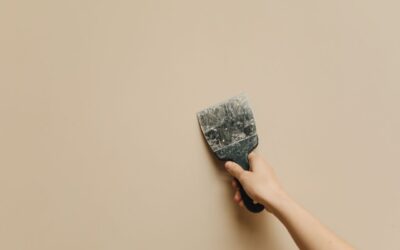
Walk down the paint aisle and you will find a dozen tubs that all promise to fix a wall. The trick to choosing a drywall hole filler is simple: match the product to the size and depth of the hole. Lightweight spackle is ideal for nail holes, vinyl spackle or wall patch putty handles dents and screw holes, and setting-type joint compound (hot mud) is the right choice for deep fills and larger patches because it hardens chemically instead of shrinking as it dries.
Part of our Paint & Walls guide — explore the full guide →
Use the wrong one and you will see it later: lightweight spackle in a deep hole cracks and sinks, while premixed joint compound in a big cavity can take days to dry and still shrink. Use the right one and a single coat, a light sanding, and paint is often all it takes.
- Choosing a Drywall Hole Filler by Hole Size
- Types of Drywall Filler Explained
- Tools and Materials
- How to Fix a Drywall Hole Step by Step
- Dry Times and Shrinkage: What to Expect
- Troubleshooting Wall Patches
- Cost of Drywall Hole Fillers and Repairs
- When to Call a Professional
- Frequently Asked Questions
This guide breaks down each type of filler for drywall, shows how to fix a drywall hole step by step, and covers dry times, shrinkage, costs, and when a patch is too big to fill.
Choosing a Drywall Hole Filler by Hole Size
| Hole or Damage | Best Filler | Typical Dry Time |
|---|---|---|
| Nail holes, pin holes | Lightweight spackle | 30 min to 2 hours |
| Screw holes, small dents up to 1/2 inch | Vinyl or standard spackle | 1 to 4 hours |
| Anchor holes, gouges 1/2 to 2 inches | Vinyl spackle or setting compound with a mesh backing | 1 to 24 hours |
| Deep fills, corners, holes over 2 inches | Setting compound plus patch or backer | 20 to 90 min set, plus topcoat |
| Skim coats and final smoothing | Premixed lightweight joint compound | Overnight |
Dry times depend heavily on humidity, temperature, and thickness. A 1/8-inch skim dries in an hour in a warm room; the same product 1/2 inch thick in a damp basement may take a full day.
Types of Drywall Filler Explained
Lightweight Spackle
This is the best spackle for nail holes. It is fluffy, dries fast, barely shrinks in thin fills, and sands with almost no effort. Many versions go on pink and turn white when dry, so you know when to paint. The downside is strength: it is soft, and it will crack or slump if you try to fill anything deeper than about 1/4 inch in one pass. For picture-hanging holes and small wall nail hole filler jobs, it is hard to beat.
Vinyl and Standard Spackle
Denser than lightweight spackle, vinyl spackle is tougher and better suited to dents, dings, and as a wall screw hole filler. It holds better on edges and corners. Expect slightly more shrinkage and harder sanding. Many homeowners call these products putty wall repair compounds or drywall repair putty; the names overlap, but the key difference is density.
Premixed Joint Compound
Often simply called drywall mud, premixed compound comes in all-purpose and lightweight versions. It dries by evaporation, so thick applications shrink and crack. Its strength is smooth, easy-sanding finish coats over patches and tape. Using premixed mud for drywall repair is best reserved for thin layers.
Setting-Type Compound (Hot Mud)
Sold as a powder with a set time printed on the bag (5, 20, 45, or 90 minutes), setting compound hardens through a chemical reaction. It shrinks very little, sets up even in thick layers, and can be recoated as soon as it hardens. It is the go-to drywall patch mud for deep holes, cracked corners, and anchor blowouts. It is harder to sand, so smooth it well before it sets and use a premixed topcoat for the final finish.
Tools and Materials
- Your chosen spackle, putty, or compound
- Flexible putty knives: 1-1/2 inch, 4 inch, and 6 inch
- Utility knife
- Sanding sponge or 120- to 220-grit sandpaper
- Self-adhesive mesh patch or fiberglass tape for holes over 1/2 inch
- Drywall scrap and furring strips for large holes
- Primer and matching paint
- Drop cloth, damp sponge, and a dust mask
How to Fix a Drywall Hole Step by Step
Nail and Small Screw Holes
- Prep the hole. Pull any nail, then press the raised paper edge flat with the handle of your putty knife. Knock off loose crumbs.
- Apply spackle. Load a small amount on a 1-1/2-inch knife and press it into the hole, then drag the knife across at a low angle to scrape it flush.
- Let it dry, usually 30 minutes to 2 hours for lightweight spackle.
- Sand lightly with a fine sanding sponge, wipe off the dust, and spot-prime before painting so the patch does not flash through the paint.
Dents and Anchor Holes up to 2 Inches
- Clean up the edges. Cut away torn paper and push in or remove any plastic anchor. Recess protruding bits slightly below the wall surface.
- Add a backing. Stick a self-adhesive mesh patch over holes wider than about 1/2 inch.
- First coat. Spread setting compound or vinyl spackle over the patch with a 4-inch knife, pressing it through the mesh. Keep it thin.
- Second and third coats. Once the first coat is hard, apply a wider, thinner coat with a 6-inch knife, feathering the edges 2 to 3 inches past the patch. Repeat if needed.
- Sand, prime, paint. Sand smooth and blend the edges into the surrounding wall.
Deep Fills and Larger Holes
- Square the hole with a utility knife or drywall saw, checking inside for wires or pipes before cutting.
- Install backers. Screw two furring strips or wood scraps behind the opening so they overlap the drywall edges.
- Cut and fit a drywall piece of the same thickness (usually 1/2 inch) and screw it to the backers.
- Tape the seams with fiberglass mesh or paper tape embedded in setting compound.
- Finish with two or three thin coats of lightweight premixed compound, feathering out 8 to 12 inches, then sand and prime.
Dry Times and Shrinkage: What to Expect
Shrinkage is the main reason drywall repairs need a second coat. Evaporation-dry products lose volume as water leaves, so a thick fill cups inward and may crack. Lightweight spackle minimizes this in shallow holes. Setting compound is the answer for depth because it hardens before it can shrink much.
Rules of thumb that save frustration:
- Apply several thin coats instead of one thick one; each dries faster and shrinks less.
- Do not paint over spackle or mud that still looks darker or feels cool; it is not dry.
- Run a fan or dehumidifier in damp rooms to speed drying.
- Choose a quick-set compound (5 or 20 minute) only for small batches; mix only what you can use before it sets.
Troubleshooting Wall Patches
- Patch cracked or sank: The fill was too thick for the product. Scrape out loose material and refill with setting compound, then top-coat.
- Visible outline after painting: The edges were not feathered wide enough, or the patch was not primed. Skim a wider coat, sand, and prime before paint.
- Bubbles in the filler: Stirring premixed compound too fast or applying over dust can trap air. Sand them open and skim over.
- Texture does not match: Use a spray texture can for orange peel or knockdown walls, testing on cardboard first.
- Screw pops keep coming back: The screw is loose in the stud. Drive a new screw 1-1/2 inches away, set the old one deeper, then fill both.
Cost of Drywall Hole Fillers and Repairs
Small tubs of spackle cost about $5 to $12. A bag of setting compound runs roughly $10 to $20, and a gallon of premixed joint compound $10 to $20. Self-adhesive mesh patches cost $3 to $10 each, and a basic set of putty knives is $10 to $25. Most DIY repairs come in under $40.
A handyman usually charges $100 to $300 for a small patching visit, while larger drywall repairs with texture matching and painting can reach $300 to $800 or more depending on size and region.
When to Call a Professional
Hire a drywall pro when damage covers a large section, when a ceiling is sagging, or when you need seamless texture matching across a whole wall. Stop and investigate if the drywall around the hole is soft, stained, or crumbling, since that usually points to a water leak. And in homes built before 1978, painted walls may contain lead; test before sanding. Older plaster, textured ceilings, and joint compound from before the 1980s may also contain asbestos, so have them tested before cutting or sanding.
Frequently Asked Questions
What is the best filler for nail holes in drywall?
Lightweight spackle is the best choice for nail holes. It fills in one pass, dries quickly, barely shrinks in small holes, and sands easily for a smooth finish.
Is spackle or joint compound better for drywall holes?
Spackle is better for small holes and dents because it dries fast and shrinks little. Joint compound, especially setting-type mud, is better for larger patches, deep holes, and taped seams.
Can I use drywall patch putty on large holes?
Not alone. Holes larger than about 2 inches need a mesh patch or a piece of new drywall behind the filler. Putty over an open cavity will sag and crack.
How long does drywall hole filler take to dry before painting?
Lightweight spackle can be ready in 30 minutes to 2 hours. Thicker vinyl spackle and premixed mud often need 4 to 24 hours. Always prime the patch before painting.
Why did my drywall patch crack after drying?
The filler was likely applied too thick. Evaporation-dry products shrink as they dry, so use setting compound for deep fills and build up thin layers.