By the time most homeowners notice termites, the colony has been feeding for three to eight years. That is the brutal math of subterranean infestations: the workers eat from the inside out, leaving paper-thin shells of wood that look completely fine until you tap them. Catching early termite damage is the difference between a $1,200 spot treatment and a $15,000 structural repair. This guide shows you exactly what to look for, where to look, and what to do the moment you spot trouble.
- What Early Termite Damage Actually Looks Like
- The Six Warning Signs Most Homeowners Miss
- Inspecting Your Home Step by Step
- Repair Costs by Severity Level
- Treatment Options That Actually Work
- Preventing Reinfestation After Treatment
- DIY Versus Professional Treatment
- When to Call Today Versus Watch and Wait
- Final Word on Catching Termites Early
What Early Termite Damage Actually Looks Like
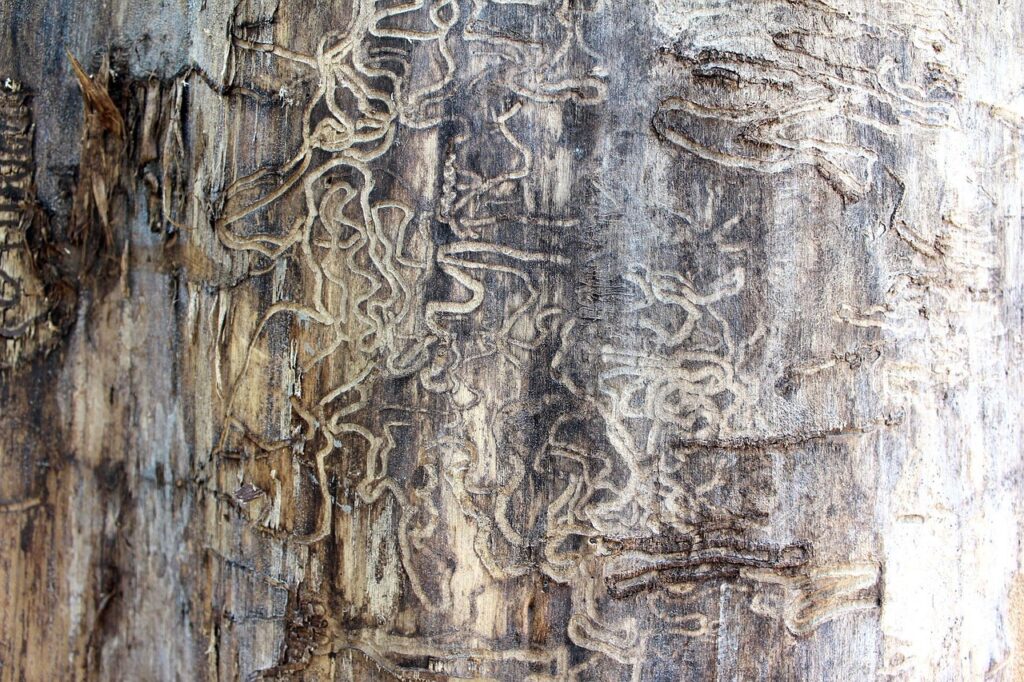
Forget the cartoon image of sawdust piles. Subterranean termites, the species responsible for roughly 80% of US infestations, leave almost no debris because they eat the wood they tunnel through. What you will see instead are subtle surface clues: faint blistering on hardwood floors that resembles minor water damage, paint that bubbles in straight lines along baseboards, and drywall that develops pinprick holes where workers briefly broke through.
Run your knuckle along suspect baseboards and door jambs. Healthy wood produces a solid thunk. Wood with active galleries underneath sounds hollow, almost papery. If you press a flathead screwdriver into the surface and it sinks more than a quarter inch with light pressure, you are looking at advanced feeding even though the surface looks intact.
The Six Warning Signs Most Homeowners Miss
Mud tubes are the single most reliable indicator. Subterranean termites build pencil-thick brown tunnels up foundation walls, pier blocks, and concrete piers to reach wood while staying protected from dry air. Check the perimeter of your crawlspace and the inside face of your foundation every spring.
- Discarded wings in window sills or near light fixtures, usually 1/4 to 1/2 inch long and translucent
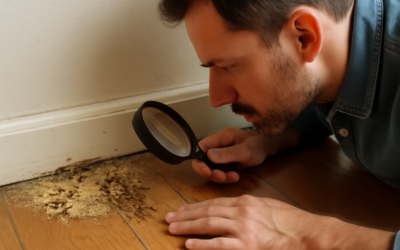
- Frass (drywood termite droppings) that looks like coarse coffee grounds or pepper near small kick-out holes
- Sagging or buckled laminate flooring with no plumbing leak nearby
- Sticking doors and windows from frame distortion as galleries weaken the framing
- Faint clicking sounds inside walls, caused by soldier termites banging their heads to alert the colony
- Tight, peeling paint on trim that no longer adheres because the substrate is honeycombed
Inspecting Your Home Step by Step
Schedule a thorough self-inspection each March and September. Grab a bright flashlight, a flathead screwdriver, and a notepad. Start at the foundation outside, walking the entire perimeter and looking for mud tubes, wood-to-soil contact, and any spots where siding meets grade. Termites need access to soil moisture, so any place where untreated wood touches dirt is a five-alarm risk.
Move into the crawlspace or basement next. Probe every floor joist, sill plate, and rim joist within 18 inches of the foundation. Pay special attention to plumbing penetrations and bath traps, where moisture concentrates. Finish in the attic, checking rafters around chimneys and any framing near roof leaks. Document anything suspicious with photos so you can compare next season.
Repair Costs by Severity Level
Pricing varies by region, but national averages give you a useful baseline. Cosmetic surface repairs to baseboards and trim run $300 to $1,000 when caught in the first season. Replacing a few feet of damaged sill plate or floor joist climbs to $2,500 to $5,000 because it requires temporary jacking and structural work.
Once damage spreads to load-bearing wall studs or multiple floor joists, you are looking at $7,500 to $20,000, with extreme cases involving foundation framing reaching $30,000 or more. Homeowners insurance almost never covers termite damage because policies classify it as preventable maintenance, which makes early detection your only real financial protection.
Treatment Options That Actually Work
For active subterranean colonies, liquid termiticide barriers using fipronil-based products like Termidor SC remain the gold standard. A licensed pro trenches around the foundation, drills through any abutting concrete, and injects roughly four gallons per ten linear feet. Expect $1,200 to $2,500 for an average 2,000 sq ft home and a transferable warranty for one to five years.
Bait systems such as Sentricon with Recruit HD work more slowly but eliminate the entire colony rather than just repelling it. Stations cost $1,500 to $3,000 to install plus $300 to $500 annually for monitoring. For drywood termites localized to one area, spot treatments with foam-injected disodium octaborate tetrahydrate run $300 to $900. Whole-structure tent fumigation with Vikane is reserved for widespread drywood infestations and costs $1,200 to $4,000 depending on cubic footage.
Preventing Reinfestation After Treatment
Treatment buys you a clean slate, but conditions that invited the first colony will invite the next. Pull mulch back at least 12 inches from your foundation and keep it under three inches deep. Grade soil so it slopes away from the house at a quarter inch per foot for the first ten feet. Fix any plumbing or roof leaks within a week, since termites cue heavily on moisture.
Store firewood at least 20 feet from the house and elevated on a rack. Replace any wood-to-soil contact, including deck posts not on proper concrete footings, fence pickets buried in dirt, and porch steps resting on grade. Annual professional inspections at $75 to $150 are cheap insurance compared to the alternative.
DIY Versus Professional Treatment
Hardware store products like Spectracide Terminate stakes and Bayer Advanced Termite Killer foam have a place for spot treatment of visible activity in detached structures, sheds, or stumps. They cost $20 to $80 and can buy time before a pro arrives. They are not a substitute for full structural treatment of a primary residence.
Licensed pest control operators bring three things you cannot replicate: commercial-grade chemistry that lasts seven to ten years, the equipment to drill and trench properly around foundations, and a transferable warranty that adds resale value. If you plan to sell within five years, the warranty alone pays for itself during inspection negotiations.
When to Call Today Versus Watch and Wait
Some findings can wait a few weeks while you gather quotes. Discarded wings in early spring, a single mud tube on an exterior pier, or one hollow-sounding baseboard warrant urgency but not panic. Get three inspection bids and compare warranty terms before committing.
Other findings demand same-week action. Visible live termites, multiple mud tubes branching across a foundation, sagging floors, or any structural framing that gives way under screwdriver pressure means the colony has been feeding for years and continues to expand daily. Call a licensed exterminator immediately, document everything for your records, and avoid disturbing the area further so inspectors can pinpoint entry points.
Final Word on Catching Termites Early
The homeowners who avoid five-figure repair bills are not the ones with luckier houses. They are the ones who walk their foundation twice a year with a screwdriver and a flashlight, fix moisture problems within days, and treat any sign of activity within weeks rather than months. Spend an hour inspecting this weekend. It is the cheapest insurance policy you will ever buy.