That breaker that trips every time you run the microwave and the toaster together isn’t being annoying — it’s saving your house. An electrical overload happens when a circuit is asked to carry more current than the wiring can safely handle, and the resulting heat is a leading cause of residential electrical fires. The good news is that overloads are predictable and preventable once you understand how circuits work. This guide explains what causes them, the warning signs you should never ignore, and the line where DIY ends and a licensed electrician must take over.
- What Causes an Electrical Overload
- Warning Signs You Should Never Ignore
- Overloaded Outlets vs. Overloaded Circuits
- How to Calculate Your Circuit's Capacity
- Preventing Electrical Overload
- Never Defeat the Breaker
- The Real Dangers of an Overloaded Circuit
- Extension Cords and Power Strips
- When to Call an Electrician
What Causes an Electrical Overload
Every circuit in your home is rated for a specific amperage — typically 15 or 20 amps for general outlets. The breaker is sized to match the wire. An overload occurs when the connected devices draw more current than that rating. Plug a 12-amp space heater into the same 15-amp circuit already running a 9-amp window unit, and you’ve demanded 21 amps from a 15-amp circuit. The wire heats up, and if the breaker is working, it trips to cut the flow before the wire can ignite.
The most common overload triggers are high-draw appliances on shared circuits: space heaters, hair dryers, microwaves, window air conditioners, and toaster ovens.
Warning Signs You Should Never Ignore
Circuits usually warn you before they fail catastrophically. Treat any of these as a red flag.
- Breakers that trip repeatedly on the same circuit.
- Outlets or switch plates warm to the touch.
- A burning or fishy plastic smell near outlets or the panel.
- Lights that dim or flicker when an appliance kicks on.
- Buzzing sounds from outlets, switches, or the panel.
- Scorch marks or discoloration around an outlet.
A burning smell or scorch marks mean stop using the circuit immediately and call an electrician. Those are signs the overheating has already begun.
Overloaded Outlets vs. Overloaded Circuits
There’s a difference worth understanding. An overloaded circuit pulls too much total current across everything plugged into it. An overloaded outlet happens when you daisy-chain power strips and adapters into a single receptacle, concentrating the draw at one point. “Octopus” wiring — a power strip feeding another power strip feeding a six-outlet adapter — is a classic fire hazard. Even if the circuit total is within limits, the single outlet and its connections can overheat from the concentrated load.
How to Calculate Your Circuit’s Capacity
You can prevent overloads with simple math. Multiply the circuit’s voltage by its amperage to find the wattage capacity, then apply the 80 percent safety rule for continuous loads.
- 15-amp circuit: 15 × 120 = 1,800 watts; safe continuous load 1,440 watts.
- 20-amp circuit: 20 × 120 = 2,400 watts; safe continuous load 1,920 watts.
Add up the wattage of everything on one circuit. A 1,500-watt space heater alone nearly maxes a 15-amp circuit, leaving almost no room for anything else.
Preventing Electrical Overload
Most overloads are easy to design out of your daily routine.
- Spread high-draw appliances across different circuits and rooms.
- Never chain power strips or plug a strip into another strip.
- Plug space heaters and A/C units directly into wall outlets, never extension cords.
- Use heavy-duty appliances on dedicated circuits wherever possible.
- Map your panel so you know which outlets share a circuit.
If your home constantly trips breakers despite careful use, the real fix may be adding circuits — a job for a pro.
Never Defeat the Breaker
The single most dangerous mistake is “solving” a tripping breaker by swapping in a higher-amp one. A 20-amp breaker on a circuit wired with 14-gauge wire removes the very protection that prevents a fire. The breaker is sized to the wire, not your convenience. If a circuit keeps tripping, the answer is reducing the load or adding capacity, never oversizing the breaker.
The Real Dangers of an Overloaded Circuit
It helps to understand exactly why overloads are so hazardous. When too much current flows through a wire, the wire heats up — that’s basic physics. Insulation has a temperature limit, typically rated for 60 or 90 degrees Celsius, and sustained overheating breaks down that insulation until bare conductors are exposed. At that point you have arcing, melting, and eventually ignition inside a wall cavity packed with wood framing and insulation. Electrical malfunctions cause tens of thousands of home fires in the U.S. every year, and overloaded circuits and overtaxed extension cords rank among the top culprits. The breaker exists precisely to interrupt this chain before it starts, which is why defeating or oversizing it is so reckless.
Extension Cords and Power Strips
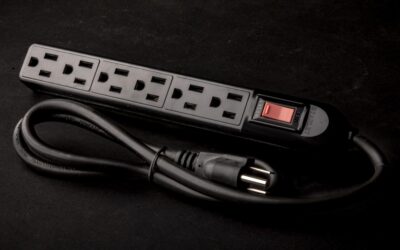
Temporary wiring deserves special caution because it’s where many overloads begin. Extension cords are rated for specific amperage, and a thin 16-gauge cord running a 12-amp space heater will overheat even if the wall circuit is fine. Never run high-draw appliances through extension cords, never coil a cord under a rug where heat can’t escape, and never link cords end to end. Power strips with built-in circuit breakers offer some protection, but they don’t increase the circuit’s capacity — plugging six devices into a strip on a 15-amp circuit still draws from that same 15 amps. Treat extension cords as short-term solutions, and hardwire or add outlets for anything permanent.
When to Call an Electrician
Resetting an occasional tripped breaker is fine. But persistent electrical overload signals a real problem. Call a licensed electrician if breakers trip repeatedly, outlets feel warm, you smell burning, you see scorch marks, or your home simply doesn’t have enough circuits for modern appliances. Older homes with 60- or 100-amp service often need a panel upgrade to 200 amps. Electrical fire is not a gamble worth taking — when in doubt, bring in a professional and pull the proper permit.