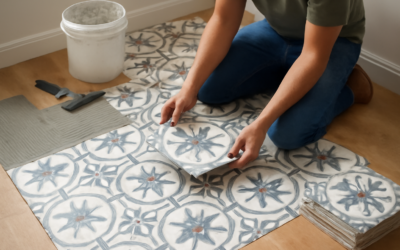
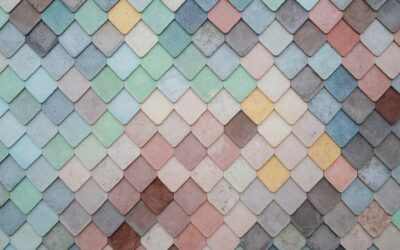
Few surfaces photograph as well as an encaustic tile floor, with its bold geometric pattern and chalky, velvety finish. Yet many homeowners do not realize that true encaustic cement tile behaves more like a natural stone than a porcelain tile: it is porous, it needs sealing, and it develops a patina over time. That character is exactly what fans love, and exactly what frustrates people who expected zero maintenance. This guide covers what encaustic tile really is, where it works, what it costs, and how to install and care for it.
Part of our Tile & Grout guide — explore the full guide →
What Is an Encaustic Tile Floor?
Historically, “encaustic” described fired clay tiles with inlaid colored clay, common in Victorian churches and hallways. Today the term almost always refers to cement tile, sometimes called hydraulic tile. These are not fired in a kiln. Instead, artisans pour pigmented cement into a metal mold that divides the pattern, add a gray cement backing, and press each tile under roughly 2,000 psi of hydraulic pressure. The tiles then cure for about 28 days.
The pigment layer is typically 3 to 5 millimeters thick, and the whole tile runs about 5/8 inch thick. Standard sizes are 8 by 8 inches, though 6 by 6, 10 by 10, and hexagonal formats are also common. Because the color goes deep into the tile rather than sitting on a glaze, an encaustic tile floor can be honed or refinished if it wears, which is one reason 100-year-old cement tile floors still survive in Spain, Cuba, and New Orleans.
Pros of Encaustic Cement Tile
- Distinctive design: Hundreds of stock patterns plus custom colorways; few materials offer this range.
- Longevity: Properly sealed and maintained, cement tile lasts generations and can be refinished.
- Comfortable underfoot: Slightly softer, warmer feel than porcelain, with a matte surface.
- Good with radiant heat: Cement tile conducts and holds heat well over hydronic or electric radiant systems.
- Handmade character: Minor variations in color and edge give each floor a one-of-a-kind look.
Encaustic tile also ages gracefully. Many owners appreciate the soft patina that develops in high-traffic paths, the same way people like a well-worn marble step.
Cons and Limitations to Consider
The biggest drawback is porosity. Unsealed cement tile absorbs oil, wine, coffee, and even water spots. Acidic cleaners such as vinegar etch the surface, just as they do on marble. Here are the main downsides:
- Sealing required: A penetrating sealer before and after grouting, then periodic resealing.
- Staining risk: Kitchens with heavy cooking need extra diligence.
- Scratches and patina: The surface is softer than porcelain; grit from outdoors wears it faster.
- Variation between batches: Order all tile at once plus overage to avoid color shifts.
- Installation cost: Requires experienced setters, careful layout, and extra steps.
- Weight: Around 7 to 8 pounds per square foot; not ideal over bouncy floors.
Encaustic tile is also unsuitable in freeze-thaw climates outdoors unless the manufacturer specifically rates it for exterior use, because absorbed water can freeze and spall the surface.
Encaustic vs Porcelain Look-Alikes
Many products marketed as encaustic are actually porcelain tiles printed with a cement-tile pattern. They are worth considering if you want the look without the upkeep.
| Feature | True Cement Tile | Porcelain Look-Alike |
|---|---|---|
| Material cost | $10 to $25 per sq ft | $3 to $12 per sq ft |
| Water absorption | High; must be sealed | Under 0.5%; no sealing |
| Stain resistance | Moderate once sealed | Very high |
| Refinishable | Yes, can be honed | No; pattern is surface-printed |
| Look and feel | Matte, velvety, handmade | Uniform, slightly flatter |
For mudrooms, busy family kitchens, and rental properties, porcelain often makes more sense. For a powder room, entry, or feature floor where authenticity matters, real cement tile is hard to beat. Vinyl and peel-and-stick versions also exist, but they read as temporary and are best left for budget refreshes.
Where an Encaustic Tile Floor Works Best
Bathrooms are a popular location, especially powder rooms and guest baths where traffic is light and the pattern can shine. Cement tile handles damp conditions well once sealed, but in a shower pan the constant water exposure and soap residue demand more upkeep; many designers use it on the bathroom floor and switch to porcelain inside the shower.
Entryways and hallways also suit encaustic tile, provided you use a good walk-off mat to trap grit. Kitchens can work beautifully, but choose a mid-tone or busier pattern that hides small stains, and wipe spills quickly. Laundry rooms, sunrooms, and covered porches in mild climates round out the list.
Consider pattern scale in each space. Large, bold repeats suit big rooms, while tiny powder rooms may feel busy with high-contrast designs. A common approach is a patterned field bordered with a solid-color tile, which frames the design and reduces cost.
Choosing Colors and Patterns That Age Well
Pattern choice affects more than style. Light backgrounds, such as white, cream, and pale gray, show stains and traffic patina fastest, especially near kitchen sinks and exterior doors. Mid-tone blues, sage greens, terracottas, and charcoals are far more forgiving and still read as crisp. If you love a white-ground pattern, consider it for a powder room, where footwear traffic and food spills are minimal.
Think about how the pattern will be read in the room. Many cement tile designs form a larger secondary pattern once four tiles meet, so look at a mockup of at least 16 tiles, not a single sample. Some manufacturers offer free layout renderings. Rotating the same tile in different orientations can create entirely different effects, from bold medallions to flowing diagonal bands, without changing the order.
- Timeless choices: Two-color geometrics, classic Moroccan stars, and black-and-white checks.
- Trend-sensitive choices: Very busy multicolor florals and oversized graphic prints.
- Smart budget move: Pattern in the center field, solid tile in the border or under cabinets and appliances where it is never seen.
Request a sample of the actual production run before placing a large order. Handmade tiles vary by batch, and pigment can look noticeably different in person than on a screen.
Cost of an Encaustic Tile Floor
Real cement tile typically costs $10 to $25 per square foot for stock patterns, and $18 to $35 or more for custom colors or imported artisan tile. Installation adds $10 to $20 per square foot because of the extra care, sealing, and the need for a flat, rigid substrate. Here is a realistic budget for a 60-square-foot bathroom floor:
- Tile with 10 to 15 percent overage: $700 to $1,700
- Setting materials, grout, and sealer: $150 to $350
- Subfloor prep and backer board or membrane: $200 to $600
- Labor: $600 to $1,200
- Total: Roughly $1,650 to $3,850
Shipping can be significant because cement tile is heavy; freight on a pallet often runs $150 to $400. Lead times for custom colorways range from 6 to 12 weeks, so order early.
Installation Essentials
Cement tile demands a flat, stiff substrate. Aim for deflection of L/360 or better and flatness within 1/8 inch over 10 feet. Over wood subfloors, use at least 1¼ inches of total plywood thickness plus a cement backer board or an uncoupling membrane.
- Dry lay the pattern. Mix tiles from several boxes to blend color variation and confirm how the pattern aligns.
- Pre-seal the tiles. Apply a penetrating sealer to the face before setting to protect against thinset and grout staining.
- Set in a white, polymer-modified thinset. Back-butter each tile and use a ½-inch square-notch trowel for full coverage.
- Keep joints tight. Joints of 1/16 to 1/8 inch are typical; use unsanded or fine grout in a light color unless the manufacturer says otherwise.
- Grout carefully. Work small areas and clean promptly with minimal water; dark grout can stain light pigments.
- Final seal. After 48 to 72 hours of drying, apply two coats of penetrating sealer, then a topical finish if desired.
Never use a wet saw with dirty water on pre-sealed faces without rinsing immediately; the slurry can set into the pores. Rubber mallets, not steel, should be used to seat tiles.
Cleaning and Maintenance
Sweep or dust mop daily in busy areas; grit is the main cause of dullness. Wash with a pH-neutral cleaner diluted in warm water, and avoid vinegar, bleach, ammonia, and citrus-based products. Wipe spills, especially oil, red wine, and tomato sauce, as soon as they happen.
Test the seal every 6 to 12 months by placing a few drops of water on a high-traffic tile. If it darkens within a few minutes, it is time to reseal, usually every one to three years for penetrating sealers. Some owners polish cement tile periodically with a stone soap or wax-based finish, which builds a soft sheen and adds a sacrificial layer. Worn floors can be professionally honed with fine diamond pads and resealed to restore the color.
An encaustic tile floor rewards homeowners who value character and are willing to spend a few minutes on upkeep. If that sounds like you, buy from a reputable maker, hire an installer with cement tile experience, and seal diligently. If not, a porcelain look-alike delivers the pattern with far less maintenance.
Prefer to explore on your own?
See how new flooring looks in your actual room in seconds — free, no signup.
Try the free Floor Studio →