
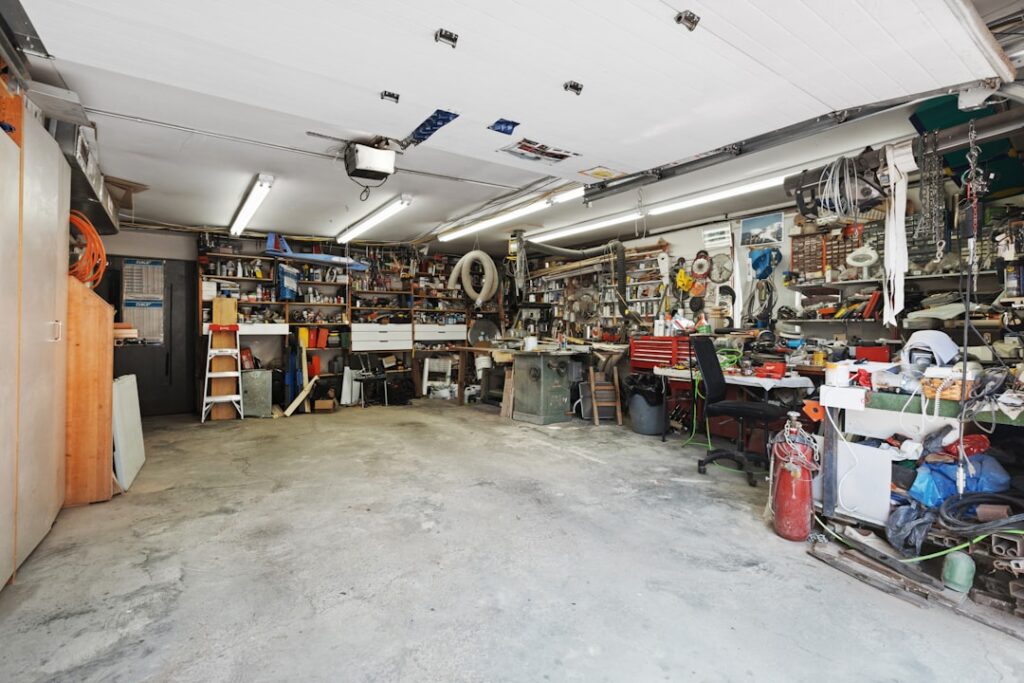
Epoxy flooring is one of the most unforgiving flooring types to install. Unlike click-lock vinyl or floating laminate, epoxy is a chemical coating that bonds permanently to the concrete substrate. Surface preparation, mixing ratios, application timing, and environmental conditions must all be precisely right — or the coating fails. Hiring the right contractor is the most important decision in any epoxy project.
Part of our Epoxy, Concrete & Garage Floors guide — explore the full guide →
What Epoxy Flooring Contractors Do
A qualified epoxy contractor handles the entire process:
Assessment and Preparation
- Concrete evaluation: Testing moisture levels, identifying cracks, checking for previous coatings or sealers, and assessing the concrete’s condition and profile
- Surface preparation: Diamond grinding, shot blasting, or acid etching to create the proper surface profile for epoxy adhesion. This step accounts for 70% to 80% of a successful installation.
- Crack and joint repair: Filling cracks, spalls, and expansion joints with appropriate repair compounds
- Moisture mitigation: Applying vapor barriers if moisture testing reveals problematic levels
Application
- Primer coat: A thin epoxy or urethane primer that penetrates the concrete and creates a bond between the substrate and the body coats
- Body coats: One or two coats of epoxy at the specified thickness, mixed to exact ratios and applied within the product’s working time
- Decorative elements: Broadcasting flake chips, quartz granules, or metallic pigments into wet epoxy if decorative finishes are specified
- Topcoat: A polyurethane or polyaspartic clear coat that protects the epoxy from UV yellowing, abrasion, and chemical exposure
Types of Epoxy Flooring Projects
Residential Garage Floors
The most common residential epoxy project. A single-car garage (200 to 250 sq ft) typically takes 2 to 3 days including prep and cure time. Full flake systems and metallic epoxy are the most popular residential finishes.
Commercial and Industrial Floors
Warehouses, manufacturing plants, commercial kitchens, and retail spaces require heavy-duty systems with higher mil thickness, chemical resistance, and slip-resistant topcoats. These projects are larger and more complex.
Decorative Interior Floors
Metallic epoxy and custom-colored systems are increasingly used in residential living spaces, basements, and retail environments. These require artistic skill in addition to technical expertise.
How to Find Epoxy Flooring Contractors
- Manufacturer referral networks: Brands like Penntek, Polyaspartic, and Garage Force maintain certified installer directories
- Industry associations: The Society for Protective Coatings (SSPC) and NACE International certify coatings professionals
- Online platforms: Angi, HomeAdvisor, and Google Business Profile with reviews and photos
- Referrals: Ask neighbors with epoxy garages, local car clubs, or commercial building managers
What to Look For in a Contractor
Experience and Specialization
Look for contractors who specialize in epoxy and resinous coatings — not general painters or handymen who offer epoxy as a side service. Ask how many epoxy floors they’ve installed in the past year and what types (garage, commercial, decorative).
Surface Preparation Method
Diamond grinding is the gold standard for surface preparation. Acid etching is cheaper but creates an inconsistent profile and can leave chemical residue. If a contractor plans to acid etch your floor, consider it a yellow flag — it’s acceptable for small residential jobs but insufficient for high-performance systems.
Product Quality
Ask what products they use. Professional-grade epoxy systems (100% solids or high-solids) from brands like Penntek, Polyaspartic, and Industrial Coatings Solutions cost more but vastly outperform box-store DIY kits. Be wary of contractors using consumer-grade products at professional prices.
Portfolio
Ask to see photos of completed projects — specifically floors that are 2 to 5 years old, not just fresh installations. This shows how their work holds up over time. Request addresses of local jobs you can see in person.
Warranty
Professional epoxy contractors should offer a minimum 5-year warranty on workmanship and adhesion. Some offer 10 to 15 years on premium systems. Get the warranty in writing with specific terms about what’s covered.
Questions to Ask
- What surface preparation method do you use? (Diamond grinding is preferred)
- What brand and type of epoxy system do you install?
- How many mils thick is the total system?
- Does the system include a UV-stable topcoat?
- How long is the cure time before I can walk on it? Drive on it?
- What’s your warranty cover, and what voids it?
- Can you provide references from jobs completed 2+ years ago?
- Are you licensed and insured?
- What happens if the coating peels or delaminates?
- How do you handle moisture issues in the concrete?
Red Flags
- One-day installation promises: Proper prep, priming, coating, and curing takes 2 to 4 days minimum for a garage floor. One-day jobs often skip critical prep steps.
- Acid etching only: While acceptable for some light-duty applications, acid etching alone is insufficient for high-performance epoxy systems.
- No moisture testing: Applying epoxy over concrete with high moisture levels guarantees failure. A professional always tests.
- Extremely low quotes: Professional epoxy installation for a two-car garage should cost $2,000 to $5,000+. Quotes under $1,500 likely mean consumer-grade products, inadequate prep, or a single thin coat.
- No topcoat included: Epoxy without a polyurethane or polyaspartic topcoat will yellow from UV exposure and wear faster. A topcoat is essential.
- Pressure to sign immediately: Reputable contractors don’t need high-pressure sales tactics.
Epoxy Flooring Contractor Costs
Residential Garage
- Single-car garage (200-250 sq ft): $1,500 to $3,500
- Two-car garage (400-500 sq ft): $2,500 to $5,500
- Three-car garage (600-750 sq ft): $3,500 to $7,500
Commercial/Industrial
- Standard epoxy system: $3.00 to $7.00 per square foot
- Decorative flake or quartz: $5.00 to $10.00 per square foot
- Metallic epoxy: $8.00 to $15.00 per square foot
- Heavy-duty industrial: $7.00 to $20.00 per square foot
What’s Included in a Professional Quote
- Diamond grinding or mechanical surface preparation
- Crack and joint repair
- Primer coat
- Epoxy body coat(s)
- Decorative flake, quartz, or metallic broadcast (if applicable)
- UV-stable polyurethane or polyaspartic topcoat
- Cleanup and furniture protection
DIY Epoxy vs Professional Installation
Big-box store DIY epoxy kits cost $100 to $300 and promise easy application. The reality is different:
- DIY kits use water-based epoxy with lower solids content — thinner, weaker, and shorter-lived
- Most DIY kits skip proper surface preparation (the most critical step)
- Professional 100% solids epoxy is 5 to 10 times thicker than a DIY kit’s single coat
- DIY garage epoxy typically lasts 2 to 5 years before peeling; professional systems last 10 to 20+
- Failed DIY epoxy must be completely removed before a professional can redo it — adding cost
For garages, basements, and especially commercial spaces, professional epoxy installation is worth the investment. The upfront cost difference pays for itself in longevity and performance.


