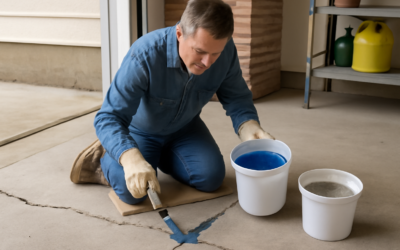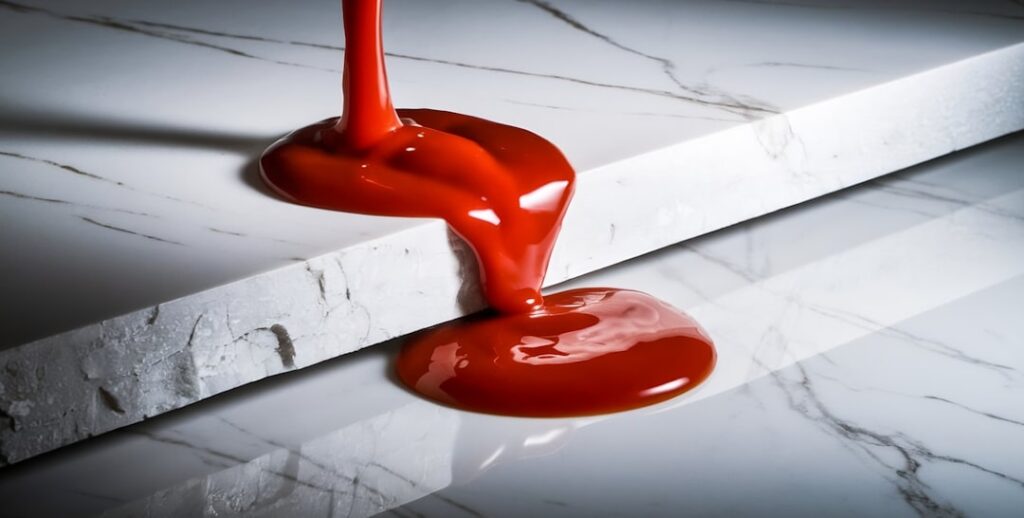
When you need a finish that shrugs off water, chemicals, and heavy abuse, few products compete with epoxy. Epoxy sealant is a two-part resin system that cures into a hard, glossy, waterproof layer bonded tightly to the surface beneath it. Homeowners use it to seal garage floors, countertops, basements, and concrete, and to fill cracks and joints that ordinary sealers cannot handle.
Part of our Epoxy, Concrete & Garage Floors guide — explore the full guide →
This guide explains how epoxy works, the common types, how to apply it correctly, and, just as important, how to do it safely. Epoxy rewards careful prep and punishes shortcuts, so understanding the process before you open the cans saves a great deal of frustration.
What Epoxy Sealant Is and How It Works
Epoxy is not a paint or a simple coating that dries by evaporation. It is a thermosetting system: you mix a resin with a hardener, and a chemical reaction transforms the liquid into a rigid, durable solid. That reaction, not drying, is why mix ratios and cure times matter so much. Too little hardener, sloppy mixing, or a cold room can leave you with a soft, tacky surface that never fully sets.
The result, when done right, is a seamless film that resists moisture, abrasion, many chemicals, and impact. That toughness is what makes epoxy the go-to for surfaces that take real punishment.
Common Types of Epoxy Sealant
Not all epoxy is the same, and matching the product to the job is critical:
- Floor coatings: Thicker, high-build epoxies formulated for garage and basement floors, often paired with decorative color flakes and a urethane topcoat for UV and wear resistance.
- Concrete and crack sealers: Penetrating or self-leveling epoxies that fill and waterproof cracks, joints, and porous slabs.
- Countertop and bar-top resins: Clear, self-leveling pour-on epoxies that create a thick, glassy surface over wood, tile, or laminate.
- Waterproofing and tank coatings: Specialized formulas for wet environments, some of which are rated for specific exposures.
One key distinction: if a surface will contact drinking water or food, you must use a product specifically certified for potable-water or food-safe contact. Standard epoxy is not automatically safe for these uses, so read the data sheet and certifications carefully.
Surface Preparation Is Everything
Epoxy bonds mechanically and chemically, so it needs a clean, sound, properly profiled surface. On concrete, that means removing all dust, oil, grease, and old coatings, then etching or grinding the slab to open the pores so the epoxy can grip. A glassy or contaminated surface will cause the coating to peel, no matter how good the product.
Moisture is the other prep concern. Concrete must be dry and below the manufacturer’s moisture threshold, since trapped moisture can push the coating off the slab. A simple plastic-sheet test, taping a square of plastic to the floor overnight and checking for condensation, gives you a rough read before you commit. For wood or laminate, sand and clean the surface per the resin maker’s instructions.
How to Apply Epoxy Sealant
The application window is short once you mix, so stage everything first. A typical floor-coating sequence looks like this:
- Prep, clean, and fully dry the surface, repairing cracks and profiling as needed.
- Measure the resin and hardener at the exact ratio on the label and mix thoroughly for the full stated time, scraping the sides and bottom of the bucket.
- Cut in the edges with a brush, then roll the field in manageable sections before the pot life expires.
- Broadcast decorative flakes (if used) into the wet coat, then back-roll to keep an even film.
- Apply additional coats or a topcoat per the product’s recoat window for durability and UV protection.
Work within the pot life, the limited time the mixed epoxy stays workable, which can be as short as 20 to 40 minutes. Mix only what you can apply in that window, and keep the room within the temperature range the manufacturer specifies, often around 60 to 85 degrees Fahrenheit, for proper curing.
Cure Times and What to Expect
Epoxy cures in stages. It may be dry to the touch in hours, walkable in roughly 24 hours, ready for light use in a couple of days, and fully cured, at maximum hardness and chemical resistance, in about 7 days. Driving a car onto a fresh garage floor too soon is a classic mistake that leaves tire marks or lifts the coating.
Temperature and humidity strongly affect these timelines. Cold slows the reaction dramatically and can prevent a full cure, while excessive heat shortens pot life. Always follow the specific cure schedule on your product’s data sheet rather than a general rule of thumb, and resist the urge to rush back into service.
Safety Precautions
Liquid epoxy components can irritate skin, eyes, and lungs, and the fumes during application demand respect. Protect yourself and your home with these basics:
- Ventilate the workspace well; open doors and windows and use fans, or wear an appropriate respirator rated for organic vapors.
- Wear chemical-resistant gloves, eye protection, and clothing that covers your skin to avoid contact with uncured resin and hardener.
- Mix and apply away from open flames and ignition sources, and keep the area off-limits to children and pets until fully cured.
- Follow the manufacturer’s safety data sheet for handling, disposal, and first-aid guidance.
Avoid any health claims or assumptions about safety; only the manufacturer’s documentation tells you what a specific product is rated for. When a project is large, involves a confined space, or requires a potable-water or food-safe rating, hiring a licensed professional is often the wiser path.
Maintenance and Longevity
A properly installed epoxy surface is low maintenance and can last many years, especially on floors that get a UV-stable topcoat to prevent yellowing and a non-slip additive for wet areas. Routine care is simple: sweep grit that can scratch the finish and clean with a mild detergent and water. Avoid harsh, abrasive cleaners that dull the gloss.
Over time, high-traffic areas may show wear and can usually be recoated after a light scuff-sand and cleaning, extending the life without a full redo. Address chips or scratches promptly so moisture cannot work its way underneath.
The Bottom Line
Epoxy sealant delivers a tough, waterproof, and attractive finish that few other products can match, but its performance lives or dies on preparation, accurate mixing, and respecting cure times. Choose the right type for your surface, verify any potable-water or food-safe rating you need, prep thoroughly, and work safely with proper ventilation and PPE. Follow the data sheet to the letter, and your epoxy finish will reward the effort with years of durable, easy-care service.