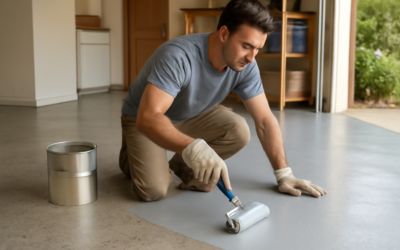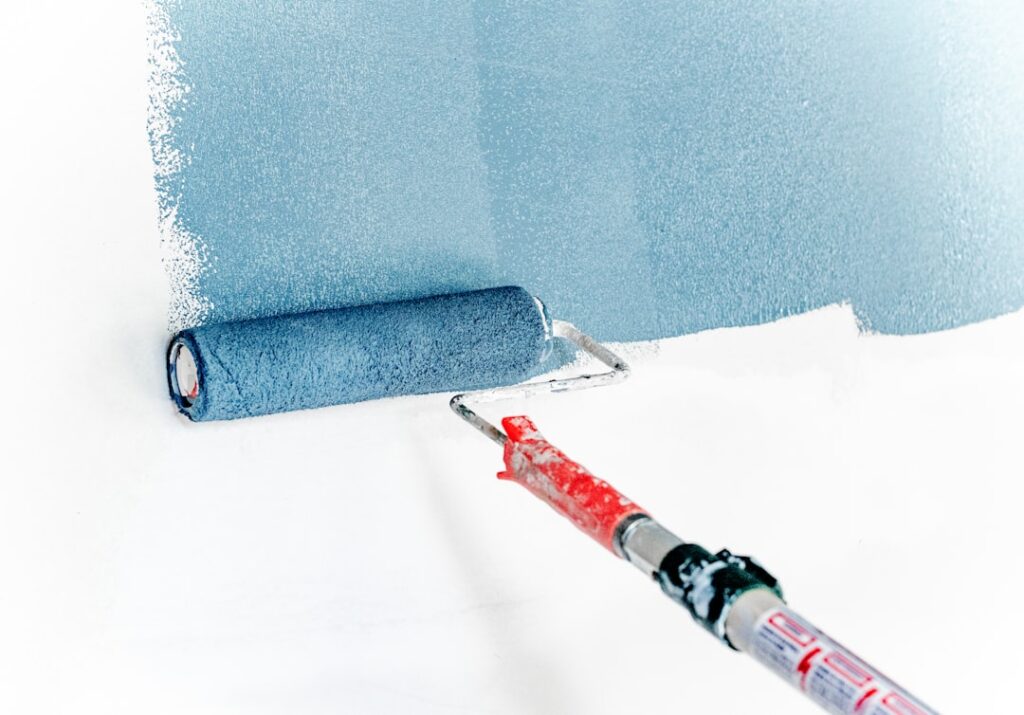
When ordinary latex just will not hold up, epoxy wall paint steps in with a hard, durable, moisture-resistant finish that handles abuse most coatings cannot. Built from a resin and a hardener that cure into a tough plastic-like film, epoxy bonds tightly to properly prepared surfaces and resists water, stains, chemicals, and scrubbing far better than standard wall paint.
Part of our Epoxy, Concrete & Garage Floors guide — explore the full guide →
This guide explains how epoxy coatings work, where they make sense in a home, their strengths and limitations, and the step-by-step process for applying them safely with proper ventilation and protection.
What Epoxy Wall Paint Is
True epoxy is a two-part system: a resin and a curing agent that you mix just before application. Once combined, a chemical reaction begins, and the coating cures into an exceptionally hard, non-porous surface. There are also one-part epoxy and epoxy-fortified paints, which are easier to use but do not reach the same durability as a genuine two-part product.
The result is a finish that seals the wall, repels moisture, and stands up to repeated cleaning. That combination is why you find epoxy coatings in commercial kitchens, hospitals, and industrial settings, and increasingly in demanding spots around the home.
Key Benefits
The appeal of an epoxy coating comes down to toughness and cleanability. Compared with conventional wall paint, it offers a meaningful step up in performance.
- Moisture resistance: Creates a non-porous barrier that resists water, humidity, and mildew growth.
- Durability: Resists scuffs, abrasion, and impacts in high-traffic and high-wear areas.
- Easy cleaning: The hard, smooth surface wipes clean and tolerates aggressive scrubbing and disinfectants.
- Chemical resistance: Shrugs off many household and shop chemicals that would damage latex paint.
- Sanitary surface: Its seamless, non-absorbent finish is easy to keep hygienic, which is why it suits kitchens and baths.
Where to Use It
Epoxy wall paint is not meant for every room. Its strengths make it ideal in specific, demanding environments rather than as a general living-room finish, where standard paint is cheaper and easier to recoat.
- Bathrooms and showers: Resists steam, splashes, and mildew on walls and trim.
- Kitchens: Wipes clean of grease and food splatter behind counters and ranges.
- Garages and workshops: Handles chemical exposure and frequent cleaning.
- Basements and laundry rooms: Adds moisture protection in below-grade or damp spaces.
- Mudrooms and utility areas: Stands up to heavy traffic and scrubbing.
For ordinary bedrooms and living areas, conventional paint usually makes more sense given epoxy’s higher cost, stronger fumes, and more involved application.
Limitations to Know
No product is perfect, and epoxy has trade-offs worth weighing before you commit. The application window is short because the mixed product begins curing immediately, so you must work efficiently. The fumes during application can be strong, demanding good ventilation. Over years of direct sunlight, some epoxies can yellow or chalk, so they are better suited to interior walls than sun-drenched exteriors.
Epoxy is also harder to repair or repaint later, since new coatings do not always bond well to the slick cured surface without sanding and proper prep. Because it is unforgiving of surface flaws and moisture in the substrate, preparation is everything.
How to Apply It Safely
Success with epoxy depends on careful prep and disciplined safety. Always read and follow the manufacturer’s instructions for the specific product you buy, since mix ratios and cure times vary.
- Ventilate the space thoroughly with open windows and fans, and wear a respirator rated for organic vapors, gloves, and eye protection.
- Clean the walls completely, removing grease, dust, mildew, and any loose or glossy old paint.
- Repair cracks and holes, then sand glossy surfaces so the epoxy can grip.
- Prime if the manufacturer recommends it for your surface.
- Mix the resin and hardener in the exact ratio specified, and let it stand for any required induction time.
- Apply in thin, even coats with a quality brush and roller, working in manageable sections before the mix sets.
- Allow full cure time between coats and before exposing the surface to water or heavy use.
Curing and Care
Curing is different from drying. The surface may feel dry within hours, but the coating continues to harden for several days. Avoid washing, scrubbing, or exposing freshly coated walls to moisture until the product reaches full cure, which can take up to a week depending on temperature and humidity. Rushing this step is the most common cause of a soft or compromised finish.
Once cured, maintenance is easy. Clean with mild soap and water or an appropriate cleaner, and avoid harsh abrasives that could dull the surface over time. Because the finish is so durable, a properly applied epoxy wall can look good for many years.
Epoxy vs Standard Wall Paint
Understanding how epoxy stacks up against ordinary latex helps you spend wisely. Standard acrylic-latex paint is inexpensive, easy to apply and touch up, low in odor, and available in nearly unlimited colors, which makes it the right call for most living spaces. Its weakness is durability in harsh conditions: it can stain, scuff, and harbor mildew in wet or greasy areas, and it does not seal a surface the way epoxy does.
Epoxy reverses those trade-offs, offering a far tougher, water-resistant, scrubbable, and chemical-resistant finish at the cost of higher price, stronger fumes, a short working window, and harder repairs. The practical takeaway is to reserve epoxy for the demanding spots that justify it, such as showers, garages, and commercial-style kitchens, and use quality latex or a moisture-resistant bathroom paint everywhere the conditions are milder. Matching the coating to the conditions gives you the best result for the money.
Final Thoughts
For wet, greasy, or hard-working spaces, epoxy wall paint delivers a level of durability and cleanability that ordinary coatings simply cannot match. The keys to a great result are honest expectations about where it belongs, meticulous surface preparation, and strict attention to ventilation, protective gear, and full cure times. Follow the manufacturer’s directions closely, and you will end up with a tough, moisture-resistant finish built to handle real life.