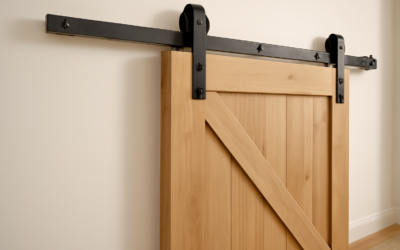
The mistake that ruins outdoor barn doors is buying an interior kit and hoping it holds up, only to watch the rollers seize and the track streak rust down the wall within a year. Exterior sliding barn door hardware is a genuinely different product, engineered with corrosion-resistant metals, weather seals, and heavier weight ratings that indoor kits simply do not have. Whether you are covering a shed, a patio opening, an outdoor bar, or a garage bay, choosing hardware built for sun, rain, and freeze-thaw cycles is what separates a door that glides for decades from one that fails by next spring. Here is what to look for and how to install it so it lasts outdoors.
Part of our Windows & Doors guide — explore the full guide →
- Why Exterior Hardware Is Different
- Material Choices That Resist the Elements
- Matching Hardware to Door Weight
- Track and Roller Design
- Bottom Guides and Wind Control
- Weather Sealing the Opening
- Installation Tips for Longevity
- Popular Uses for Exterior Barn Doors
- Aesthetic and Finish Considerations
- Maintenance to Keep It Sliding
Why Exterior Hardware Is Different
Outdoor conditions attack barn door hardware in ways an indoor hallway never will. Rain and humidity cause corrosion, temperature swings expand and contract metal, UV degrades finishes, and wind loads and debris stress the rollers. Interior hardware, usually raw or lightly coated steel, is not built for any of that.
Exterior-rated hardware answers each threat with corrosion-resistant materials, sealed bearings, protective finishes, and often heavier construction. It also frequently includes weatherstripping and bottom guides designed to keep the door tracking straight in wind. Paying for true exterior hardware is not an upsell; it is the difference between a working door and a rusted-out one.
Material Choices That Resist the Elements
The single most important spec outdoors is the metal and its corrosion protection. Your realistic options each carry a tradeoff between cost and longevity:
- Stainless steel (grade 316): The gold standard for coastal and wet climates. Marine-grade 316 resists salt air and rust almost indefinitely, at the highest price.
- Stainless steel (grade 304): Excellent corrosion resistance for most inland climates at a more moderate cost.
- Powder-coated or galvanized steel: Carbon steel sealed under a baked finish or zinc coating. Affordable and durable if the coating stays intact, but scratches can start rust.
- Aluminum: Naturally rust-proof and lightweight, though softer and less suited to very heavy doors.
For homes near the ocean, spend on 316 stainless. For a typical inland patio or shed, 304 stainless or quality powder-coated steel offers the best balance of price and weather resistance.
Matching Hardware to Door Weight
Exterior doors tend to be heavy, solid-wood, insulated, or reinforced, so weight rating is critical. Every hardware kit lists a maximum door weight, and you must stay well under it, not right at the limit.
Standard exterior kits handle doors up to around 200 pounds, but heavy solid-wood or double doors can exceed that, requiring an upgraded rail and roller set rated for 300 to 500 pounds. Weigh or estimate your door before buying, factoring in that a large exterior door with glass or metal cladding is heavier than it looks. Undersized rollers wear quickly outdoors, where they already face more stress, so choosing hardware with generous headroom above your door’s weight is smart insurance.
Track and Roller Design
The track and rollers are the heart of the system, and outdoor versions have specific features worth understanding. Look for sealed or shielded roller bearings that keep out water, grit, and insects, since exposed bearings corrode and jam.
The track itself should be a sturdy, thick rail, and the mounting brackets, called standoffs, must hold the door far enough off the wall to clear any exterior trim, siding, or the door’s own thickness. A box-rail or enclosed-track design, where the wheels ride inside a channel, offers extra protection from weather and debris compared to an open flat track, and it resists the door jumping the rail in high wind. For very wide openings, confirm the track can be joined with a splice while staying perfectly aligned.
Bottom Guides and Wind Control
Outdoors, keeping the door from swinging in the wind is a real concern that indoor installs ignore. A bottom guide is essential; it anchors the base of the door so it slides straight and does not sway or bang against the wall.
Exterior setups typically use a floor-mounted guide, a wall-mounted stay-roller, or a channel that the door’s bottom edge rides in. In windy or coastal locations, a full bottom track or a groove-and-guide system holds the door most securely. Also plan for adjustable door stops at each end of travel and anti-jump brackets that keep the rollers seated on the rail, both of which matter more outdoors where gusts can lift a door.
Weather Sealing the Opening
Hardware alone does not weatherproof the opening; sealing does. Because a sliding door hangs on the outside of the wall rather than sitting in a jamb, gaps around the edges let in wind, rain, and pests unless you address them.
Add brush-style weatherstripping or a rubber seal along the sides and top where the door meets the wall, and a sweep along the bottom edge. Sizing the door with generous overlap, several inches beyond the opening on all sides, minimizes the gaps to begin with. If the door protects a conditioned space, this sealing is important for energy efficiency; if it covers a shed or patio, it mainly keeps out driving rain and critters. Either way, plan the seals as part of the project, not an afterthought.
Installation Tips for Longevity
Solid mounting is everything outdoors. The track must anchor into structural framing or a securely fastened backer board, never into siding or sheathing alone, because an exterior door plus wind loads put real force on the fasteners. Use a continuous mounting board lag-bolted into studs to spread the load and give you flexibility in roller placement.
Use only stainless or hot-dipped galvanized fasteners throughout, since ordinary screws rust and bleed stains down the wall within a season. Seal any penetrations through siding with exterior caulk to keep water out of the wall. Finally, add corrosion protection to the door itself, sealing or painting all edges including the top and bottom, so the door and hardware weather together.
Popular Uses for Exterior Barn Doors
Understanding where exterior sliding barn doors work best helps you spec the right hardware for the job. These doors have moved well beyond the literal barn and now solve a range of outdoor design and access problems around the home. Common applications each place slightly different demands on the hardware:
- Sheds and outbuildings: A sliding door saves the swing space a hinged door needs and handles wide openings gracefully. Standard exterior kits suffice for lightweight shed doors.
- Patio and outdoor bar openings: Sliding doors close off a covered patio or outdoor kitchen against weather and pests, often needing heavier hardware for larger, decorative doors.
- Garage and workshop bays: A single large sliding door or a biparting pair can cover a wide bay, requiring the highest weight-rated tracks and rollers.
- Pool houses and cabanas: In these damp, often chlorinated environments, marine-grade 316 stainless hardware is the safe choice against corrosion.
- Privacy screens and gates: A sliding wood door on a track can screen a trash enclosure, an outdoor shower, or a side-yard passage.
Matching the hardware’s weight rating and corrosion resistance to the specific use is what keeps each of these installations sliding smoothly for years.
Aesthetic and Finish Considerations
Because an exterior barn door is highly visible, the hardware’s appearance matters alongside its performance. The track, rollers, and mounting brackets are on full display, so choose a finish that complements your home’s exterior palette. Matte black is the most popular, reading modern and farmhouse alike and hiding minor weathering, while raw or brushed stainless suits contemporary designs and coastal homes where corrosion resistance is paramount.
Roller strap design is another style lever, ranging from a simple flat strap to decorative shapes, and the strap is the most eye-catching hardware element. Coordinate the door handle, whether a rustic pull, a modern bar, or a flush recessed grip, with the strap finish for a cohesive look. If your hardware is powder-coated, keep touch-up paint on hand so any scratch that could start rust gets sealed promptly. Thoughtful finish selection ensures the door functions as a design feature rather than an afterthought bolted to the wall.
Maintenance to Keep It Sliding
Even the best exterior hardware benefits from occasional care. Twice a year, wipe down the track to clear leaves, grit, and cobwebs that can bind the rollers, and apply a dry lubricant or a marine-grade grease suited to the bearings, avoiding sticky lubricants that attract dirt.
Inspect the fasteners and brackets for any loosening from vibration and wind, and touch up any scratches in a powder-coated finish promptly before rust can start. Check that the weather seals remain intact and replace worn strips. With quality corrosion-resistant hardware and this light seasonal attention, an exterior sliding barn door will operate smoothly and look sharp for many years, standing up to weather that would destroy an interior kit in months.