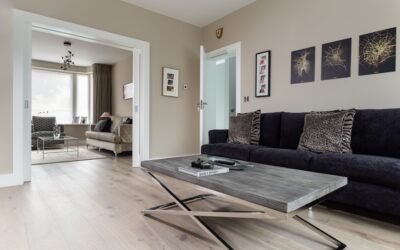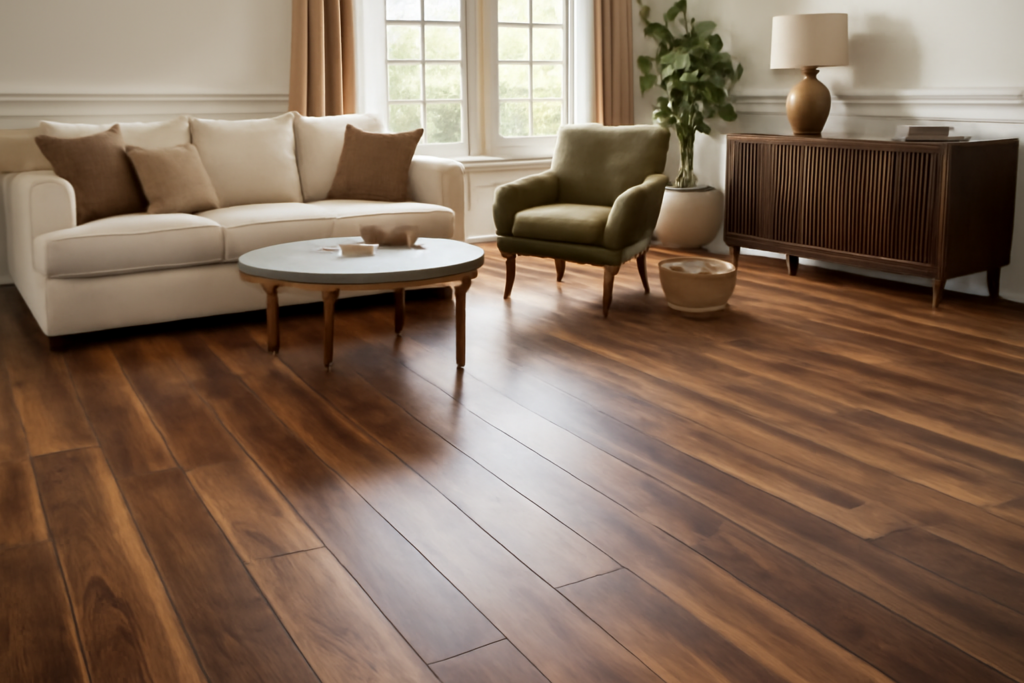
After two decades of pulling up worn carpet and installing floors in everything from starter homes to lakeside remodels, I can tell you that fancy laminate flooring has come a long way from the shiny, plasticky boards homeowners remember from the early 2000s. Today’s premium laminate can pass for genuine white oak, reclaimed barnwood, or honed marble at arm’s length, and sometimes even underfoot. The difference is in the printing, the surface texture, and the edge treatment, and once you understand what separates the top tier from the bargain bin, you can furnish an entire home in convincing high-end looks for a fraction of what real hardwood or stone would cost.
This guide walks you through what actually makes laminate “fancy,” how to read the specs that matter, and where your money goes when you upgrade. I’ll give you real coverage numbers, wear ratings, and installation realities so you can shop like a pro instead of getting talked into features you don’t need.
What Makes Laminate “Fancy” in the First Place
The word fancy gets thrown around loosely, but in the flooring trade it comes down to four measurable things: image resolution, surface embossing, board dimension, and edge detail. Cheap laminate uses a low-resolution photographic layer that repeats every few boards, so your eye eventually catches the same “knot” showing up over and over across the room. Premium product uses high-definition printing with a dozen or more unique board patterns in a carton, which means the floor reads as authentic wood with no obvious repeat.
Then there’s embossing. Basic laminate has a flat or lightly textured wear layer, while fancy laminate uses embossed-in-register (EIR) texture, where the grooves and grain you feel line up exactly with the printed grain you see. Run your hand across a good EIR floor and you feel the pores of the oak, the saw marks in the hickory, the trowel swirl in a stone look. That tactile match is the single biggest tell between a floor that looks expensive and one that looks like a laminate.
Finally, the fancy tiers use longer, wider planks (often 7 to 9 inches wide and up to 5 feet long) and painted or beveled micro-edges that mimic the shadow line of individual hardwood boards. These details cost more to manufacture, which is exactly why they signal quality.
Understanding AC Ratings and Durability
Every laminate carries an Abrasion Class (AC) rating from AC1 to AC5, and this is the spec I check before anything else. AC1 and AC2 are light residential and honestly not worth your time. For a home, you want AC3 at minimum, which handles all residential traffic including busy hallways and kids. AC4 steps up to light commercial durability, and AC5 is built for heavy commercial spaces like retail floors.
Here’s my practical take: for fancy laminate in a primary living area, AC4 is the sweet spot. It costs only marginally more than AC3 but resists the scuffs, pet claws, and grit that dull a floor over time. The wear layer on these premium boards is a melamine-aluminum oxide composite, and the denser it is, the longer that photographic layer stays crisp. A quality AC4 or AC5 floor will hold its looks for 20 to 25 years of normal use, which is competitive with engineered hardwood at half the price.
Durability also depends on the core. Standard laminate uses high-density fiberboard (HDF), but the fancier waterproof lines now use a rigid stone-plastic or wood-plastic composite core that shrugs off spills and won’t swell the way old laminate did. If you have a busy household, spending on a waterproof HDF or rigid core is money well placed.
The Realistic Looks You Can Get
The most convincing fancy laminate mimics white oak and European oak, with soft matte finishes and wire-brushed texture that reads as a designer hardwood. Wide-plank light oak has been the dominant look in high-end remodels for years, and laminate nails it because the printing captures the subtle color variation that makes real oak so appealing.
Beyond oak, reclaimed and weathered wood looks are where fancy laminate genuinely shines. Real reclaimed barnwood is expensive, splintery, and inconsistent, but a good laminate reproduction gives you all the gray-brown character with a smooth, sealed surface that cleans up in seconds. Herringbone and chevron patterns, once reserved for pricey parquet, now come in laminate at a tiny fraction of the installed cost of the real thing.
Stone and tile looks are the third category. High-gloss marble laminate, honed travertine, and concrete looks let you get a dramatic entryway or kitchen without the cold, hard, grout-heavy reality of ceramic. These come in both plank and square-tile formats, and the better ones include a slight surface texture so they don’t look like a printed photo under raking light.
What Fancy Laminate Actually Costs
Let’s talk numbers, because “fancy” doesn’t have to mean expensive relative to the alternatives. Entry-level laminate runs $1 to $2 per square foot. The fancy tier I’ve been describing (AC4 or AC5, EIR texture, wide planks, waterproof core) generally lands between $3 and $5 per square foot for the material, with a few designer and specialty patterns pushing $6 to $7. Compare that to $8 to $15 for engineered hardwood or $10 to $20 for solid hardwood installed, and the value becomes obvious.
Installation adds $2 to $4 per square foot if you hire it out, though laminate’s click-lock system makes it one of the most DIY-friendly floors on the market. Budget another $0.30 to $0.60 per square foot for underlayment if it isn’t pre-attached, plus transition strips, quarter-round, and a moisture barrier over concrete. For a typical 300-square-foot living room in fancy laminate, expect roughly $1,500 to $2,700 in materials and around $2,500 to $3,900 fully installed by a pro.
Always order 7 to 10 percent extra for cuts and waste, and more like 15 percent for herringbone or diagonal layouts. A carton typically covers 18 to 24 square feet, so do the math on cartons, not just square footage, and buy from a single dye lot to avoid color mismatch.
Installation Realities and Underlayment
Fancy laminate installs as a floating floor, meaning the planks click together and rest on top of the subfloor rather than being nailed or glued down. This is a genuine advantage: it goes over most existing hard surfaces, tolerates minor subfloor imperfections, and can be pulled up and reused. The critical prep step is a flat subfloor, no more than 3/16 inch of deviation over 10 feet, because floating floors telegraph high and low spots and can develop flex or gapping over dips.
Underlayment matters more on premium floors than people realize. A quality foam or cork underlayment cushions the step, quiets the hollow click that gives cheap laminate away, and adds a little R-value underfoot. Over concrete, you need a 6-mil poly moisture barrier or an underlayment with one built in, because slab moisture is the number one killer of laminate. I always run a simple plastic-sheet moisture test on concrete: tape down a two-foot square of plastic for 24 hours and check for condensation before installing anything.
Leave a 1/4 to 3/8 inch expansion gap around the entire perimeter and at every fixed object. Laminate expands and contracts with humidity, and pinching it against a wall is what causes buckling. Let the planks acclimate in the room for 48 hours before installation so they reach the home’s temperature and humidity first.
Maintenance That Keeps It Looking Expensive
The beauty of fancy laminate is how little it asks of you. Sweep or vacuum with a hard-floor setting to keep grit off the wear layer, since abrasive dirt is what dulls the finish over years. For wet cleaning, use a barely damp microfiber mop and a laminate-specific cleaner or a splash of vinegar in water. Never wet-mop with standing water, never use wax or oil soaps, and wipe up spills promptly even on waterproof lines, because water sitting in the locking joints is asking for trouble.
Put felt pads under furniture legs and rugs at entry points to trap grit. If a plank does get damaged, the floating construction means a pro can disassemble to the damaged board and swap it, which is why keeping a spare carton is smart. With this light routine, a fancy laminate floor holds its high-end look for the full life of the wear layer.
Is Fancy Laminate the Right Choice for You?
Fancy laminate flooring makes the most sense when you want the look of premium hardwood or stone but need durability, water resistance, and a friendlier budget. It’s ideal for busy families, pet owners, rental upgrades, and anyone who wants a designer aesthetic without the maintenance and cost of the real material. The waterproof rigid-core lines even work in kitchens and half-baths where solid hardwood would be a risk.
Where it falls short is resale perception in luxury markets and refinishing, since laminate can’t be sanded and refinished like hardwood. If you’re in a high-end home where buyers expect genuine wood, that’s a consideration. But for the vast majority of homeowners, a well-chosen AC4 fancy laminate delivers 90 percent of the look and feel for a fraction of the price, and that is a trade most people are thrilled to make once they see the finished floor.
Prefer to explore on your own?
See how new flooring looks in your actual room in seconds — free, no signup.
Try the free Floor Studio →