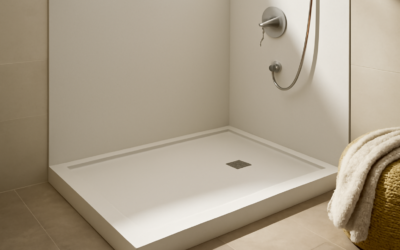
A fiberglass shower pan is the sloped base that catches water and channels it to the drain at the bottom of a shower. It is one of the most affordable and widely used shower bases in American homes because it is lightweight, easy to install, and comes ready-made in standard sizes. If you are building a new shower, replacing a cracked base, or remodeling a bathroom on a budget, a fiberglass pan is often the go-to choice. But it also has real trade-offs in durability and appearance compared with acrylic and tile, so it pays to understand what you are getting before you buy.
Part of our Bathroom Remodeling & Flooring guide — explore the full guide →
This guide covers what a fiberglass shower pan is, its cost, sizes, installation, care, and how it stacks up against other options.
- What Is a Fiberglass Shower Pan?
- Fiberglass Shower Pan Cost
- Common Sizes and Configurations
- Pros of a Fiberglass Shower Pan
- Cons and Limitations
- Fiberglass vs. Acrylic vs. Tile
- How a Fiberglass Shower Pan Is Installed
- Caring for a Fiberglass Shower Pan
- Common Mistakes to Avoid
- Repairing a Cracked Fiberglass Shower Pan
- Preparing the Subfloor and Drain
- Is a Fiberglass Shower Pan Right for You?
What Is a Fiberglass Shower Pan?
A fiberglass shower pan is molded from layers of glass fiber and resin, then coated with a gel-coat finish on the surface. The result is a one-piece sloped base with an integrated drain opening and, usually, a raised threshold or curb. It arrives preformed, so there is no need to build a mortar bed or waterproof a custom base. Fiberglass pans are sold at home centers like Home Depot and Lowe’s and by plumbing suppliers, often as part of a matched shower kit with walls.
Fiberglass Shower Pan Cost
Fiberglass is the least expensive shower base material. A standalone fiberglass pan typically costs $80 to $350 depending on size and quality, with most common sizes falling in the $100 to $250 range. Installation by a plumber or tile setter adds roughly $200 to $700 in labor, so a professionally installed pan often totals $300 to $1,000. By comparison, a custom tile shower base can run $1,500 to $4,000 installed once you factor in the mortar bed, waterproofing membrane, and tile labor. For budget remodels, fiberglass is hard to beat on price.
Common Sizes and Configurations
- Square: 32×32, 36×36, and 48×48 inches are common for stand-alone showers.
- Rectangular: 60×30 and 60×32 inches often replace a standard tub footprint.
- Neo-angle: Corner units, commonly 36×36 or 38×38, for tight bathrooms.
- Drain location: Center, left, or right drain options to match existing plumbing.
- Threshold: Standard curb or low-threshold and barrier-free options for accessibility.
Always confirm the drain location and rough-in dimensions match your plumbing before buying, since moving a drain adds significant cost.
Pros of a Fiberglass Shower Pan
- Low cost: The most budget-friendly base material.
- Lightweight: Easy to carry and install without heavy structural support.
- Preformed and pre-sloped: No mortar bed or waterproofing membrane needed.
- Easy to install: Achievable for a capable DIYer in a day.
- Widely available: Stocked in standard sizes at home centers.
Cons and Limitations
- Less durable: The gel-coat surface can crack, chip, and wear over time, especially if the pan is not fully supported underneath.
- Can flex: Thinner pans may feel springy underfoot if not bedded properly.
- Harder to clean over time: The finish is more porous than acrylic and can stain or dull.
- Limited looks: Fewer color and finish options; reads as basic compared to tile.
- Shorter lifespan: Typically lasts 10 to 15 years versus longer for acrylic or tile.
Fiberglass vs. Acrylic vs. Tile
Fiberglass vs. acrylic
Acrylic pans are made of a vacuum-formed acrylic sheet, often reinforced with fiberglass backing. Acrylic is warmer, glossier, more stain-resistant, and easier to clean, and it holds up better than plain fiberglass, but it costs a bit more, usually $150 to $500 for the pan. For a modest price bump, acrylic is often the better value.
Fiberglass vs. tile
A tile shower base offers unlimited design options and, when properly waterproofed, excellent durability and a high-end look. It costs several times more, requires skilled installation and ongoing grout maintenance, and takes longer to build. Choose tile for custom design and longevity, fiberglass for speed and savings.
How a Fiberglass Shower Pan Is Installed
Installation is straightforward but must be done correctly to prevent flexing and leaks.
- Dry-fit the pan: Set it in place and confirm it is level and the drain lines up.
- Bed it in mortar: Spread a layer of thinset or mortar on the subfloor so the pan is fully supported. This prevents flexing and cracking, a step DIYers often skip and regret.
- Connect the drain: Install the drain assembly and gasket per the manufacturer’s instructions, then set the pan into the mortar bed.
- Level and secure: Check level in all directions, screw the flange to the studs where specified, and let the mortar cure.
- Seal and install walls: Caulk the seams and install the surround, overlapping the pan flange so water drains into the pan.
A handy DIYer can install a fiberglass pan in a day. If plumbing needs to move or you are unsure about waterproofing the wall-to-pan connection, hire a professional.
Caring for a Fiberglass Shower Pan
- Use non-abrasive cleaners: Harsh scrubbing and abrasive pads dull the gel-coat. Use gentle bathroom cleaners and a soft cloth.
- Rinse and dry: Wiping down after showers reduces soap scum and staining.
- Address cracks early: Small chips and cracks can be repaired with a fiberglass or gel-coat repair kit before they spread.
- Avoid standing on the edges: Keep weight over the supported center to prevent flexing.
Common Mistakes to Avoid
- Skipping the mortar bed: An unsupported pan flexes and cracks. Always bed it fully.
- Wrong drain location: Confirm the rough-in before buying; relocating a drain is costly.
- Improper wall overlap: The surround must overlap the pan flange or water gets behind the walls.
- Using harsh cleaners: Abrasives permanently dull the finish.
- Buying the thinnest pan: Ultra-cheap pans flex and wear out fast; a mid-grade pan lasts longer.
Repairing a Cracked Fiberglass Shower Pan
Because the gel-coat surface can crack or chip, especially if the pan was not fully bedded in mortar, homeowners often face the choice of repairing versus replacing. Small hairline cracks and chips can be fixed with a fiberglass or gel-coat repair kit available at hardware stores for $20 to $40. The process involves cleaning and lightly sanding the damaged area, filling it with the two-part resin or gel-coat filler, sanding it smooth once cured, and blending the finish. A well-done repair restores the surface and stops water from seeping into the crack, which is important because water intrusion under the pan can lead to rot and mold in the subfloor.
That said, repairs are a stopgap. If a pan cracks because it flexes on an unsupported subfloor, the crack will likely return until the underlying support problem is fixed. A pan that flexes noticeably underfoot, has multiple cracks, or shows signs of water damage around it is usually better replaced than repeatedly patched. Reinforcing kits that inject expanding foam under a flexing pan exist, but for an aging pan, a proper replacement bedded in mortar is the more durable long-term solution.
Preparing the Subfloor and Drain
The single biggest factor in how long a fiberglass shower pan lasts is what sits underneath it. The subfloor must be clean, flat, structurally sound, and free of rot before the pan goes in. Any soft spots or old water damage should be repaired first, because a new pan set over a compromised subfloor will flex and fail early. Check that the subfloor is level, or shim and adjust as needed so the pan sits evenly and drains toward its outlet.
The drain connection deserves equal care. Confirm the drain rough-in location matches the pan’s drain opening before you buy, since relocating a drain means opening the floor and adding significant cost. Use the specific drain assembly and gasket recommended for your pan, and follow the manufacturer’s torque and sealing instructions so the connection does not leak. Test the drain for leaks before finishing the walls. Taking time on subfloor prep and the drain connection prevents the most common and expensive shower failures down the road.
Is a Fiberglass Shower Pan Right for You?
A fiberglass shower pan is an excellent choice when budget, speed, and simplicity matter most, such as in a rental, a secondary bathroom, or a fast remodel. If you want a warmer, glossier, easier-to-clean surface for a modest premium, step up to acrylic. If you want a fully custom, high-end shower and are willing to pay for it, tile is the way to go. Whatever you choose, proper installation with a full mortar bed is the single biggest factor in how long your shower base lasts.
For homeowners who want a functional, affordable, and easy-to-install shower base, the fiberglass shower pan remains a practical, proven option. Match the size and drain location to your bathroom, bed it properly, care for the finish, and it will serve reliably for years while keeping your remodel on budget.