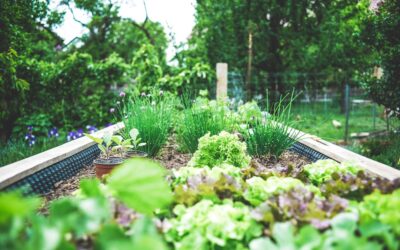
Sticker shock hits every new gardener at the same moment: the bed kit cost $150, and the dirt to fill it costs more. Done naively — bagged garden soil to the brim — filling raised garden beds runs $8-$12 per cubic foot, which means $200-plus for one 4×8 bed. Done with a layered strategy, filling raised garden beds costs a third of that, drains better, and feeds the soil for years as the base layers break down. Here’s the layer system I use, the mix ratios that work, and the exact cubic-foot math for common bed sizes.
- First, Know Your Volume
- The Layer Strategy: Hugelkultur-Style Base
- Growing-Mix Recipes That Work
- Worked Example: 4x8x17-Inch Metal Bed, ~45 Cu Ft
- Settling, Topping, and Year-Two Care
- Shallow Beds: When You Can’t Layer
- Sourcing Cheap and Free Materials
- What Not to Put in the Bottom
- Fine-Tuning the Soil Mix for Raised Beds
First, Know Your Volume
Volume = length x width x depth, in feet. Common beds:
- 4×4 x 1 ft deep: 16 cu ft (0.6 cu yd)
- 4×8 x 1 ft: 32 cu ft (1.2 cu yd)
- 4×8 x 17 in (typical tall metal bed): ~45 cu ft (1.7 cu yd)
- 4×8 x 2 ft: 64 cu ft (2.4 cu yd)
- 2×8 x 17 in: ~23 cu ft (0.85 cu yd)
Bagged soil comes in 1, 1.5, and 2-cu-ft bags at roughly $5-$15 each; bulk soil delivers at $30-$60 per cubic yard (27 cu ft) plus a $50-$100 delivery fee. The crossover point: once you need more than about 1 cubic yard total, bulk delivery wins, and it wins big across multiple beds. Filling a 4x8x2-ft bed entirely with $10 bags costs about $400; the layered approach below does it for $60-$120.
The Layer Strategy: Hugelkultur-Style Base
Vegetable roots do almost all their feeding in the top 8-12 inches. Everything below that depth can be cheaper, coarser organic material that decomposes into fertility over 3-5 years — the principle borrowed from hugelkultur (German for “mound culture”). For any bed 17 inches or deeper, build in this order:
Layer 1: Ground Prep (0 inches)
Break up or fork the native soil under the bed for drainage and worm access. Line the bottom with plain corrugated cardboard (tape removed) or 4-6 sheets of newspaper to smother grass — it decomposes within a season. Add 1/2-inch hardware cloth stapled across the bottom only if you have gophers or voles; skip landscape fabric entirely, since it blocks worms and roots and eventually clogs.
Layer 2: Coarse Wood (bottom 25-40 percent of depth)
Rotting logs, branch trunks, and split firewood too punky to burn — laid tight like cobblestones. Wood soaks up water like a sponge and releases it in dry spells while feeding fungal networks as it rots. Best species: alder, apple, maple, oak, poplar, birch. Avoid black walnut (juglone toxin), black locust and cedar (won’t rot for decades), and anything treated. No logs available? Broken branches, wood chips, or even untreated dimensional lumber offcuts work.
Layer 3: Brush and Greens (next 10-20 percent)
Twigs, corn stalks, spoiled straw, dry leaves, grass clippings, kitchen scraps, aged manure. This mixed browns-and-greens band packs the voids between logs so the soil above doesn’t sift down, and it composts in place. Stomp it down and soak the whole assembly with a hose until water runs from the base.
Layer 4: Transition Compost (2-3 inches)
Cheap bulk compost or well-rotted manure caps the rough stuff and jump-starts decomposition. Municipal compost at $15-$30 per yard is perfect here.
Layer 5: Growing Mix (top 10-12 inches)
The money layer — quality matters here and only here. Use one of the proven ratios below.
Growing-Mix Recipes That Work
- Classic thirds (my default): 1/3 topsoil, 1/3 compost (blend at least two sources — municipal, mushroom, homemade, bagged), 1/3 aeration material (coarse perlite, rice hulls, or pine bark fines). Drains well, holds moisture, feeds all season.
- Mel’s Mix (Square Foot Gardening): 1/3 peat moss or coco coir, 1/3 vermiculite, 1/3 blended compost. Fluffy and weed-free but pricey — about $10-$14 per cubic foot — and best confined to shallow SFG beds.
- Bulk “garden blend” plus upgrades: Many yards sell a 50/50 topsoil-compost blend at $35-$55 per yard. Take it, then fortify each 4×8 bed with 2 cu ft of compost, 2-4 quarts of worm castings, and the amendment package below.
Amendments per 4×8 Bed
- 2-4 cups balanced organic fertilizer (4-4-4 or 5-5-5, e.g., a Down to Earth or Espoma blend)
- 1-2 cups azomite or basalt rock dust for trace minerals
- 2 quarts worm castings ($8-$15) — cheap insurance for biology
- Optional: 1 cup kelp meal; gypsum only if a soil test shows calcium need without pH headroom
Worked Example: 4x8x17-Inch Metal Bed, ~45 Cu Ft
- Cardboard on forked ground: free.
- 6 inches of logs and branches (~16 cu ft): free from storm cleanup or a tree service’s discard pile.
- 3 inches of leaves, straw, clippings (~8 cu ft): free to $15 for a straw bale.
- 2 inches bulk compost (~5 cu ft): ~$10 of a bulk yard.
- 10 inches growing mix (~16 cu ft): 2/3 yard of garden blend (~$30) + 3 bags compost ($21) + amendments ($20).
Total: roughly $80-$100 versus $350-$450 all-bagged. Multiply the savings across a three-bed garden and the layer method pays for another entire bed.
Settling, Topping, and Year-Two Care
- Overfill by 1-2 inches and water heavily twice before planting; hugel-style beds settle 10-20 percent the first season as layers compact. Keep a few bags of mix in reserve to top up.
- Expect the surface to drop again over winter as wood decays. Each spring, top-dress 1-2 inches of compost — that’s the entire annual soil program; never dig the layers back up.
- Nitrogen note: buried wood ties up a little nitrogen at the wood-soil interface the first year. The compost cap mostly buffers this, but feed heavy feeders (tomatoes, brassicas, corn) with a nitrogen-forward organic fertilizer in year one if leaves run pale.
- By year three the log layer functions as an underground water reservoir — layered beds in my experience need noticeably less irrigation in August than soil-only beds of the same depth.
Shallow Beds: When You Can’t Layer
Beds under 12 inches deep don’t have room for a wood base — the growing layer needs the full depth. For an 8-11-inch bed, fill entirely with the classic-thirds mix and accept the higher per-cubic-foot cost; the volumes are small enough (a 4x8x10-inch bed holds about 27 cu ft) that even all-bagged filling stays near $150-$250, and a single bulk yard of garden blend plus amendments does it for $60-$90. Two shallow-bed adjustments matter: skip coarse fillers entirely, since anything chunky in the top foot interferes with roots, and lean the mix slightly heavier on compost (up to 40 percent) because shallow profiles dry out faster and compost is your moisture buffer. If the bed sits on concrete or a deck, add 2 inches of coarse pine bark at the very bottom strictly as a drainage transition and choose a mix with more perlite — contained beds over hard surfaces waterlog in ways in-ground beds never do.
Sourcing Cheap and Free Materials
- Logs and brush: Storm cleanup piles, tree services (many dump wood chips and logs free through services like ChipDrop), and your own pruning backlog.
- Leaves: Bagged curbside leaves every fall — a suburban street yields more than any garden can use.
- Municipal compost: Many cities sell finished compost at $15-$30 per yard or give it away to residents; test a batch with a bean-germination check if herbicide carryover worries you.
- Manure: Horse barns give it away aged; ask for piles at least 6 months old and avoid stables that spray their hay fields with persistent herbicides like aminopyralid — the one contaminant that genuinely ruins beds for a season or two.
- Straw: Feed stores sell spoiled bales at half price; spoiled is exactly what you want for burying.
What Not to Put in the Bottom
- Rocks or gravel “for drainage”: A persistent myth — a coarse layer under fine soil actually creates a perched water table and slows drainage. Skip it.
- Landscape fabric or plastic sheeting: Blocks drainage, worms, and deep roots.
- Treated lumber, painted wood, glossy cardboard: Chemical leaching where you grow food.
- Fresh softwood chips mixed into the growing layer: Fine buried deep or as surface mulch, but blended into root-zone soil they rob nitrogen aggressively.
- Sod flipped green-side down works; loose grass with rhizome weeds (Bermuda, quackgrass) does not — those survive burial and colonize the bed.
Fill the bottom with what rots, spend on the top foot, amend with intent, and top-dress every spring. A bed filled this way gets better every single year — which is exactly the opposite trajectory of a bed filled with 40 bags of anonymous “garden soil.”
Fine-Tuning the Soil Mix for Raised Beds
A good soil mix for raised beds balances three jobs: holding enough water for roots, draining fast enough that roots never sit in soggy soil, and feeding plants through the season. Most gardeners start with roughly equal parts topsoil, compost and an aeration material, then adjust the proportions to match the bed depth, the crops and the local climate.
Adjusting Typical Ratios to Your Conditions
Equal thirds is a starting point, not a rule. In hot, dry regions, shift toward 40 percent compost and trim the aeration material so the bed holds moisture longer between waterings. In rainy climates or for crops that hate wet feet, such as herbs, garlic and carrots, raise the aeration share closer to 40 percent and keep compost near 25 to 30 percent.
Checking a Bulk Mix Before It Goes In
Delivered blends vary from load to load. Grab a damp handful and squeeze: good mix holds a loose ball that crumbles when poked. A sticky ribbon points to too much clay; a pile that will not hold together at all is too sandy or too woody. A simple jar test helps too: shake a cup of mix in a jar of water, let it settle overnight and look for a thin clay layer rather than a thick band.
Converting Volume to Bags and Yards
Multiply length, width and depth in feet to get cubic feet, then divide by 27 for cubic yards. Split that total by your recipe: a 30 cubic foot bed mixed in thirds needs 10 cubic feet each of topsoil, compost and aeration material. Bag sizes are printed in cubic feet or quarts (about 26 dry quarts per cubic foot), so divide your total by the bag size and round up. Order about 10 percent extra to cover settling during the first few waterings.
Treated Wood and Soil Contact
Many gardeners prefer naturally rot-resistant lumber, stone, block or metal for beds that grow food. If an existing frame is made from older treated lumber or an unknown wood, a simple precaution is to line the inside walls with a heavy plastic liner, keep the bottom open for drainage, and plant edible roots a few inches in from the frame. When in doubt about what a wood was treated with, replacing the frame is the cautious choice.
Refreshing the Soil Each Year
Raised beds lose volume every season as organic matter breaks down. Each spring or fall, spread 1 to 2 inches of finished compost over the surface and work it lightly into the top few inches without turning the whole bed. Every two to three years, send a sample to a local extension lab for a soil test, then add lime, sulfur or specific nutrients only if the results call for them.