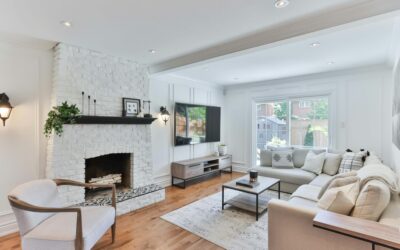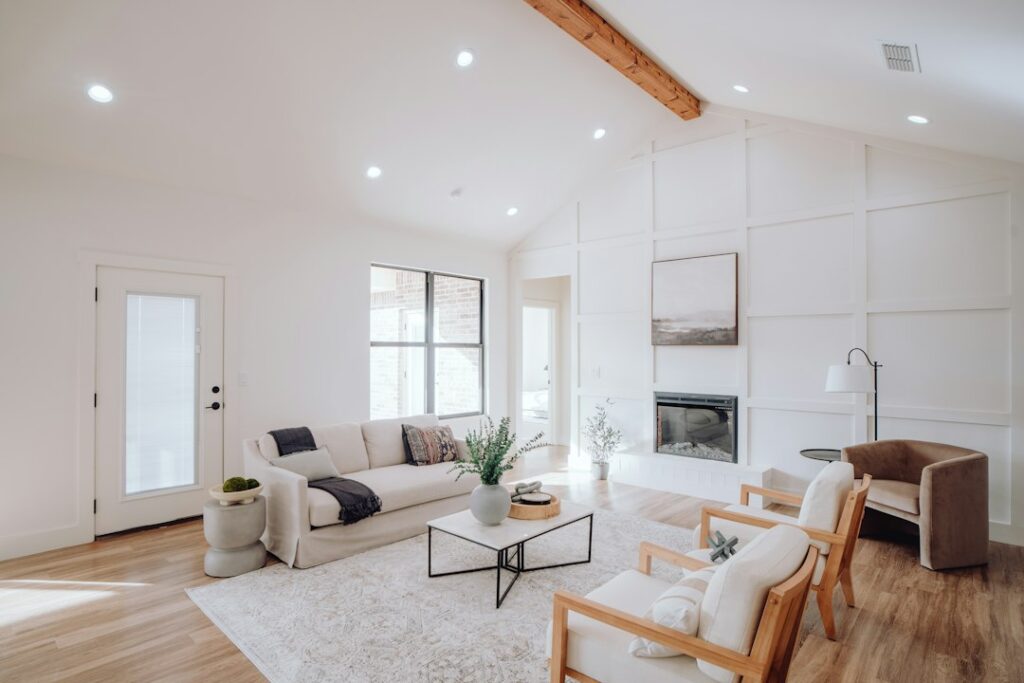
Plenty of beautiful rooms have a fireplace without a mantel, and the look is often intentional. Modern linear gas units, minimalist plaster surrounds and full-height tile walls all skip the shelf because a mantel would break the clean lines. The challenge is that, without a shelf, the wall can feel unfinished, and there is nowhere obvious for art, candles or seasonal decor.
The solution is to treat the whole fireplace wall as the design element instead of the shelf. That might mean a flush surround in a bold material, a carefully placed large artwork, built-in niches, or a slim ledge that holds a few objects. If you are removing an old mantel, you also need a plan to patch the anchor holes and paint shadow it leaves behind.
- Why Choose a Fireplace Without a Mantel?
- Materials and Tools for Mantel-Free Updates
- Design Ideas That Work Without a Shelf
- How to Remove an Old Mantel Step by Step
- Patching the Wall After Mantel Removal
- Safety and Clearance Considerations
- Troubleshooting Common Problems
- General Cost Ranges
- When to Call a Pro
- Frequently Asked Questions
Why Choose a Fireplace Without a Mantel?
Going mantel-free is a style choice for some and a practical necessity for others. Common reasons include:
- Modern design: Linear and contemporary fireplaces look sleekest with an uninterrupted surround.
- Clearance rules: Some wood-burning fireplaces and inserts require so much clearance to combustible material that a wood mantel would sit too high to be useful.
- Mounted TV: A mantel can push a television uncomfortably high. Removing it gives more flexibility, though heat above the opening still matters.
- Dated trim: A heavy, ornate or damaged mantel can make the whole room feel old. Removing it is often easier than refinishing it.
- Small rooms: A projecting shelf takes visual space. A flush wall feels lighter.
Call it a fireplace without mantle trim, a fireplace no mantle setup or simply a shelf-free surround: the design principles stay the same. Scale, balance and one strong focal point do the work a shelf used to do.
Materials and Tools for Mantel-Free Updates
Depending on which approach you take, you may need some of the following:
- Stud finder, level, tape measure and painter’s tape for layout
- Pry bar, oscillating tool and utility knife for mantel removal
- Setting-type joint compound, mesh tape and a 6 inch and 10 inch drywall knife
- Primer, wall paint and sanding sponges
- Cement board, thinset and tile or stone if building a new surround
- Heavy-duty picture hangers or a French cleat for large art
- A slim picture ledge shelf if you want a place for small decor
- Safety glasses, gloves and a dust mask
Design Ideas That Work Without a Shelf
Flush surrounds in a statement material
Run large-format porcelain, honed stone, zellige-style tile or smooth plaster from the opening to the ceiling. The material becomes the decoration. Large slabs with few grout lines read the most modern; handmade tile adds texture and warmth.
Oversized art centered on the opening
One large piece usually beats a cluster of small ones. Aim for art that is roughly two-thirds the width of the fireplace opening or surround, hung so its bottom edge sits 8 to 12 inches above the top of the surround. Lean toward canvas, metal or framed prints behind glass rather than fragile paper near heat.
Built-in niches beside the firebox
Recessed niches in flanking walls or a bump-out provide display space without a projecting shelf. A log niche below or beside a linear unit is a popular contemporary detail. Keep niches within the clearance rules for whatever material lines them.
A floating picture ledge
A picture ledge shelf, typically 3 to 4 inches deep, gives you a place for a few frames or a small plant without the visual weight of a mantel. Choose metal or a noncombustible material if it sits within the clearance zone, and mount it into studs or masonry anchors.
Paint and color blocking
Painting the fireplace wall a deeper shade than the rest of the room, or color-drenching the surround and wall in one tone, adds presence without adding anything to the wall.
Symmetrical sconces
A pair of wall sconces flanking the fireplace frames it the way a mantel would. Plug-in sconces avoid wiring work; hardwired fixtures need an electrician or careful, permitted work.
How to Remove an Old Mantel Step by Step
- Check for hazards. In homes built before 1978, assume painted trim may contain lead. Use a lead test kit before sanding or demolition, and follow lead-safe practices if it tests positive.
- Find the fasteners. Most wood mantels attach with finish nails, screws hidden under plugs, or a hidden cleat. Some cast stone mantels sit on brackets or are mortared in place.
- Score the caulk and paint lines. Run a utility knife around every edge where the mantel meets the wall so you do not peel off paper facing from the drywall.
- Pry gently. Insert a pry bar with a scrap of wood behind it to spread the load and work along the edge, loosening a little at a time.
- Cut stubborn fasteners. An oscillating tool with a metal-cutting blade slipped behind the mantel can cut nails flush.
- Get help for heavy pieces. Stone or cast mantels can weigh well over 100 pounds. Use two or more people and support the piece before the last fastener releases.
Patching the Wall After Mantel Removal
Expect nail holes, a few torn spots, a ridge of old caulk, and usually a paint outline where the mantel shielded the wall from years of light and soot.
- Pull or set remaining nails below the surface.
- Cut away loose paper and seal torn drywall paper with a shellac-based or stain-blocking primer before patching; this stops bubbles.
- Fill holes and gouges with setting-type compound, which shrinks less than premixed. Use mesh tape over cracks.
- Apply two or three thin coats, feathering each wider than the last, and sand smooth between coats.
- Prime the entire wall, not just the patches, so the sheen and color match after painting.
- If the surround is masonry and the mantel was mortared on, chip off old mortar, then patch with a matching mortar or plan to cover the area with a new surround.
When the damage is extensive, it is often faster to skim the whole wall or cover it with new tile or plaster instead of chasing dozens of small patches.
Safety and Clearance Considerations
Removing a mantel usually improves safety, but what you add afterward still matters:
- Follow the fireplace or insert manufacturer’s clearance to combustibles for any shelf, ledge, art or trim. When unsure, use noncombustible materials in the zone near the opening.
- Electronics above a fireplace can overheat. Check the TV maker’s guidance and measure wall temperature during a long fire before mounting.
- If you add LED strips inside niches, use UL-listed drivers sized with headroom, keep strips away from heat sources, and never coil or cover them.
- For hardwired sconces, turn off the breaker and confirm power is off with a non-contact voltage tester. New circuits or outlets should be installed by a licensed electrician.
- Keep working smoke and carbon monoxide alarms on every level, especially with wood or gas fireplaces.
Troubleshooting Common Problems
The wall looks empty
Scale up. Undersized art is the most common mistake. A larger piece, a statement mirror or a taller surround fixes the void better than adding small items.
Patch lines show through paint
This is called flashing. Prime the whole wall and use a roller with the same nap as the original finish. A light skim coat may be needed on heavily textured walls.
Nowhere to hang stockings or seasonal decor
Use weighted stocking holders on a console table, a temporary tension rod or a garland draped on a picture ledge, keeping anything flammable well away from the opening.
The fireplace looks off-center
Balance it with furniture, a pair of matching chairs, or built-in cabinets on both sides rather than trying to center decor on the wall.
General Cost Ranges
Simply removing a wood mantel and patching drywall is usually a modest DIY project costing tens of dollars in compound, primer and paint. A handyman might charge a few hundred dollars. Adding a tile or stone surround runs from several hundred dollars for a small DIY tile job to a few thousand for professionally installed slab or stone. Custom built-in niches or full plaster finishes cost more, often in the low to mid thousands depending on size and region.
When to Call a Pro
Bring in a professional if the mantel is heavy stone, if removal reveals cracked masonry or damaged firebox surrounds, or if you plan to cut niches into a wall that may contain flues, framing or wiring. Have a chimney professional confirm clearances for any new material near a wood-burning fireplace, and use a licensed electrician for hardwired lighting or new outlets for a mounted TV. Tile, painting and drywall patching are well within reach for most handy homeowners.
Frequently Asked Questions
Does a fireplace need a mantel?
No. A mantel is decorative. Many modern and linear fireplaces are designed without one, and some wood-burning units have clearance rules that make a low wood mantel impractical.
How high should art hang over a fireplace with no mantel?
A common guideline is to hang the bottom of the art 8 to 12 inches above the top of the surround, with the piece about two-thirds the width of the fireplace.
Can I remove my mantel myself?
Most wood mantels come off with a pry bar and some patience. Test pre-1978 paint for lead first, and get help or a pro for heavy stone or cast mantels.
What can I put above a fireplace without a mantel?
Large art, a mirror, a slim picture ledge, sconces, a mounted TV where heat allows, or a full-height tile or plaster surround all work well.
How do I hide the outline left by an old mantel?
Patch holes, sand smooth, then prime and paint the entire wall rather than spot painting. Faded paint outlines disappear once the whole surface has fresh primer.