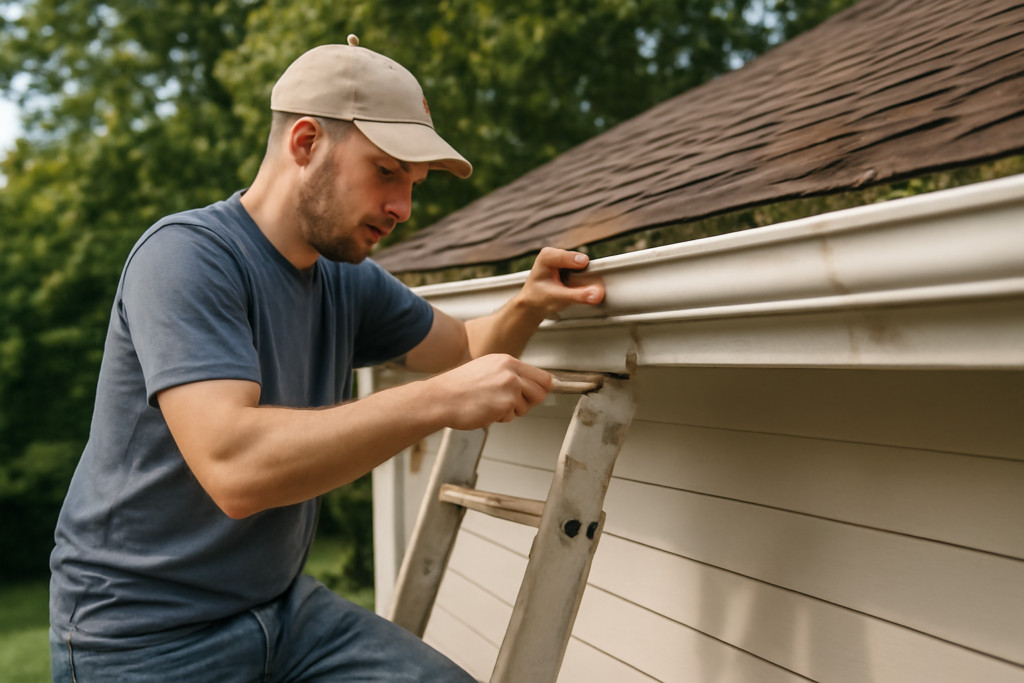
Gutters quietly protect your home from thousands of dollars in water damage, until they fail. Fixing gutters promptly keeps water flowing away from your foundation, siding, and landscaping instead of pooling where it causes rot, leaks, and erosion. The good news is that many common gutter problems are well within reach of a careful DIYer. This guide covers the most frequent repairs, the tools you need, and the ladder safety rules that keep this project from going wrong.
Part of our Roofing guide — explore the full guide →
Why Gutter Repairs Matter
When gutters leak, sag, or clog, water spills where it should not. Over time that leads to a wet basement, cracked foundation, peeling paint, rotted fascia boards, and soggy flower beds. A small repair today prevents an expensive structural problem later, so it pays to address issues as soon as you notice them.
The most common warning signs are water running down behind the gutter, visible sagging, dripping seams, overflowing during rain, and pooling water near the foundation. Each points to a specific fix you can often handle yourself.
Ladder Safety Comes First
Before any repair, take ladder safety seriously, because most gutter injuries come from falls, not the work itself. Set up on firm, level ground and never lean a ladder against the gutter, which can bend or break it. Use a stabilizer or standoff bracket that rests against the roof or wall instead.
- Maintain three points of contact at all times, two hands and a foot, or two feet and a hand.
- Follow the 4-to-1 rule: place the ladder base 1 foot away from the wall for every 4 feet of height.
- Never stand on the top two rungs or overreach; move the ladder instead.
- Have a helper steady the ladder, and avoid working in wind or rain.
- Wear closed shoes with good grip and keep tools in a pouch or hoist them up.
Clearing Clogs and Debris
The most common gutter problem is simply a clog. Leaves, twigs, and roof grit build up and block the flow, causing overflow. Scoop out debris by hand with gloves and a small trowel, then flush the gutter with a garden hose to confirm water runs freely to the downspout.
If water backs up at the downspout, it is clogged too. Flush it from the top, and if that fails, use a plumber’s snake to clear the blockage. Regular cleaning, at least twice a year, prevents most other gutter problems before they start.
Sealing Leaks and Seams
Leaks usually appear at seams and corners where sections join. To fix them, let the gutter dry, clean the area thoroughly, and apply a gutter sealant or silicone caulk along the inside seam. For best adhesion, scrape away old, failed sealant first and let the new bead cure fully before the next rain.
Small holes from rust or punctures can be patched with a metal patch and sealant, or with gutter repair tape for a quick fix. For larger rusted-out sections, replacing that length of gutter is usually the more lasting solution.
Fixing Sagging Gutters
Sagging gutters trap standing water and pull away from the house. The cause is often loose or failed hangers, or an improper slope. Gutters need a slight pitch, about a quarter inch of drop for every 10 feet, to drain toward the downspout.
Re-secure the gutter by replacing worn spikes with modern hidden hangers or gutter screws driven into solid fascia. While you are at it, check the slope with a level and adjust the hangers so water flows steadily toward the downspouts rather than pooling.
Repairing Downspouts and Drainage
Downspouts carry water away from the house, so they deserve attention too. Reattach any loose brackets, seal leaking joints, and make sure the bottom directs water at least several feet from the foundation. Adding a downspout extension or splash block prevents water from collecting against the house.
If water consistently pools near the foundation despite clear gutters, the problem may be drainage. Extending downspouts or improving grading around the house solves what gutter repairs alone cannot.
When to Call a Professional
Some situations are better left to experts. Call a pro when gutters are on a steep or very high roofline, when large sections are rusted through and need replacement, or when leaks persist despite your repairs. If you are uncomfortable on a ladder at height, the cost of professional service is far cheaper than a fall.
Persistent water in the basement or foundation cracks also signal a bigger drainage problem worth a professional assessment.
Tools and Materials You Will Need
Gathering the right gear before you climb the ladder makes the job faster and safer. Most gutter repairs use simple, inexpensive tools you may already own. Having everything in a pouch or bucket means fewer trips up and down the ladder.
- Sturdy extension ladder with a stabilizer or standoff bracket.
- Work gloves and safety glasses to protect against debris and sharp metal edges.
- Gutter sealant or silicone caulk for seams and small holes.
- Gutter scoop or trowel and a bucket for debris.
- Hidden hangers or gutter screws and a drill for resecuring sags.
- Garden hose for flushing and testing flow.
Preventing Future Gutter Problems
The best repair is the one you never have to make. A little prevention keeps gutters flowing and dramatically reduces how often you need to climb up for fixes. Cleaning gutters at least twice a year, in spring and fall, removes the debris that causes most clogs and overflow.
Installing gutter guards can cut down on cleaning by keeping leaves out, though they still need occasional checking. Trimming overhanging branches reduces the leaves and twigs that fall in, and inspecting seams and hangers each season lets you catch small issues before they become big ones. Pairing routine maintenance with prompt small repairs keeps your gutter system protecting your home for many years.
Final Thoughts
Fixing gutters is a manageable project that protects your home from serious water damage, as long as you put ladder safety first. Clear clogs, seal leaking seams, re-secure sagging sections, and keep downspouts directing water away from the foundation. Stay on top of seasonal cleaning, and your gutters will keep doing their quiet, essential job. When the work gets too high or the damage too extensive, do not hesitate to bring in a pro.