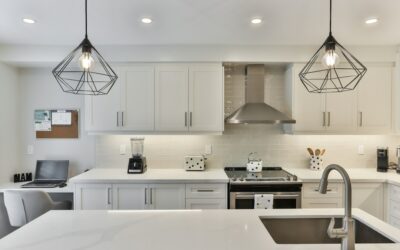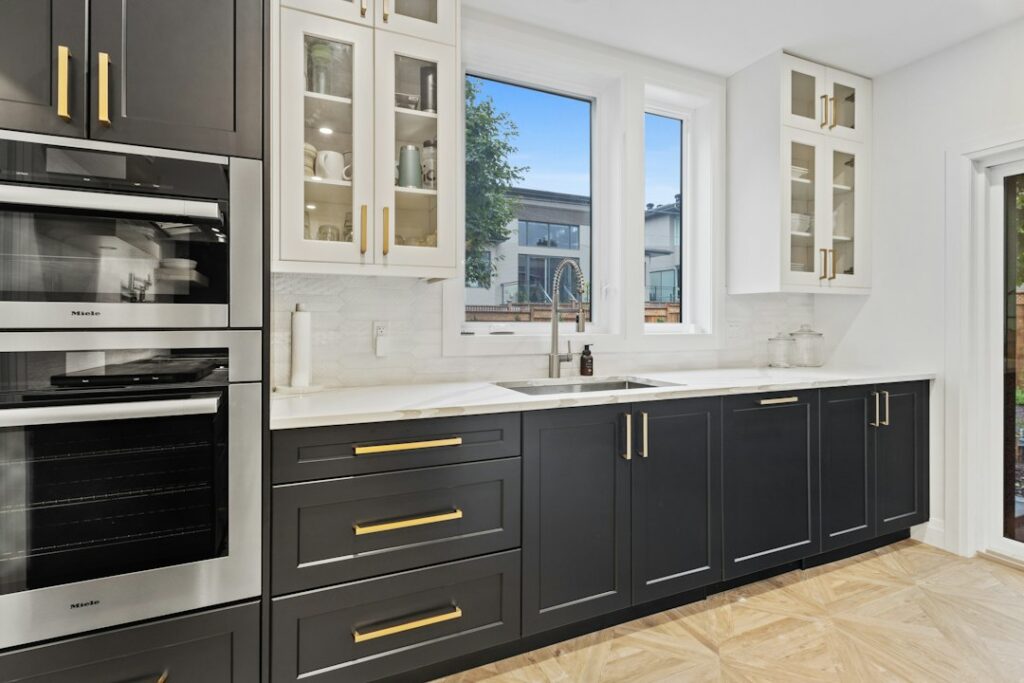
Round bar pulls dominated kitchens for two decades, but flat cabinet pulls have quietly taken over modern and transitional designs because they sit closer to the door, catch fewer sleeves and read as a clean line instead of a tube. A flat pull is any handle whose grip is a flat strip of metal, wood or composite rather than a round rod. Sizes run from tiny 3 inch pulls for small drawers to 12 inch bars and longer appliance pulls.
Part of our Kitchen Remodeling guide — explore the full guide →
The fast answer on sizing: use 3 to 4 inch center to center pulls on small doors and narrow drawers, 5 to 6-5/16 inch pulls on standard drawers up to about 24 inches wide, and 7-9/16 to 12 inch pulls on wide drawers, tall pantry doors and large slab fronts. A common rule of thumb is to make the pull roughly one third of the drawer width. Finish choice then follows the rest of the room, with matte black, brushed nickel, satin brass and stainless the most common options.
Flat pulls suit slab doors best, look sharp on shaker doors when the size is right, and can feel out of place on ornate raised panel cabinets. The sizing table handles the measurements; the rest covers finishes, mounting and the installation steps that make a dozen pulls line up perfectly.
Flat Cabinet Pulls Size Chart
Center to center (often written c-c or CC) is the distance between the two screw holes, and it is the number you need when buying replacements. Overall length is a bit longer because the bar extends past each post.
| Center to center | Typical overall length | Best placement |
|---|---|---|
| 3 in (76 mm) | 3-1/2 to 4 in | Small drawers, vanity doors, bath cabinets |
| 3-3/4 in (96 mm) | 4-1/4 to 5 in | Standard doors, drawers up to 15 in wide |
| 5 in (128 mm) | 5-1/2 to 6-1/2 in | Drawers 15 to 24 in wide, upper doors |
| 6-5/16 in (160 mm) | 7 to 7-3/4 in | Base drawers 18 to 30 in wide |
| 7-9/16 in (192 mm) | 8 to 9 in | Wide drawers, tall doors |
| 8-13/16 in (224 mm) | 9-1/2 to 10 in | Deep pot drawers 30 to 36 in wide |
| 10-1/16 in (256 mm) | 10-1/2 to 11-1/2 in | Pantry doors, large slab drawers |
| 12 in (305 mm) | 12-1/2 to 13-1/2 in | Oversized drawers, tall pantry doors |
Metric sizes in 32 mm steps are the norm for imported hardware, which is why you see odd inch figures like 6-5/16 and 7-9/16. When replacing existing pulls, measure the holes rather than the old pull and match that exact spacing so you do not have to fill and redrill.
Types of Flat Pulls
Flat bar pulls
The most common style is a flat rectangular bar on two short posts. Bars range from thin strips around 1/8 inch thick to chunky 3/8 inch profiles, and widths from about 3/8 to 3/4 inch. Thicker bars look substantial on large drawers; thin bars feel delicate and suit smaller spaces.
Low-profile and slim pulls
Low-profile pulls reduce projection, meaning how far the grip stands off the door. A standard bar pull projects roughly 1 to 1-3/8 inches, while low-profile versions may sit under 1 inch. They suit tight walkways, galley kitchens and spots where hips brush the cabinets. Make sure there is still enough finger clearance for a comfortable grip.
Edge and tab pulls
Edge pulls mount on the top edge or back of a door so only a thin flat lip shows. Tab pulls are short, flat projections, often 2 to 4 inches wide. Both work well for minimalist slab fronts. For pulls set fully into the drawer face, look at recessed and inset styles instead.
Flat drawer pulls with backplates
Some flat drawer pulls include a flat backplate that covers old holes or adds a frame. They are useful when switching from a different hole spacing and you do not want to patch the door.
Finishes and What They Pair With
The finish matters as much as the shape, since a flat bar shows its surface over a wide area.
- Matte black: Strong contrast on white, gray and light wood. Shows fingerprints less than polished finishes but can show scratches over time.
- Brushed or satin nickel: Neutral and forgiving, pairs with stainless appliances and cool palettes.
- Stainless steel: Durable and corrosion resistant, a natural fit with commercial-style kitchens.
- Satin or brushed brass: Warm accent that works on navy, green and dark wood cabinets.
- Polished chrome: Bright and reflective, but shows smudges quickly on wide flat faces.
- Gunmetal or graphite: A softer alternative to black that suits gray and greige cabinets.
- Wood or leather: Warm, tactile and suited to Scandinavian and rustic modern designs.
Coordinate with faucets and lighting, but they do not have to match exactly. A common approach is to pick one dominant metal and one accent, then use the accent sparingly.
Which Door Styles Flat Pulls Suit
Slab doors: The best match. Flat bars echo the flat door face, and long pulls emphasize horizontal lines in modern kitchens. Shaker doors: Flat pulls look crisp on shaker as long as they fit within the center panel or rail. Mount drawer pulls centered on the rail and door pulls on the stile. Thin rail shaker and slim profile doors: Thin flat bars suit these well. Raised panel and ornate doors: Flat bars can clash with curved moldings; a cup pull or traditional bail pull often looks better.
Orientation also changes the look. Horizontal pulls on drawers and vertical pulls on doors is the standard layout. Some modern kitchens run long horizontal bars across both, which works on slab fronts but can look odd on tall doors.
How to Install Flat Cabinet Pulls
The main tool that keeps holes consistent is a cabinet hardware jig, which is a drilling template that clamps to the door edge and sets hole spacing and offset the same way every time.
Tools and materials
- Pulls with matching screws (check screw length for door thickness)
- Cabinet hardware jig or a cardboard template
- Drill with a sharp bit sized to the screw, usually 3/16 inch
- Tape measure, pencil and painter’s tape
- Scrap block to back up the drill
- Screwdriver
Steps
- Plan placement. Decide on centered drawer pulls and door pulls set 2 to 3 inches from the bottom of upper doors or top of base doors.
- Set the jig to the center to center spacing and the offset from the door edge.
- Tape the drill area to protect the finish and help prevent tear-out.
- Drill slowly from the front with a scrap block held behind the door so the bit does not splinter the back side.
- Check screw length. Standard cabinet doors are about 3/4 inch thick; drawer fronts on a box may need longer screws or breakaway screws.
- Attach the pull and snug the screws without overtightening, which can strip threads in the posts.
- Repeat using the same jig setting so every pull lines up across the run.
Troubleshooting
Holes do not match the new pull. Fill old holes with wood filler, sand, touch up and redrill, or use a backplate pull to cover them. Pull wobbles. The screw may be too short or the threads stripped; try a slightly longer screw. Pull sits crooked. One hole is off; a jig prevents this. Sharp edges. Some inexpensive flat bars have crisp edges that bite fingers, so feel a sample first.
Cost Ranges and When to Hire Help
Budget flat pulls in multipacks can cost a few dollars each, mid-range solid metal pulls run roughly $5 to $15 each, and designer or solid brass bars with long lengths can exceed $20 to $40 each. Since a kitchen can need 30 to 50 pulls, the total ranges widely. Most homeowners install pulls themselves in an afternoon. If you have expensive custom doors or painted finishes that chip easily, a cabinet installer or handyman can drill them for a modest fee.
Frequently Asked Questions
What size flat cabinet pulls should I use?
Match the pull to about one third of the drawer width. Use 3 to 4 inch pulls on small drawers, 5 to 6-5/16 inch on standard drawers, and 7-9/16 to 12 inch on wide drawers and tall doors.
Do flat drawer pulls work on shaker cabinets?
Yes. Choose a length that fits within the rail or stile, mount drawer pulls centered on the top rail and door pulls on the stile, and pick a finish that complements the paint color.
How do I measure center to center?
Measure from the middle of one screw hole to the middle of the other. That spacing, not the overall length, determines whether a new pull fits existing holes.
Are flat pulls comfortable to use?
Most are, as long as the projection leaves enough finger room. Very low-profile pulls can feel tight for larger hands, so check the projection before ordering a full set.
Should door pulls be vertical or horizontal?
The usual layout is vertical on doors and horizontal on drawers. Modern slab kitchens sometimes run horizontal pulls everywhere, which works when the doors are wide.
What screws come with flat cabinet pulls?
Most include machine screws sized for a 3/4 inch door. Thicker drawer fronts often need longer screws, and some packs include breakaway screws that snap to the right length.