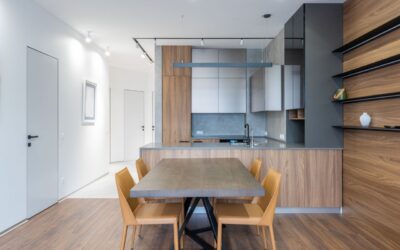
If your kitchen wish list includes words like clean, modern, and minimal, flat panel kitchen cabinet doors are almost certainly what you’re picturing. Also called slab doors, they’re a single flat surface with no frame, no raised center, and no grooves, the visual opposite of a traditional paneled door. That simplicity is exactly why they define contemporary and European-style kitchens. But slab doors aren’t just a look; the material you choose determines how they wear, how they clean, and how much they cost. Here’s what to know before you order.
Part of our Kitchen Remodeling guide — explore the full guide →
What Makes a Door “Flat Panel”
A flat panel, or slab, door is precisely what it sounds like: a flat, unadorned rectangle with no profiles, moldings, or recessed center panel. Compare that to a shaker door, which has a recessed flat center framed by a raised border, or a raised-panel door with its ornate contours. The slab’s absence of detail is the whole point.
That flat face creates clean sightlines and an uninterrupted, horizontal feel across a run of cabinets. Paired with handleless hardware or slim edge pulls, slab doors deliver the seamless, gallery-like look that reads distinctly modern.
Materials and Finishes
Because the surface is flat, the material and finish do all the talking. Common choices include:
- Thermofoil over MDF: A vinyl film heat-sealed to a medium-density fiberboard core. Affordable, seamless, and available in matte or high-gloss white and colors. Susceptible to heat damage near ovens.
- Laminate and melamine: Durable, budget-friendly surfaces in a huge range of solid colors and wood looks, great for high-traffic kitchens.
- Wood veneer: A thin slice of real wood over a stable core, showing off natural grain in a flat, modern format. Popular for warm, contemporary kitchens.
- Painted MDF: A smooth, grain-free painted surface that shows off color beautifully with no wood texture.
- High-gloss acrylic: A premium, mirror-like finish that maximizes the sleek, reflective modern effect.
Flat Panel vs. Shaker
These two dominate modern kitchen design, so the comparison comes up constantly:
- Style: Slab reads modern and minimal; shaker reads transitional, blending traditional and contemporary.
- Cleaning: Slab wins, no recessed panel or grooves to trap grease and dust, so a quick wipe does it.
- Versatility: Shaker fits more design styles; slab commits harder to a modern aesthetic.
- Cost: Slab doors are often less expensive to manufacture because they’re simpler, though premium finishes flip that.
- Resale appeal: Shaker is the safer broad-appeal choice; slab appeals strongly to modern-leaning buyers.
The Cleaning Advantage
One of the most practical reasons homeowners choose slab doors is maintenance. With no raised profiles or recessed panels, there are no crevices for cooking grease, dust, and grime to collect. A soft cloth with mild soapy water wipes the entire face in seconds.
Be mindful of finish, though. High-gloss surfaces show fingerprints and smudges more readily, so matte finishes are more forgiving in a busy family kitchen. Avoid abrasive cleaners and scouring pads on any slab finish, since scratches show clearly on a flat surface.
Design Considerations
Slab doors thrive when the rest of the kitchen supports their minimalism. Think integrated or handleless hardware, waterfall countertop edges, and full-height cabinets that emphasize clean vertical and horizontal lines. Wood-grain slabs add warmth to an otherwise stark palette, while solid matte colors like deep green, navy, or classic white keep things crisp.
Because there’s no ornamentation to hide behind, quality matters. Cheap thermofoil can look flat and lifeless, while a good veneer or painted MDF slab looks rich and intentional. Order door samples and view them in your kitchen’s actual light before committing.
Pros and Cons at a Glance
- Pros: Sleek modern look, easy to clean, often budget-friendly, versatile finishes, timeless minimalism.
- Cons: High-gloss shows fingerprints, thermofoil can delaminate near heat, scratches are visible on flat surfaces, and the style commits to a modern aesthetic.
Cost of Flat Panel Doors
Slab doors span a wide price range depending on the material and finish. Basic thermofoil and melamine slab doors are among the most affordable cabinet fronts you can buy, which is part of their appeal for budget renovations and rental upgrades. Painted MDF and wood-veneer slabs sit in the mid range, while high-gloss acrylic and premium exotic veneers command a premium.
Because the door has no intricate profiles to machine, manufacturing is often simpler than for detailed raised-panel doors, which can keep costs down. If you’re refacing existing cabinets, swapping to slab doors and drawer fronts is a relatively economical way to completely modernize a kitchen without a full teardown.
Choosing the Right Finish for Your Home
The finish decision matters as much as the door style itself, because it drives both the look and the daily upkeep. Matte finishes are forgiving, hiding fingerprints and minor scuffs, and they suit busy family kitchens. High-gloss finishes deliver maximum drama and reflect light to make small kitchens feel larger, but they show every smudge and demand more wiping.
Wood-grain veneers add warmth and texture, softening the minimalism for homeowners who find pure slab too stark. Consider your household: a home with kids and heavy cooking leans toward durable matte or textured surfaces, while a design-forward space with lighter use can enjoy the wow factor of high-gloss acrylic.
Hardware and Styling Details
Because the door is a blank canvas, hardware becomes a defining choice. Many slab kitchens go handleless, using push-to-open mechanisms or integrated finger-pull channels routed into the top edge for a seamless, uninterrupted face. Others add slim, linear bar pulls in matte black, brushed brass, or stainless to reinforce the modern lines.
Keep the styling restrained to let the slab’s simplicity work. Coordinate the hardware finish with faucets and lighting, choose a countertop that complements rather than competes, and let one or two elements, a bold door color or a striking waterfall island, carry the design. That disciplined approach is what makes a slab kitchen look high-end rather than plain.
Grain direction is a subtle detail that separates custom-looking slab kitchens from generic ones. On wood-veneer doors, running the grain horizontally across a run of cabinets creates a continuous, flowing line that reinforces the modern, streamlined feel. Some high-end kitchens even use sequence-matched veneers so the grain appears to travel unbroken from one door to the next, a small touch that reads as genuine craftsmanship.
Are They Right for Your Kitchen?
Flat panel kitchen cabinet doors are the ideal choice if you want a contemporary, low-maintenance kitchen with clean lines and easy upkeep. Choose a matte or veneer finish for durability and forgiveness, or go high-gloss acrylic if you want maximum modern drama and don’t mind wiping fingerprints. If your home leans traditional or you want the broadest resale appeal, shaker may serve you better. For modern kitchens, though, the slab door remains the defining, hardworking classic.