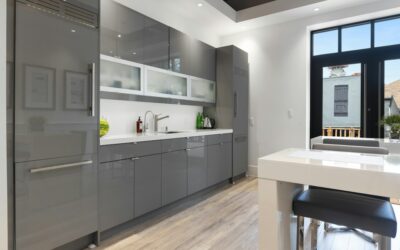
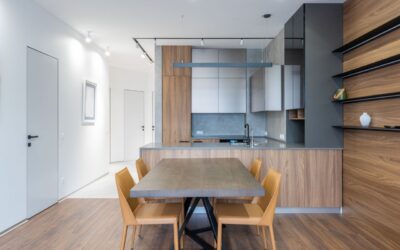
The fastest way to make a kitchen look current is to strip away the fuss, and nothing does that like a flat door. Flat kitchen cabinet doors, also called slab or European-style doors, are single flat panels with no raised center, no grooves, and no ornate framing. That simplicity is exactly the point: clean horizontal or vertical lines that read modern, minimalist, and easy to wipe down.
Part of our Kitchen Remodeling guide — explore the full guide →
Slab doors have moved from strictly ultra-modern kitchens into transitional and even warm wood-toned designs. Choosing the right material, finish, and hardware determines whether yours look sleek and custom or flat and cheap. Here is what separates the two.
Why Homeowners Choose Slab Doors
Beyond the contemporary look, flat doors offer practical advantages. With no raised panels or profiled edges, there are no grooves to trap grease, crumbs, and dust, so cleaning is a single wipe. That makes them a favorite in high-use family kitchens.
They also photograph beautifully and pair with almost any countertop, from waterfall quartz to butcher block. And because they use less machining than a five-piece Shaker or raised-panel door, base-level slab doors can be more affordable, though high-gloss and exotic-veneer versions climb quickly in price.
Material Options for Flat Doors
The core material behind the flat face defines durability, look, and cost. Your main choices:
MDF (Medium-Density Fiberboard)
The most common slab-door substrate. MDF is dimensionally stable, meaning it will not expand, contract, or crack the way solid wood can, which makes it ideal for a perfectly smooth painted finish. It is the go-to for painted slab doors and typically the most budget-friendly at $60 to $150 per door.
Thermofoil
A vinyl film heat-pressed over an MDF core. Thermofoil delivers a seamless, easy-clean surface in white, gray, or wood-look patterns at a low price. The tradeoff is heat sensitivity; keep thermofoil doors away from unshielded ovens and toasters, since high heat can peel the film over time.
Wood Veneer
A thin slice of real wood, like walnut, oak, or teak, bonded to a stable core. Veneer slab doors show authentic grain and warmth, perfect for a modern kitchen that still wants natural texture. Prices run $150 to $400+ per door depending on the species.
High-Gloss Acrylic and Laminate
Acrylic and high-pressure laminate faces give a mirror-like or matte contemporary finish that resists scratches and moisture. Acrylic in particular delivers a deep, reflective shine popular in luxury modern kitchens, at a premium price of $200 to $500 per door.
Finish and Color Choices
Finish carries most of the visual weight on a flat door, since there is no ornament to distract the eye. A few directions to consider:
- Matte painted: Soft, sophisticated, and forgiving of fingerprints. Popular in deep greens, navy, charcoal, and warm white.
- High-gloss: Bright and reflective, bouncing light around a small kitchen, but it shows every smudge.
- Natural wood veneer: Horizontal grain running across a run of doors creates a striking, continuous flow.
- Two-tone: Wood-veneer uppers with painted lowers, or vice versa, a common modern move.
For a continuous-grain look, order sequenced veneer doors so the wood pattern flows uninterrupted across adjacent doors, a signature high-end detail.
Hardware, or the Lack of It
Flat doors are the natural home for minimalist hardware. Three common approaches:
- Slim bar pulls: Long, straight tube or edge pulls in matte black, brushed brass, or stainless, mounted vertically on doors and horizontally on drawers.
- Edge pulls: Small finger pulls mounted on the top or side edge, nearly invisible from the front.
- Handleless (integrated) systems: A routed finger channel or an aluminum J-profile behind the door top lets you open cabinets with no visible hardware at all, the cleanest European look.
- Push-to-open: Touch-latch mechanisms eliminate hardware entirely, though they can leave fingerprints on the door face.
Because the door face is a blank canvas, hardware finish becomes a defining design choice. Coordinate it with your faucet and lighting for a pulled-together result.
Slab vs. Shaker: Which Fits Your Kitchen
Shaker doors, with their recessed center panel and square frame, read traditional-to-transitional and hide minor wear in their profile. Slab doors read modern and show every ding on their flat face, so material quality matters more. If your home is a craftsman or farmhouse, Shaker likely suits it better; if it is contemporary, mid-century, or you simply love clean lines, flat doors are the move. Neither is objectively better; they signal different design languages.
Design Styles That Suit Slab Doors
Flat doors anchor several distinct kitchen aesthetics, and knowing which one you are chasing guides your material and color choices. In a strictly modern or contemporary kitchen, high-gloss white or deep matte charcoal slab doors with handleless fronts create the seamless, gallery-like look these spaces are known for. Mid-century modern kitchens pair walnut or teak veneer slab doors with slim brass or black bar pulls, echoing the warm-wood-and-metal palette of the era.
Scandinavian kitchens lean on light oak veneer or soft white slab doors for their bright, uncluttered feel. Even industrial kitchens use flat doors, often in dark laminate or with a concrete-look finish, alongside exposed brick and steel. The common thread is that slab doors let the material and finish carry the design, so the kitchen’s style comes from the wood tone, the color, and the hardware rather than from door ornament.
Caring for Flat Cabinet Doors
Different face materials call for different care, and matching your cleaning routine to the finish keeps doors looking new. Matte-painted and matte-laminate doors wipe clean with a damp microfiber cloth and mild dish soap; avoid abrasive pads and harsh degreasers, which can burnish a dull spot into the matte surface. High-gloss acrylic and lacquer doors show every fingerprint, so plan on a quick daily wipe and use only a soft cloth to avoid fine scratches that dull the mirror shine.
Thermofoil doors need special attention near heat sources; keep toasters, ovens, and steam away from the film, and never let a running dishwasher vent steam directly onto an adjacent thermofoil door for years, or the film can eventually lift at the edges. Wood veneer benefits from an occasional wipe with a barely damp cloth and, once or twice a year, a wood-safe cleaner to keep the grain looking rich. Across all materials, wipe up splatters and grease promptly, since the flat, unbroken face shows buildup more readily than a profiled door.
Common Mistakes to Avoid
The flat face is unforgiving, so a few missteps stand out more than they would on a Shaker door. Choosing too cheap a substrate is the biggest one; a bargain particleboard slab telegraphs every bump and sags over time, undercutting the sleek look you paid for. Skimping on hardware quality is another, since a blank door draws the eye straight to the pulls, and a worn coating on cheap black or brass pulls ruins the effect within a couple of years.
Poor measuring dooms a slab-door refacing, because these doors leave no profile to hide a sizing error, and a gap that is off by an eighth of an inch is glaring across a run of cabinets. Finally, mixing too many finishes reads as busy rather than modern; slab doors reward a disciplined palette of one or two tones and a single hardware finish. Keep the material quality high and the palette tight, and the result looks custom.
Cost and Installation
Replacing just the doors and drawer fronts, known as cabinet refacing when combined with new veneer on the boxes, costs far less than new cabinets. Slab door replacements run $60 to $500 per door depending on material, and a full-kitchen door-and-front swap typically lands between $1,500 and $6,000 installed, versus $10,000+ for all-new cabinetry.
If your existing cabinet boxes are sound, ordering new flat doors and fronts sized to your current hinges is a high-impact, moderate-cost update. Confirm your hinge type (most modern doors use concealed European cup hinges) and measure every opening precisely, since slab doors leave no margin to hide a sizing error.
Well-chosen flat kitchen cabinet doors deliver a clean, modern kitchen that wipes down in seconds and pairs with almost any style you build around them. Focus your budget on a quality face material and coordinated minimalist hardware, and the slab look will feel custom rather than cheap.