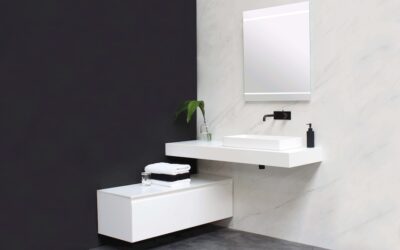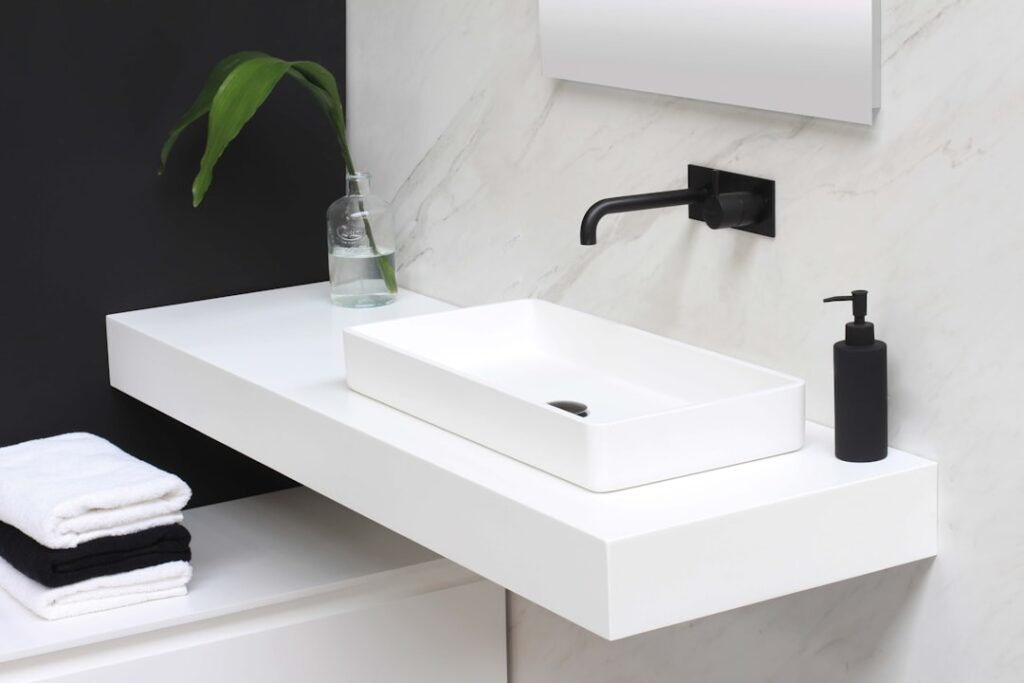
Nothing modernizes a bathroom faster than a floating bathroom vanity with sink. By mounting the cabinet to the wall and leaving open floor space beneath, this wall-hung design makes even a small bathroom feel larger, brighter, and more contemporary. It is one of the most requested upgrades in bathroom remodels today, but it comes with specific installation and plumbing considerations you need to understand before buying. This guide covers the benefits, sizes, mounting height, plumbing, installation, and costs so you can decide if a floating vanity is right for your space.
Part of our Bathroom Remodeling & Flooring guide — explore the full guide →
- What Makes a Vanity "Floating"
- Why Choose a Floating Vanity
- Standard Sizes
- Choosing the Right Mounting Height
- The Critical Structural Requirement
- Plumbing Considerations
- Installation Overview
- Cost of a Floating Vanity with Sink
- Common Mistakes to Avoid
- Storage Trade-Offs to Consider
- Frequently Asked Questions
- Is a Floating Vanity Right for You?
What Makes a Vanity “Floating”
A floating vanity, also called a wall-hung or wall-mounted vanity, attaches directly to the bathroom wall with no legs or base touching the floor. The cabinet appears to hover, with open space beneath it. This is purely a mounting difference from a traditional freestanding vanity, but it changes the look dramatically and creates practical advantages, along with a few structural requirements since all the weight transfers to the wall.
The sink options are the same as any vanity: an integrated sink-and-counter top, an undermount bowl beneath a stone or solid-surface counter, or a vessel sink sitting on top. Many floating units ship as a complete package with the cabinet, counter, and sink together.
Why Choose a Floating Vanity
Floating vanities are popular for real, practical reasons, not just looks:
- Makes the room feel bigger. Exposed floor beneath the cabinet tricks the eye into seeing more space, a huge benefit in small bathrooms.
- Easier floor cleaning. You can mop or sweep right under the vanity with no base to trap dust and grime.
- Adjustable height. Because you choose the mounting height, you can set it perfectly for the users rather than accepting a fixed base height.
- Modern, spa-like aesthetic. The clean, minimal look defines contemporary bathroom design.
- Hides plumbing options. Many designs conceal the trap and supply lines within the cabinet or behind a panel.
Standard Sizes
Floating vanities come in the same standard widths as freestanding models:
- 24 to 30 inches for powder rooms and compact baths.
- 36 to 48 inches for standard single-sink bathrooms.
- 60 to 72 inches for double-sink primary bathrooms.
Depths typically run 18 to 21 inches, with shallow 15- to 18-inch models available for tight spaces. Because a floating vanity exposes the floor, even a large unit reads lighter than a bulky freestanding cabinet of the same width.
Choosing the Right Mounting Height
One of the biggest advantages of a floating vanity is that you decide the height, but that freedom means you have to choose well. The countertop typically lands between 32 and 36 inches above the floor. Comfort height around 34 to 36 inches suits most adults and reduces bending, while a lower 30- to 32-inch mount works better for children’s bathrooms.
Consider who uses the bathroom, whether the sink is a vessel (which adds height on top of the counter), and how the mounting height relates to the mirror and faucet. Mark your chosen height on the wall and live with the tape line for a day before committing.
The Critical Structural Requirement
Here is the single most important thing to understand: a floating vanity puts all its weight, plus the weight of a stone counter, water, and anything stored inside, onto the wall. That means it must anchor into solid framing, not just drywall. In practice, this requires either:
- Mounting screws driven into wall studs at the right height, or
- Adding wood blocking between the studs during a remodel so you have a continuous solid surface to anchor into anywhere along the vanity.
If your studs do not align with the vanity’s mounting points, you either open the wall to add blocking or use a heavy-duty mounting cleat rated for the load. Never rely on drywall anchors alone, a loaded floating vanity that pulls out of the wall is a disaster.
Plumbing Considerations
Because the space under a floating vanity is open or shallow, the plumbing rough-in height often needs adjusting. The drain and supply lines should be positioned so they enter the back of the cabinet and stay hidden, which usually means moving them higher than a standard freestanding setup. If you are converting from a pedestal or freestanding vanity, plan to relocate the drain and supply stub-outs to align with the new cabinet’s back panel.
Many floating vanities are designed to conceal the P-trap inside the cabinet or behind a false back. If yours exposes the plumbing beneath, consider a decorative bottle trap and clean supply lines, since they will be visible.
Installation Overview
- Locate and mark studs. Find the framing and mark your chosen mounting height with a level line.
- Add blocking if needed. If studs do not line up, open the wall and install horizontal blocking, then patch.
- Rough in the plumbing. Set the drain and supply lines at the correct height to enter the cabinet.
- Mount the cleat or bracket. Secure the vanity’s mounting rail or cleat into the studs or blocking, perfectly level.
- Hang the cabinet. Lift the vanity onto the cleat and fasten it through the back into the framing.
- Install the top and sink. Set the counter and sink, then connect the faucet, drain, and supply lines.
- Seal and finish. Caulk the counter-to-wall joint and check that everything is solid.
Cost of a Floating Vanity with Sink
Floating vanities span a wide price range. Compact units with sink and top start around $300 to $600. Mid-range 36- to 48-inch models with quality construction and stone tops run $600 to $1,500. High-end and double-sink floating vanities can reach $1,500 to $3,000 or more. Professional installation adds $300 to $800, more if plumbing must be relocated or blocking added, which is common in these projects.
Common Mistakes to Avoid
- Anchoring only to drywall. The number-one failure. Always mount into studs or blocking.
- Ignoring plumbing height. Failing to raise the rough-in leaves ugly exposed pipes or a cabinet that will not sit flush.
- Choosing the wrong height. Test your mounting height with tape before installing.
- Overloading a small unit. Heavy stone tops need adequate support; match the mounting hardware to the load.
- Skipping level checks. A floating vanity that is even slightly off looks obviously crooked with nothing below to hide it.
Storage Trade-Offs to Consider
One honest drawback of floating vanities is storage. Because the cabinet floats and often sits shallower to keep the plumbing hidden, and because the space below is intentionally open, you typically get less storage than a full floor-to-ceiling freestanding vanity with a deep base. Drawer-style floating vanities help by using the interior space efficiently, and choosing a wider unit recovers some capacity.
If storage is a top priority in a small bathroom, weigh the sleek look against the lost cabinet volume. Many homeowners solve this by pairing a floating vanity with a wall-mounted medicine cabinet, open shelving, or a tall linen cabinet elsewhere in the room, keeping the airy floating look while adding storage that does not sit on the floor.
Frequently Asked Questions
How much weight can a floating vanity hold?
When anchored properly into studs or solid blocking, a floating vanity easily supports its cabinet, a stone top, water, and stored items. The critical factor is mounting into real framing, never just drywall.
Do I need to open the wall to install one?
Often yes, to add horizontal blocking between studs so the mounting points hit solid wood, and to relocate the plumbing higher. If the studs already align with the mounting rail, you may avoid opening the wall.
What height should a floating vanity be mounted?
The countertop usually lands between 32 and 36 inches. Comfort height around 34 to 36 inches suits most adults; go lower for a children’s bathroom. Test with a tape line first.
Will the plumbing show?
Many floating vanities conceal the trap inside the cabinet or behind a panel. If yours exposes it, raise the rough-in and use a clean bottle trap and tidy supply lines, since they will be visible.
Is a Floating Vanity Right for You?
A floating bathroom vanity with sink is a fantastic choice if you want a modern look, an easier-to-clean floor, and a small bathroom that feels bigger. The trade-off is a more demanding installation that requires solid wall anchoring and, often, relocated plumbing. If you are already remodeling and have the walls open, adding blocking is simple and the payoff is a sleek, contemporary bathroom. Choose a size and height that fit your space and users, anchor it into real framing, and plan the plumbing carefully, and your floating vanity will look stunning and perform flawlessly for years.