
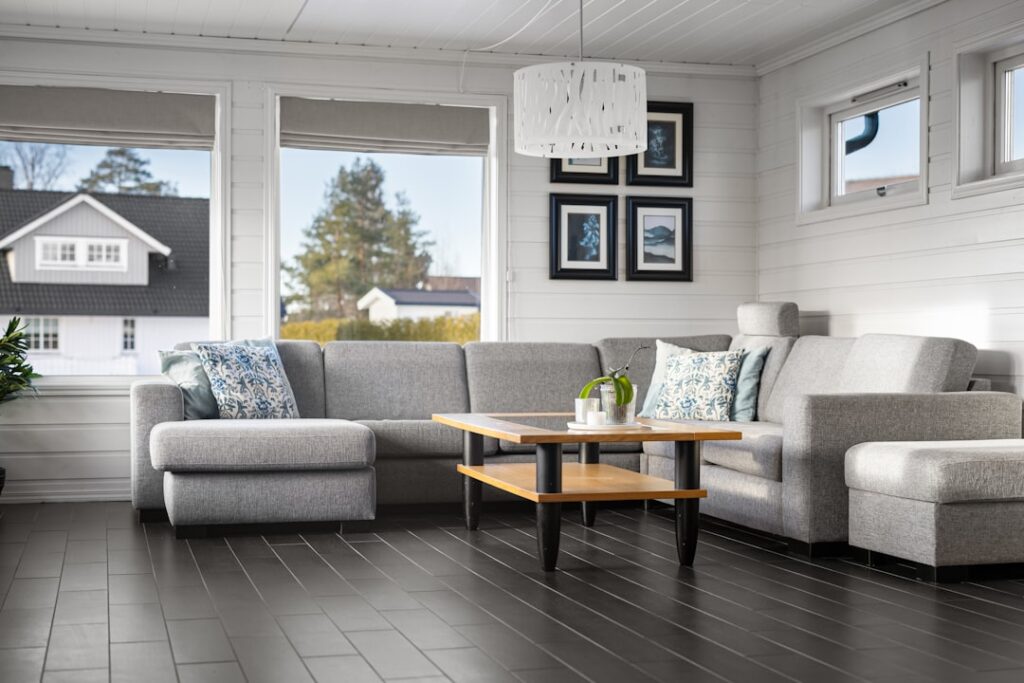
Vinyl has stopped being the budget afterthought it was 20 years ago. The category now spans everything from $0.79-per-square-foot sheet rolls in rentals to $7 luxury SPC planks that fool experienced contractors at five feet. Floor covering vinyl covers four distinct product families — sheet, LVT, LVP, SPC, and WPC — each with different cores, install methods, and ideal rooms. Confusing them is the most common reason a homeowner ends up with the wrong product. This guide breaks down each type and where it earns its keep.
- The Five Vinyl Categories
- Wear Layer: The One Spec That Matters
- Sheet Vinyl: Where It Still Makes Sense
- LVP and LVT: The Click-Lock Workhorses
- SPC: The Subfloor Forgiver
- WPC: Comfort Underfoot
- Realistic Cost Per Room
- Installation Best Practices
- Cleaning and Long-Term Care
- Buying Tips That Save Real Money
The Five Vinyl Categories
Every product on the showroom floor fits into one of these:
- Sheet vinyl: 6 or 12-foot rolls glued or loose-laid. $0.79 to $2.50 per sq ft.
- LVT (luxury vinyl tile): Square pieces mimicking stone or ceramic. $2 to $5 per sq ft.
- LVP (luxury vinyl plank): Long planks mimicking hardwood. $2.50 to $5.50 per sq ft.
- SPC (stone plastic composite): Rigid-core plank with limestone filler. $3 to $7 per sq ft.
- WPC (wood plastic composite): Foamed-core plank, softer underfoot. $3.50 to $6.50 per sq ft.
SPC and WPC are the two fastest-growing segments because they install over imperfect subfloors that defeat traditional LVP.
Wear Layer: The One Spec That Matters
Wear layer thickness, measured in mils, predicts how long any floor covering vinyl product holds up. The grading scale:
6 mil: Bedrooms only. Avoid for any room with regular traffic.
12 mil: Light residential. Fine for adult households, marginal with kids and pets.
20 mil: Heavy residential and light commercial. The sweet spot for most homes.
28 to 40 mil: Commercial and rental. Overkill for a private home but worth it in heavy-use areas.
Anything under 12 mil is rental-grade regardless of what the marketing says. Pay the $0.50 to $1 premium per square foot for 20 mil if your floor sees daily traffic.
Sheet Vinyl: Where It Still Makes Sense
Sheet vinyl is the cheapest waterproof flooring made and the only category where seams can be heat-welded for true zero-water entry. Best applications: rental units, mobile homes, basement bathrooms, and laundry rooms. Quality lines like Armstrong Flexstep ($1.50 to $2.30) and Mannington Aduramax Sheet ($2.10 to $3.20) hold up surprisingly well in residential traffic.
The downside is install — sheet vinyl over 8 by 12 feet requires professional handling, and any mistake during cut layout wastes a 60-square-foot chunk. DIY-friendly only on rooms small enough that a single uncut piece fits.
LVP and LVT: The Click-Lock Workhorses
LVP and LVT install as floating floors with no glue, making them the most DIY-friendly floor covering vinyl. The flexible 4 to 6mm-thick planks rely on a perfectly flat subfloor — variations beyond 3/16 inch over 10 feet telegraph through the planks within 6 months.
Best lines: COREtec Pro Plus ($3.50 to $5 per square foot, 22 mil wear layer), Shaw Floorte Pro ($3 to $4.50, 20 mil), and Lifeproof Rigid Core ($2.79 to $4.20 at Home Depot, 12-22 mil). Click-lock systems vary; the Unilin and Välinge patented joints lock tightest.
SPC: The Subfloor Forgiver
Stone plastic composite has changed what is possible in renovation work. The 5 to 7mm rigid core spans subfloor variations up to 1/4 inch over 10 feet, hides minor unevenness, and refuses to dent when heavy furniture is dragged across it. The trade-off: it is harder underfoot than WPC and conducts cold readily, so it feels chillier in unheated basements.
SPC is also the quietest plank to install with cork or IXPE underlayment ($0.40 to $0.85 per foot). Without the underlayment, footfall sound is noticeable on second floors.
WPC: Comfort Underfoot
Wood plastic composite uses a foamed core that feels softer underfoot and warmer in cold climates. It is the right choice for kitchens with home cooks who stand for hours, and for any room where comfort matters more than ultimate dent-resistance. WPC dents under point loads (rolling office chairs, stiletto heels) more readily than SPC at the same thickness.
For a kitchen that connects to a dining and living room, many homeowners choose WPC for the kitchen and SPC for the heavily-trafficked entry — same color, different cores. Manufacturers like COREtec and Mohawk offer matched lines.
Realistic Cost Per Room
For a 200-square-foot kitchen, total installed costs:
- Sheet vinyl: $400 to $1,000.
- Mid-grade LVP: $1,200 to $2,000.
- Premium SPC: $1,800 to $2,800.
- Premium WPC: $2,000 to $3,000.
Underlayment, transitions, and disposal add $150 to $400. Skip unrealistic quotes well below these ranges — corner-cutting on prep, glue, or wear layer is the most common cause.
Installation Best Practices
Three rules separate installs that last 25 years from those that fail in three. First, acclimate the planks 48 hours in the room at 65 to 85 degrees Fahrenheit and 35 to 65 percent humidity. Second, leave 5/16-inch expansion gaps at every wall, post, and pipe — peaking is the number-one failure mode of vinyl plank. Third, never run a single uninterrupted floor longer than 40 feet in any direction without a transition; thermal expansion buckles long runs.
For glue-down LVT in commercial applications, use a pressure-sensitive adhesive like Mapei Ultrabond ECO 373 ($75 per gallon, covers 200 to 250 sq ft) and roll the floor with a 100-pound roller within the open time window.
Cleaning and Long-Term Care
Floor covering vinyl is the lowest-maintenance hard surface available. Sweep or vacuum daily (no beater bar), damp-mop weekly with a pH-neutral cleaner like Bona Pro Series Hard-Surface ($16 per quart). Skip steam mops on glue-down installs, skip oil-based polishes that build cloudy residue, and skip vinegar — frequent acidic cleaning dulls the wear layer.
For deep cleaning, the Bissell CrossWave at $250 cleans well without the moisture damage of steam. Re-wax occasionally on commercial-grade installs to refresh sheen.
Buying Tips That Save Real Money
Buy 8 to 10 percent overage to cover cuts and waste, plus one extra box stored in conditioned space for repairs 5 years later — discontinued patterns are the top regret reported in vinyl owner surveys. Compare per-square-foot installed cost across at least three retailers; price spreads of 20 to 30 percent on identical products are common because of regional inventory differences.
The right floor covering vinyl, installed correctly with proper underlayment and expansion gaps, lasts 20 to 30 years in residential use and pays back many times over compared to repeated re-floors with cheap product.
Prefer to explore on your own?
See how new flooring looks in your actual room in seconds — free, no signup.
Try the free Floor Studio →

