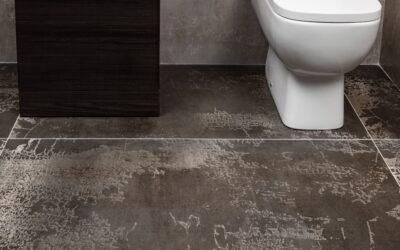
Walk into a flooring showroom cold and you face roughly two thousand SKUs across a dozen materials, each with a salesperson swearing it’s the right answer. The truth is simpler. There are about eight real types of floor covering in the modern US market, and each one wins on one or two specific criteria — water, cost, comfort, durability, look. Match the room to the material and you’ll never regret the floor. Mismatch them and you’ll be ripping it out in seven years.
Solid Hardwood Flooring
Solid hardwood is a single piece of wood, typically 3/4 inch thick, milled from oak, maple, hickory, walnut, or a handful of exotics. It’s the original wood floor and still the gold standard for resale value. Expect $6-$14 per sq ft installed for domestic species, $10-$20 for exotics like Brazilian cherry or tigerwood.
The strength is longevity. A solid hardwood floor can be sanded and refinished 4-7 times, giving 80-100 years of service. The weakness is moisture. Solid wood swells and cups in basements, slabs, and bathrooms. Stay above grade, on a wood subfloor, away from standing water.
Engineered Hardwood
Engineered hardwood is a real wood veneer (1-6mm thick) glued to a plywood or HDF core. It looks identical to solid hardwood from above and handles moisture and temperature swings far better. Use it over slabs, in basements, and over radiant heat. Cost runs $4-$10 per sq ft installed for a 3-5mm wear layer.
The catch is refinishing. A 1mm “wear layer” cannot be sanded — it’s a one-shot floor. A 4mm or 6mm wear layer can be refinished 2-3 times. Always check the wear layer spec, not just the total thickness.
Luxury Vinyl Plank (LVP) and SPC
LVP is the dominant new-construction floor in 2026, and for good reason. It’s 100% waterproof, dent-resistant, easy to install, and the high-def prints fool most guests at a glance. SPC (Stone Plastic Composite) is the rigid-core variant — harder, quieter, more dimensionally stable. Cost $2-$6 per sq ft material, $4-$8 installed.
- Best rooms: kitchens, baths, basements, mudrooms, full-house installs in pet households.
- Watch for: pets with claws — softer LVP can scratch. Choose 20-mil wear layers for active homes.
- Best brands: COREtec Pro Plus, Shaw Floorté, Mohawk RevWood Premier, LifeProof Performance.
Laminate Flooring
Laminate is HDF core with a printed photo layer and a clear melamine wear surface. Cheap to make, cheap to install, and the modern AC4-AC5 luxury tier looks remarkable. Cost $1.50-$4.50 per sq ft material. Among types of floor covering, laminate gives the best appearance-per-dollar in the dry rooms of the house.
Limits are water and feel. Standard laminate swells permanently if it sits in standing water for hours. Newer “waterproof laminate” lines (Pergo WetProtect, Mohawk RevWood Plus) close the gap but still cost less than premium LVP. Underfoot, laminate can sound hollow without a quality pad.
Ceramic and Porcelain Tile
Tile is the workhorse of wet rooms. Porcelain in particular is denser, harder, and lower-absorption (under 0.5%) than ceramic. Cost runs from $1 per sq ft for builder-grade ceramic to $20+ for designer porcelain, plus $5-$12 per sq ft for installation depending on size and pattern.
Tile is functionally permanent — a properly installed porcelain floor with epoxy grout will outlive the house. The trade-offs are cold underfoot (worth pairing with radiant heat in cold climates) and hard on dropped dishes. For bathrooms, mudrooms, and high-end kitchens, nothing else competes.
Natural Stone
Granite, marble, travertine, slate, and limestone all show up as floors. Each has a personality. Slate is grippy and dark, perfect for entryways. Travertine is warm and porous, needs sealing every 2-3 years. Marble is gorgeous and stains if you sneeze on it.
Cost is wide: $5-$30 per sq ft material, $10-$25 installed depending on stone and pattern. All natural stone needs a periodic penetrating sealer ($40-$80 per gallon, covers 300-500 sq ft) to resist stains. Install on a stiff subfloor — natural stone cracks if the floor flexes.
Carpet
Carpet still owns bedrooms, dens, family rooms, and basements where comfort and sound matter more than waterproofing. Modern fibers fall into four buckets: nylon (most durable, $3-$8 sq ft installed), triexta (best stain resistance, $3-$7), polyester (cheapest, soft, $2-$4), and wool (premium, $9-$18).
The pad matters as much as the carpet. Specify 7/16-inch, 8-pound rebond pad and the floor lasts 50% longer. Skip the pad upgrade and you’ll re-carpet at year seven instead of year twelve.
Cork, Bamboo, and Linoleum
Cork is warm, quiet, naturally antimicrobial, and runs $4-$8 per sq ft installed. It dents under heavy furniture but heals partially over time. Bamboo (especially strand-woven) is harder than oak and competes with hardwood at $4-$9 per sq ft installed. True linoleum (Marmoleum, not vinyl) is plant-based, lasts 30+ years, and runs $5-$8 per sq ft installed.
These three are the niche players among types of floor covering. Each one has a passionate fan base and a real performance argument, but they cumulatively make up under 5% of the residential market.
Choosing the Right Floor for Each Room
The honest matrix most contractors recommend:
- Kitchen: LVP, porcelain tile, or waterproof laminate.
- Bathroom: Porcelain tile, LVP, or natural stone with sealer.
- Basement: SPC, LVP, or carpet tiles with moisture-barrier pad.
- Bedroom: Carpet, hardwood, or engineered hardwood.
- Living room: Hardwood, engineered hardwood, or luxury laminate.
- Mudroom and entry: Porcelain tile or slate.
- Whole-house single-floor install: LVP for under $30K homes, engineered hardwood for higher tiers.
One last guideline: among all types of floor covering, the cheapest material plus the cheapest installer almost always becomes the most expensive floor by year ten, because you replace it twice. Spend in the middle of the market, hire a real installer, and the floor pays for itself in service life.
Prefer to explore on your own?
See how new flooring looks in your actual room in seconds — free, no signup.
Try the free Floor Studio →