When you want a kitchen with genuine personality, a floral backsplash delivers charm that solid tile never will. Blooming patterns, whether painted by hand or printed on peel-and-stick sheets, turn the wall behind your counter into art. Florals span a huge range, from delicate cottage sprigs to bold Mediterranean blossoms, so the style adapts to almost any kitchen. Here’s a tour of the materials, the best places to use them, and the design tricks that keep a patterned wall looking intentional rather than chaotic.
Part of our Kitchen Remodeling guide — explore the full guide →
- Styles and Sources of Floral Tile
- Where to Use a Floral Backsplash
- Choosing Color and Pattern Scale
- Vintage vs. Modern Floral Looks
- Pairing With the Rest of the Kitchen
- Mixing Florals With Solid Tile
- Materials and Durability
- What It Costs
- Installation Notes
- Renter-Friendly and Reversible Options
- Cleaning and Maintenance
- Is a Floral Backsplash Right for You?
Styles and Sources of Floral Tile
Floral patterns come from several rich traditions, each with a distinct look.
- Hand-painted ceramic: Artisan tiles with brushstroke florals and slight variation that signal craftsmanship.
- Talavera: Vibrant Mexican tile with folk-art blooms in yellows, blues, and greens.
- Encaustic and cement: Matte, pigment-through tiles with graphic, repeating floral motifs.
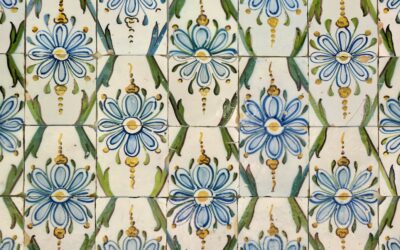
- Portuguese azulejo: Classic blue-and-white glazed tile with intricate botanical patterns.
- Mural tile: Multiple tiles that combine into one large floral scene, like a painting behind the range.
- Peel-and-stick floral: Budget-friendly, renter-approved vinyl or gel sheets that mimic patterned tile.
Where to Use a Floral Backsplash
Placement determines whether the pattern feels like a wow moment or visual overload. The most effective approach is treating florals as a focal point rather than covering every wall. Behind the range or cooktop is the prime spot: framed by the hood and cabinets, a floral panel becomes the kitchen’s centerpiece. A section behind the sink or a small coffee-station nook also works well. If you love the pattern enough to run it across the entire backsplash, keep the rest of the kitchen calm so the tile can breathe.
Choosing Color and Pattern Scale
Scale and palette make the difference between charming and overwhelming. Large, bold blooms create drama and suit spacious kitchens with plenty of wall, while small, tight patterns feel classic and read almost as texture from across the room. Match the pattern’s dominant colors to something already in your kitchen, your cabinet color, an island, or the countertop, so the backsplash feels connected rather than random. In a small kitchen, lighter backgrounds with softer florals keep the space feeling open; save inky, saturated patterns for rooms that can handle the visual weight.
Vintage vs. Modern Floral Looks
Florals aren’t a single aesthetic, and knowing the two broad camps helps you shop with intent. Vintage-leaning florals, think delicate cottage sprigs, chintz-inspired repeats, and hand-painted botanicals, bring nostalgia and warmth, and they pair naturally with shaker cabinets, farmhouse sinks, and traditional millwork. Modern florals strip the pattern down to graphic silhouettes, oversized single blooms, or two-tone line drawings, and they suit flat-front cabinets and minimalist kitchens. Deciding which camp you’re in narrows the field fast and keeps the finished kitchen feeling deliberate rather than dated by accident.
Pairing With the Rest of the Kitchen
A busy backsplash wants quiet companions. Pair a bold floral with solid-color cabinets and a plain countertop so nothing competes for attention. White or wood cabinets are the safest partners, letting the pattern star. If your florals are traditional blue-and-white azulejo, brass or nickel hardware complements them; for bright Talavera, simple black or matte hardware keeps things grounded. Repeat one accent color from the tile in your accessories, dish towels, a vase, a small appliance, to tie the whole room together.
Mixing Florals With Solid Tile
You don’t have to choose between a bold pattern and a calm kitchen; combining the two often looks best. A popular strategy frames a floral focal panel behind the range with plain subway or zellige tile on the surrounding walls, so the pattern feels curated like framed art. Another approach uses a single row of floral tile as a decorative accent stripe amid solid field tile, giving a subtle nod to pattern without committing the whole wall. You can also pull one color from the floral tile and repeat it in a solid tile elsewhere, tying the two together. Mixing this way stretches an expensive artisan tile further, since you buy fewer of the pricey patterned pieces.
Materials and Durability
The material affects both looks and upkeep in a working kitchen. Glazed ceramic and porcelain are the most practical: the printed or painted pattern sits under a hard, wipeable glaze that resists grease and moisture, ideal behind a stove. Encaustic cement tiles are stunning but porous, so they need sealing and gentle cleaning to avoid staining. Peel-and-stick florals are the easiest and cheapest, though they hold up best in low-splash areas and may lift near constant heat and steam over time.
What It Costs
Prices vary widely with the source and craftsmanship. Peel-and-stick floral tiles run roughly $4 to $12 per square foot and install without special tools. Machine-made patterned ceramic lands around $8 to $20 per square foot. Hand-painted, Talavera, and authentic azulejo tiles are artisan products, often $20 to $50 or more per square foot, plus professional installation of $10 to $20 per square foot. Because florals usually cover a limited focal area, the total can stay reasonable even with premium tile, a 15-square-foot range panel keeps costs contained.
Installation Notes
Patterned tile is less forgiving than a plain field because misalignment shows immediately. Dry-lay the tiles on the floor first to confirm the pattern flows correctly, especially with murals and directional motifs that must be oriented the right way. Number the backs if the design is complex. Use a level and consistent spacers, and choose a grout color that complements the pattern, usually a soft neutral that recedes rather than a stark contrast that chops up the design. For murals, professional installation is worth it to keep the image seamless.
Renter-Friendly and Reversible Options
You don’t need to commit to permanent tile to enjoy a floral backsplash. Peel-and-stick vinyl and gel tiles apply over smooth, clean walls or even existing tile, and they peel away without damage when you move out, making them ideal for apartments. Removable wallpaper with a sealed, wipeable finish is another low-cost route for low-splash areas, and it comes in gorgeous large-scale floral prints. For a temporary focal point behind a coffee station or open shelving, these options deliver big personality for under a few hundred dollars and a single afternoon of work. Just keep them away from constant direct heat and heavy water, where adhesives eventually loosen.
Cleaning and Maintenance
Glazed floral tile is easy to live with: wipe it down with a soft cloth and mild dish soap, and skip abrasive pads that can scratch the glaze. Behind the range, clean grease promptly before it bakes on. Sealed grout resists staining, and re-sealing every year or two keeps the lines looking fresh. Cement and unglazed tiles need a penetrating sealer and gentler, pH-neutral cleaners. With minimal care, a floral backsplash stays vivid for years and remains the detail guests notice first when they step into your kitchen.
Is a Floral Backsplash Right for You?
Before committing, weigh how you feel about bold, lasting design. A tiled floral backsplash is a semi-permanent choice, so it suits homeowners who are confident in their style and plan to stay put, or who simply love pattern enough not to tire of it. If you tend to redecorate often or worry about resale, lean toward the removable peel-and-stick and wallpaper options, or keep the floral confined to a small, easily changed accent. Ask yourself whether you want the kitchen to feel serene or spirited; florals lean spirited, and that energy is exactly the point. For anyone craving warmth, color, and a space that feels personal rather than showroom-generic, a floral backsplash rewards the leap with a kitchen full of character.