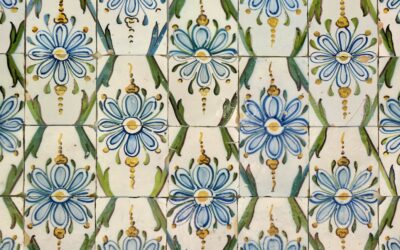
Pattern is back in flooring, and nowhere is it more playful than in floral carpet tiles. These modular squares let you bring botanical motifs, vines, and blossoms into a room without committing to wall-to-wall broadloom or hunting down a rug in the exact right size. Because they install square by square, you can run a full floral field, scatter a few accent tiles into a solid base, or build a custom border, all with materials you can lift and swap one piece at a time. Here is how to use them well.
Part of our Tile & Grout guide — explore the full guide →
What Floral Carpet Tiles Are
Carpet tiles, sometimes called carpet squares, are modular pieces of carpet, most commonly 19.7 inches square (the 50cm metric standard) or 24 inches square. A floral version simply carries a flower or leaf pattern in the pile, either woven, tufted, or printed onto the surface. Each tile has a stiff backing, often bitumen, PVC, or a cushioned composite, that keeps it flat and stable on the floor. That rigidity is what makes them so easy to handle compared with rolled carpet.
Why Choose a Modular Floral Floor
The appeal goes beyond looks. Modularity solves several real problems that traditional carpet cannot:
- Pattern flexibility — combine floral tiles with solid coordinates to create borders, checkerboards, or a feature area without custom fabrication.
- Spot replacement — if one tile gets stained or worn, you pull it and drop in a spare instead of replacing the whole floor.
- Easy transport and install — boxes of tiles fit in a car and carry up stairs, unlike a heavy broadloom roll.
- Low waste — you cut only the perimeter tiles, so leftover material is minimal compared with rolled carpet.
For renters, apartments, and rooms with tricky shapes, this lift-and-replace flexibility is genuinely useful.
Residential vs. Commercial Use
Floral carpet tiles started in the commercial world, where modular flooring rules offices, hospitality, and retail because damaged sections can be swapped without closing the space. That commercial pedigree means many floral tiles are built tough, with dense low-pile construction and high stain resistance. In a home, the same toughness pays off in playrooms, home offices, basements, and craft rooms. Look at the manufacturer’s traffic rating: a tile graded for heavy commercial use will outlast a budget residential square in a busy household.
Choosing the Right Pattern Scale
Floral patterns range from tiny ditsy prints to large painterly blooms, and scale changes everything about how a room feels. A few guidelines from experience:
- Large-scale florals make a bold statement but can overwhelm a small room. Reserve them for spacious areas or a defined feature zone.
- Small, repeating motifs read almost as a texture from a distance and are more forgiving in compact spaces.
- Tiles designed with a quarter-turn or random-lay pattern hide seams and traffic patterns better than directional designs that demand precise alignment.
Always check whether the tile is meant to be installed in one direction (monolithic), quarter-turned, or random. The arrows on the back tell you, and ignoring them is the fastest way to a floor that looks accidentally mismatched.
Cost Expectations
Pricing spans a wide range depending on fiber, density, and whether the tile is a designer or contract product. Realistic 2026 ranges for materials:
- Budget residential floral tiles: $1.50 to $3 per square foot
- Mid-grade commercial-rated tiles: $3 to $6 per square foot
- Designer and high-pattern lines: $6 to $12 per square foot
Self-stick or loose-lay tiles let many homeowners install themselves, which keeps total cost low. Professional installation, if needed, typically adds $1 to $3 per square foot.
Installation Basics
Most carpet tiles install with peel-and-stick backing, releasable adhesive dots, or a full-spread adhesive on the subfloor. The process is approachable for a careful DIYer:
- Start by snapping chalk lines to find the room’s center, then dry-lay tiles from the middle outward so cut pieces land evenly at the walls.
- Follow the directional arrows on each tile’s backing to keep the pattern consistent.
- Press each tile firmly and butt edges tight without forcing them, since gaps and overlaps both show.
- Cut perimeter tiles with a sharp utility knife and a straightedge, scoring the backing from behind.
A clean, dry, flat subfloor is essential. On concrete, check for moisture first, since trapped humidity can loosen adhesive over time.
Cleaning and Maintenance
Day-to-day care is simple: vacuum regularly to keep grit out of the fibers, and blot spills promptly rather than rubbing. Because tiles lift out, you can take a badly soiled square to a sink for a deep clean or simply replace it. This is exactly why buying 5% to 10% extra tiles at the start is smart, your repair stash protects you against discontinued patterns down the road.
Fiber and Backing Choices
Two construction details determine how a floral carpet tile performs over the years: the face fiber and the backing. On the fiber side, nylon is the most resilient and is the standard for commercial-grade tiles, holding its texture and color in busy areas. Solution-dyed nylon and polyester resist fading and bleach-cleaning better because the color runs through the fiber rather than sitting on the surface, a real advantage for a patterned product you want to keep looking vivid. On the backing side, heavier composite, PVC, and bitumen backings lie flatter and resist curling, while cushioned backings add comfort and warmth underfoot. For a basement or concrete slab, a moisture-tolerant backing matters more than anywhere else.
Design Ideas That Use the Modular Format
The whole point of modular tiles is creative freedom, so it pays to think beyond a simple wall-to-wall field. A few approaches that work well with floral patterns:
- Floral rug effect: Lay a block of floral tiles in the center of a room with a solid-color border to mimic an area rug that you can never trip over an edge of.
- Accent scatter: Drop a handful of floral tiles randomly into a solid field for a subtle, playful texture.
- Defined zones: Use floral tiles to mark out a reading nook, play area, or desk zone within a larger room.
- Patterned border: Frame a solid floor with a single row of floral tiles for a finished, intentional look.
Because you buy and lay individual squares, none of these require custom fabrication, which is what makes carpet tiles so forgiving for first-time DIY designers.
Are Floral Carpet Tiles Right for You?
If you want softness underfoot, a distinctive patterned look, and the freedom to replace damaged sections one at a time, floral carpet tiles are a flexible and budget-friendly choice. They shine in playrooms, offices, basements, and any space where personality and practicality both matter. Match the traffic rating to your room, mind the pattern scale and lay direction, and keep spares on hand, and you will get a floor that looks custom while staying easy to live with.