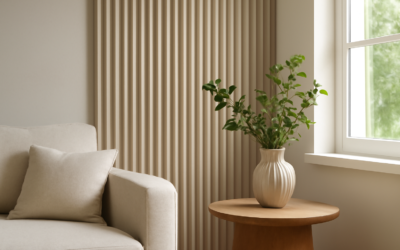
A fireplace is the natural focal point of any room it sits in, which makes it the perfect canvas for one of the most striking looks in modern design. A fluted tile fireplace wraps the surround in vertical, ribbed tile that catches light and shadow, adding sculptural depth and a sense of quiet luxury that flat tile or painted drywall simply cannot match. It is a way to make the hearth feel custom and architectural without a full masonry rebuild — and it works in styles from serene modern to warm transitional.
Part of our Tile & Grout guide — explore the full guide →
This guide covers the design possibilities, the tile types that work for a fireplace, layout and safety considerations, realistic costs, and how to get a clean, high-end result.
Why Fluted Tile Suits a Fireplace
Fluted tile — sometimes called reeded or ribbed tile — has raised vertical channels molded into its surface. On a fireplace, those ridges do something special: they play with the light from the fire and the room, casting subtle shadows that shift throughout the day and give the surround genuine three-dimensional presence. Where a flat tile reads as a surface, fluted tile reads as texture and craft.
The vertical lines also have a practical design effect. They draw the eye upward, emphasizing height and making a fireplace wall feel taller and more grand. Run the flutes from floor to ceiling and a modest fireplace becomes a full architectural feature.
Design Ideas for a Fluted Tile Fireplace
The versatility of fluted tile means it adapts to almost any aesthetic. Here are directions worth considering:
- Floor-to-ceiling monolith: Cover the entire chimney breast in a single tile color for a bold, seamless statement wall.
- Surround-only accent: Frame just the firebox opening in fluted tile against a plain or plaster wall for a subtler look.
- Tonal minimalism: White or bone fluted tile with matching grout for a calm, sculptural Scandinavian feel.
- Warm earth tones: Terracotta, taupe, or sand fluted tile for an organic, inviting mood.
- Dramatic dark: Charcoal or deep green fluted tile that turns the fireplace into a moody centerpiece.
Pair the fluted surround with a simple floating mantel or skip the mantel entirely to let the texture stand on its own. A raised hearth in the same tile ties the composition together.
Choosing the Right Tile
Not every fluted tile is right for a fireplace, so material matters. Porcelain and ceramic fluted tiles are the most common and practical choice — durable, heat-tolerant on the surround, and available in the widest range of colors and finishes. Some homeowners choose zellige-style or handmade ceramic flutes for an artisanal look with slight color variation. Natural stone fluted tile exists too but is heavier, pricier, and porous.
Whatever you pick, confirm it suits the location relative to the firebox. Tile on the decorative surround around a modern sealed gas insert deals with minimal heat, but tile close to an open firebox needs to meet clearance and heat-rating requirements. Always follow the fireplace manufacturer’s clearance-to-combustibles specifications and local code.
Layout and Installation Considerations
Fluted tile is less forgiving to install than flat tile because the eye immediately catches any ridge that is out of plumb. A few things make or break the result. The vertical flutes must run perfectly plumb from bottom to top, checked with a level on every course, or the whole wall looks off. Many fluted collections are designed so the ridges continue across grout joints, making the seams nearly invisible when installed carefully.
Grout color choice is critical. Match the grout to the tile so the joints disappear and the flutes read as one continuous ribbed surface — a contrasting grout fights the vertical rhythm and cheapens the look. Outside corners need either a matching bullnose, a metal trim profile, or a mitered edge for a clean finish, and cutting the textured tile demands a wet saw with a quality diamond blade.
What a Fluted Tile Fireplace Costs
Fluted tile is a specialty product, so it costs more than standard field tile. Here is a working budget:
- Ceramic fluted tile: $6 to $12 per square foot.
- Porcelain fluted tile: $10 to $20 per square foot.
- Handmade and designer fluted tile: $20 to $40 per square foot.
- Professional installation: $15 to $30 per square foot given the precision required.
A typical surround uses 30 to 60 square feet, while a full floor-to-ceiling feature wall can run 80 square feet or more. Most homeowners budget somewhere between $1,200 and $4,000 for a professionally tiled fluted fireplace, depending on scope and tile grade.
Safety and Code
Do not let aesthetics override safety around a working fireplace. Maintain the clearance to combustibles specified by the fireplace or insert manufacturer, use a cement backer board or appropriate heat-rated substrate behind the tile, and select thinset and grout rated for the temperatures near the firebox. If your fireplace is wood-burning or a high-heat unit, consult a professional to confirm your tile and installation meet code before you commit.
Keeping It Looking Sharp
It also helps to think about how the fireplace reads when the fire is off, which is most of the year. A flat painted surround is lifeless when unlit, but a fluted tile wall keeps its sculptural interest year-round thanks to the way ambient light rakes across the ridges. Position a floor lamp or wall sconce to graze the surface at an angle and the texture comes alive even without a flame. This is part of why designers favor fluted tile for a fireplace over a plain flat finish — it earns its focal-point status every day, not just when the fire is burning.
Maintenance is easy. Dust settles in the grooves over time, so a quick pass with a soft brush or vacuum attachment keeps the flutes clean, and a damp cloth handles any smudges from hands or soot. Sealed grout resists staining from the occasional puff of smoke. A fluted tile fireplace rewards the extra care taken during installation with a focal point that feels genuinely custom — a textured, light-catching centerpiece that anchors the room and looks as current in ten years as it does today.
Prefer to explore on your own?
See how new flooring looks in your actual room in seconds — free, no signup.
Try the free Floor Studio →