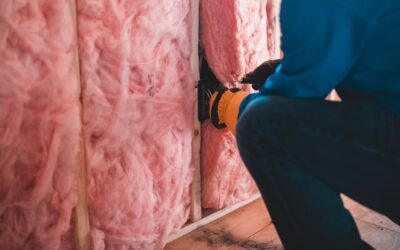
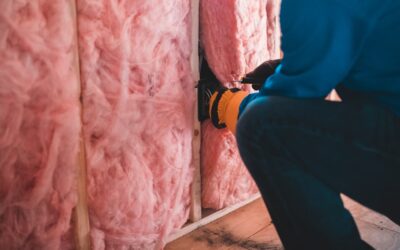
Choosing insulation is one of those decisions that quietly shapes your energy bills for the next 20 years, so it pays to get it right. The foam board vs fiberglass insulation debate comes down to a few practical trade-offs: how much R-value you get per inch, how each material handles moisture, how well it seals air leaks, and what it costs to install. Both are proven, code-approved products used in millions of homes, but they excel in different places. Fiberglass is the fluffy pink or yellow batt most people picture in an attic, while foam board is a rigid panel of extruded or expanded polystyrene or polyisocyanurate. Here is how they stack up.
R-Value Per Inch
Thermal resistance per inch is where foam board pulls ahead. Fiberglass batts deliver roughly R-2.9 to R-3.8 per inch depending on density. Foam board is denser and more efficient: expanded polystyrene (EPS) runs about R-3.6 to R-4.2 per inch, extruded polystyrene (XPS) around R-5, and polyisocyanurate (polyiso) about R-6 to R-6.5 per inch. That means in a tight space — a basement wall, a cathedral ceiling, or under a slab — foam board packs more insulating power into fewer inches. When you have deep, open stud or joist cavities to fill, though, fiberglass gets you a lot of R-value for the money without the higher material cost.
Moisture Resistance
This is a defining difference. Fiberglass absorbs and holds water, and wet fiberglass loses most of its insulating value while it stays damp. It also gives mold a place to grow if it never fully dries. Foam board, by contrast, resists moisture — XPS and polyiso especially shrug off water, which is why rigid foam is the standard choice against below-grade basement and foundation walls where dampness is a fact of life. If you are insulating a space that could ever see moisture, foam board is the safer material.
Air Sealing
Fiberglass filters air rather than blocking it. Air passes right through a batt, so on its own fiberglass does little to stop drafts and air leakage. To perform, it must be paired with a separate air barrier and installed perfectly with no gaps, compression, or voids. Foam board, taped and sealed at the seams, doubles as both insulation and a continuous air barrier. Rigid foam applied over the exterior sheathing or the interior of a basement wall dramatically cuts air infiltration, which is often a bigger source of heat loss than the insulation R-value itself.
Cost
Fiberglass is the budget champion. Batts are inexpensive, widely stocked, and fast to install, making fiberglass the cheapest way to hit a target R-value in open framing. Foam board costs noticeably more per square foot, and the price climbs with polyiso. You also spend on seam tape and adhesives. So while foam board saves space and adds air sealing, fiberglass wins on pure dollars-per-R when space is not tight.
Installation Differences
Fiberglass batts go up quickly with a utility knife and a staple gun, and a determined DIYer can insulate an attic or wall in a weekend — though itch, dust, and the need for careful, gap-free fitting are real. Foam board requires precise cutting to fit around framing, taped seams, and often a fire-rated covering like drywall because foam is combustible and must be covered per code in living spaces. Foam is cleaner to handle but more finicky to fit tightly around outlets and irregular framing.
Where Each One Belongs
- Foam board is best for: basement and foundation walls, rim joists, under-slab applications, exterior continuous insulation over sheathing, and any space where moisture or limited depth is a concern.
- Fiberglass is best for: open attic floors, standard stud wall cavities, and floor joists where you have depth to spare and want the lowest material cost.
- Use them together: many high-performance walls combine exterior foam board for air sealing and thermal break with fiberglass in the cavity — a hybrid that plays to both strengths.
Sound, Fire, and Pest Considerations
Performance goes beyond thermal numbers. Fiberglass has a natural advantage for sound dampening — its fibrous structure absorbs airborne noise, which is why it is common in interior walls between bedrooms and around bathrooms. Rigid foam is denser and does less for sound. On fire behavior, fiberglass itself is non-combustible, while foam board is a petroleum product that burns and releases smoke, which is exactly why building codes require foam in living spaces to be covered by a fire-rated barrier such as half-inch drywall. Neither material is food for pests, but rodents and insects can burrow through soft fiberglass to nest, whereas they are more likely to tunnel through foam. Some foam products include borate additives to deter insects. Weigh these secondary factors alongside R-value when the location calls for it.
Environmental and Health Notes
If sustainability factors into your decision, there are trade-offs on both sides. Fiberglass is often made with a significant percentage of recycled glass content, and modern formaldehyde-free batts have addressed older air-quality concerns, though installers should still wear a respirator and gloves against the irritating fibers. Foam board’s blowing agents have historically had a higher environmental footprint, though XPS manufacturers have been shifting to lower-impact formulations, and EPS is generally considered the greener foam. Polyiso often uses a more benign blowing agent as well. Neither material off-gasses meaningfully once installed and covered. For most homeowners the choice hinges far more on the practical performance factors than on these differences, but they are worth knowing.
Common Installation Mistakes
Whichever material you choose, poor installation kills performance. With fiberglass, the biggest error is compression — stuffing a thick batt into a shallow cavity or packing it around wires and boxes crushes the air pockets that do the insulating, cutting the real-world R-value. Gaps, voids, and batts that do not fill the full cavity are nearly as damaging. With foam board, the mistake is leaving seams untaped, which defeats the air-sealing benefit that justifies the higher cost, or failing to seal around penetrations. Take the time to cut foam snugly, tape every joint, and fit fiberglass fully and gently, and either product will deliver the numbers on the label.
The Bottom Line
In the foam board vs fiberglass insulation matchup, there is no single winner — there is a right tool for each job. If you need moisture resistance, air sealing, and high R-value in a thin profile, foam board earns its higher price, particularly below grade. If you are filling open cavities on a budget and moisture is not a factor, fiberglass delivers solid performance for the least money. Match the material to the location, install it carefully, and either one will keep your home comfortable and your energy bills lower for decades.