When a furnace quits on the coldest night of the year, the problem is almost never the whole unit; it is one worn component doing exactly what it was destined to do after a decade of cycles. Knowing the common furnace replacement parts and roughly what they cost lets you judge a repair quote, spot a mechanic padding the bill, and decide whether a fix makes sense or the furnace has reached the end of its life. Most failures trace back to a handful of parts, and several are within reach of a careful homeowner.
- The Most Common Furnace Replacement Parts
- Igniters and Flame Sensors: The Usual Suspects
- Blower Motors and Capacitors
- Control Boards and Ignition Modules
- Safety Switches: Limit and Pressure
- What You Can Replace Yourself vs. Call a Pro
- Reading Furnace Diagnostic Codes
- Repair or Replace? The Decision Framework
The Most Common Furnace Replacement Parts
Furnaces are simpler than they look. Air moves through them, gas or electricity heats it, and a series of safety devices makes sure it happens without burning the house down. The parts that fail are usually the ones that wear, spark, or sense.
- Igniter: lights the burners; the single most common failure on modern furnaces.
- Flame sensor: confirms the burners lit; a dirty one causes short cycling.
- Blower motor: pushes heated air through the ducts.
- Control board: the brain that sequences everything.
- Capacitor: gives the motor its startup jolt.
- Gas valve, limit switch, and pressure switch: control and safety components.
Recognizing which of these is acting up saves time and money, because the symptoms are surprisingly distinct once you know what to listen and look for.
Igniters and Flame Sensors: The Usual Suspects
On most furnaces built in the last 20 years, the hot surface igniter is the part that fails first. It is a fragile silicon carbide or nitride element that glows to light the gas, and after thousands of heat-up cycles it cracks. Symptom: the furnace tries to start, clicks, but no heat, and you may see the igniter fail to glow. The part costs $15 to $50, and replacing it is a 20-minute job of unplugging one connector and unscrewing one bracket, though the element is brittle so handle it by the ceramic base only.
The flame sensor is a thin metal rod that verifies a flame is present. When it gets coated with carbon, it stops sensing the flame and the furnace shuts the gas off after a few seconds, over and over, called short cycling. Often it just needs cleaning with fine emery cloth; a replacement runs $10 to $30. These two parts account for a huge share of no-heat calls.
Blower Motors and Capacitors
The blower motor moves the air. When it fails, you get heat at the furnace but little or no airflow at the registers, or a loud humming and no spin. Before condemning the motor, check the run capacitor, a cheap $10 to $30 part that stores the energy to start the motor. A bulging or leaking capacitor is a classic culprit and an easy swap.
If the motor itself is bad, costs jump. A standard PSC blower motor runs $150 to $450 for the part; a variable-speed ECM motor is $300 to $700. Labor adds $150 to $400. On an older furnace, a failed blower motor is a fork in the road where replacing the whole unit starts to make sense.
Control Boards and Ignition Modules
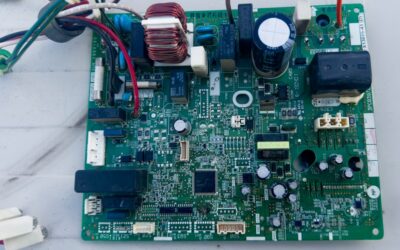
The integrated control board sequences the igniter, gas valve, and blower and reads the safety switches. When it fails, symptoms are erratic, no response, random cycling, or blinking diagnostic codes on the board’s LED. Many boards have a flashing-light fault code you can read against a legend printed inside the furnace door, which tells you whether the board or a sensor it monitors is at fault.
A replacement control board costs $150 to $600 depending on the furnace, plus $100 to $300 labor. Before replacing one, a good tech confirms the board is truly dead and not just reporting another part’s failure, since boards are expensive and often blamed wrongly.
Safety Switches: Limit and Pressure
Two safety devices commonly trip or fail. The high-limit switch shuts the burners off if the furnace overheats, usually because a clogged filter or blocked ducts restricted airflow. If your furnace runs then shuts down and the blower keeps going, suspect a dirty filter first, then the limit switch, a $20 to $60 part.
The pressure switch verifies the draft inducer is venting exhaust properly and will not let the furnace fire if it senses a blocked flue or a bad inducer. A cracked hose, a blocked vent, or a failed switch ($20 to $80) causes a no-start with a specific fault code. These switches are protecting you, so never bypass one; diagnose why it tripped.
What You Can Replace Yourself vs. Call a Pro
Some furnace replacement parts are genuinely DIY-friendly with the power off at the breaker and basic tools.
- DIY-appropriate: air filter, flame sensor cleaning, igniter, capacitor, thermostat.
- Pro territory: gas valve, control board on high-efficiency units, blower motor, anything involving gas leaks or the heat exchanger.
Always cut power at the breaker and shut the gas before touching internal parts. If you smell gas, leave and call the utility. A cracked heat exchanger is a special case: it leaks carbon monoxide, cannot be safely repaired, and almost always means replacing the furnace.
Reading Furnace Diagnostic Codes
Modern furnaces are far easier to diagnose than the old standing-pilot units, because the control board flashes a fault code through an LED visible through a small window in the furnace door. Before you buy any part, read that code against the legend printed on the inside of the access panel. A steady light usually means normal operation; a repeating pattern of flashes, say three short then a pause, points to a specific fault like an open limit switch, a failed ignition, or a pressure switch that did not close.
Decoding the blink pattern saves you from throwing parts at the problem. A code pointing to ignition failure directs you to the igniter and flame sensor first. A pressure-switch code sends you to check the vent, the condensate trap on high-efficiency units, and the draft inducer before you condemn the switch itself. Write down the pattern, look it up in the manual or on the manufacturer’s site, and you will often pinpoint the failed component in minutes rather than guessing.
Reading the diagnostic code tells you what failed; the next step is buying the correct replacement, and this is where a little diligence saves both money and a wasted trip. Furnace components are not universal in the way a homeowner might hope, and grabbing the wrong igniter, control board, or gas valve means either a return or, worse, a part that seems to fit but fails prematurely. Before you shop anything, you need the furnace’s exact model and serial number and a clear idea of which parts are model-specific and which come in universal versions. It is also worth deciding up front whether to spend on genuine OEM components or trust a reputable aftermarket brand, since that choice matters more for some parts than others. Sourcing correctly the first time keeps a straightforward repair from turning into a multi-day ordeal in the middle of a cold snap. Here is how to find the right part and where to buy it.
When you do need a part, sourcing the correct one matters more than saving a few dollars. Furnace components are model-specific, so pull the furnace’s model and serial number off the rating plate inside the cabinet before you shop. Many parts, especially igniters and flame sensors, come in universal versions that fit dozens of furnaces, but the control board and gas valve are almost always specific to your model or a direct OEM equivalent.
Stick with OEM or reputable aftermarket brands for anything electrical or safety-related; a bargain no-name igniter or capacitor often fails within a season. Local HVAC supply houses, big-box stores, and online retailers all stock common wear items, and having the model number lets a counter tech match the right part on the first try. Keep a spare igniter and flame sensor on the shelf if your furnace is aging, because those are the parts most likely to strand you on the coldest night, and both are cheap insurance against a no-heat emergency.
Repair or Replace? The Decision Framework
Use the age and cost rule of thumb. Furnaces last 15 to 20 years. If yours is under 10 years old, replacing a $50 igniter or a $200 blower motor is a clear repair. If it is over 15 years old and facing a $600 control board or a failed heat exchanger, put that money toward a new high-efficiency unit that will cut your gas bill. A common guideline: if the repair costs more than half the price of a new furnace, replace it.
Keep the odds in your favor with maintenance, change the filter every 1 to 3 months, keep the flame sensor clean, and get an annual tune-up. Most furnace failures are wear items that a little upkeep delays for years, and knowing the parts means you will never overpay to keep the heat on.