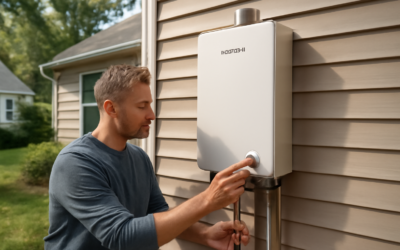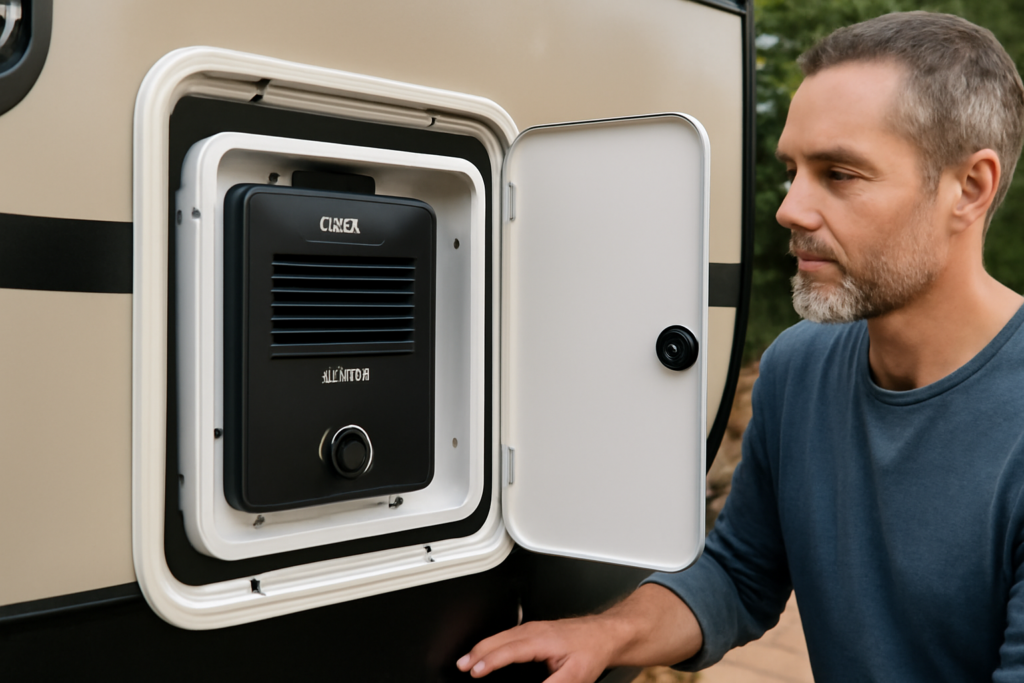
Nothing ends a great camping trip faster than a cold shower with the campground still an hour away, which is why upgrading to a Furrion RV tankless gas water heater has become one of the most popular improvements RV owners make. By heating water on demand instead of storing it in a small 6-gallon tank, this propane unit delivers a genuinely endless hot shower while freeing up weight and space. But tankless RV heaters have their own rules around water pressure, propane supply, and winter care. Here’s how to get reliable hot water on the road.
- How the Furrion Tankless System Works
- Key Specifications and Models
- Understanding the Water Pressure Requirement
- Managing the Cold Water Sandwich
- Installation Overview
- Winterizing to Prevent Damage
- Maintenance for Reliable Hot Water
- Troubleshooting Common Issues
- Tankless Versus Traditional RV Tank Heaters
- Power, Propane, and System Demands
- Real-World Tips From Experienced RVers
- Is It Right for Your Rig?
- The Bottom Line
How the Furrion Tankless System Works
Traditional RV water heaters store 6 to 10 gallons in a tank that slowly reheats, so a long shower drains it and you wait for a refill. The Furrion tankless unit skips the tank entirely. When you open a hot tap, a flow sensor ignites the propane burner, which heats water instantly as it passes through the heat exchanger on its way to the fixture.
Because there’s no tank to empty, you get continuous hot water as long as propane and water flow. The unit also saves considerable weight and interior space compared to a bulky tank, a meaningful advantage in a rig where every pound counts.
Key Specifications and Models
Furrion’s tankless RV heaters run on the RV’s LP (propane) supply and 12-volt power for ignition and controls. Knowing the core specs helps you match a unit to your rig and expectations.
- Fuel: propane (LP gas) with 12V DC for ignition and the control board
- Output: roughly 60,000 BTU on typical models, enough for a single strong RV shower
- Flow: around 1.5 gallons per minute at usable shower temperature
- Controls: an exterior digital temperature display and adjustment on many models
- Size: designed to fit common RV water heater openings for retrofits
Always confirm the specific model’s dimensions against your existing cutout before ordering, since a clean retrofit depends on matching the opening.
Understanding the Water Pressure Requirement
Here’s the detail that trips up new owners: the Furrion tankless unit needs a minimum water flow to trigger the burner. If flow drops too low, the burner won’t ignite and you get cold water. This matters most when you’re on a weak campground spigot or running the RV’s 12V water pump.
To keep the burner firing reliably, ensure adequate water pressure and a steady flow, sometimes that means adjusting the water pump’s pressure setting or opening the tap a bit more. A trickle won’t cut it; the unit is designed for a real, flowing shower, not a slow drip.
Managing the Cold Water Sandwich
Like all tankless heaters, the Furrion has a quirk: the cold water sandwich. When you briefly shut off the shower to soap up, then reopen it, a slug of cooled water in the line reaches you before the reheated water catches up, a quick cold blip mid-shower.
Minimize it by avoiding rapid on-off cycling and, if your model allows, setting a comfortable temperature so you’re not mixing much cold at the fixture. Many RVers simply keep a low steady flow rather than fully shutting the water between rinses, which keeps the burner lit and the temperature stable.
Installation Overview
Many owners retrofit a Furrion tankless unit into the space left by an old 6-gallon tank. The job is within reach of a handy RVer but demands care with the propane connection.
- Turn off propane and water, and drain the old tank completely before removal
- Remove the existing water heater and inspect the opening and mounting flange
- Set the Furrion unit into the opening, confirming a proper fit and seal against the exterior wall
- Connect the LP gas line with proper fittings and thread sealant rated for gas
- Connect the hot and cold water lines and the 12V wiring per the manual
- Leak-test every propane joint with soapy water before firing the unit
The propane leak test is non-negotiable, brush soapy water on each fitting and watch for bubbles with the gas on. If you’re not fully confident working with LP gas, have an RV technician handle the connection.
Winterizing to Prevent Damage
Freezing is the number-one killer of RV water heaters, and a tankless unit’s compact heat exchanger is especially vulnerable to cracking if water freezes inside it. Before any freeze, winterize the unit completely.
Drain all water from the heater and lines, then either blow the lines out with compressed air or run RV antifreeze through the system per your winterizing routine. Because the tankless heat exchanger holds little water but freezes fast, don’t skip it, a cracked exchanger is an expensive repair. Store the RV with the system drained, and in shoulder-season cold snaps, protect the unit if you’re still camping.
Maintenance for Reliable Hot Water
Like any tankless heater, the Furrion benefits from periodic descaling, especially if you frequently fill with hard water. Mineral scale builds inside the heat exchanger and restricts flow and heat transfer over time. Flushing the unit with a vinegar or descaling solution once a season keeps it performing.
Also keep the exterior vent and burner area clear of insects and debris, mud daubers love to nest in RV heater vents, and a blocked burner won’t ignite properly. A quick inspection before each season’s first trip prevents most surprises.
Troubleshooting Common Issues
When the Furrion won’t produce hot water, the cause is usually one of a few things. Work through them methodically.
- No ignition: check that propane is on and the tank isn’t empty, and confirm 12V power to the unit
- Burner won’t fire: water flow may be too low, increase flow or check the pump pressure
- Lukewarm water: you may be exceeding the unit’s flow capacity, or scale is restricting the exchanger, flush it
- Intermittent cold bursts: the normal cold water sandwich, avoid rapid on-off cycling
- Error codes: consult the manual, many trace to low voltage, low gas, or low flow
A weak RV battery can starve the ignition and controls, so verify your 12V system is healthy if the unit behaves erratically.
Tankless Versus Traditional RV Tank Heaters
Weighing the Furrion tankless against a conventional RV tank heater helps set realistic expectations. A traditional 6-gallon tank stores hot water ready to go, delivering strong initial pressure and shrugging off low flow, but it runs out after one good shower and takes 20 minutes to reheat. The tankless flips those trade-offs.
- Tankless pros: endless hot water, lighter weight, more storage space where the tank used to be, no reheat wait
- Tankless cons: needs steady water flow to fire, more sensitive to low pressure, the cold water sandwich, and careful winterizing
- Tank pros: simple, forgiving of low flow, strong stored pressure, familiar operation
- Tank cons: limited capacity, heavy, bulky, and a reheat delay between showers
For full-timers and long-shower families who boondock, the endless hot water and weight savings make tankless a clear upgrade. For occasional weekenders who rarely shower in the rig, a simple tank may be the more trouble-free choice.
Power, Propane, and System Demands
The Furrion tankless leans on two systems working together: propane for heat and 12-volt DC for ignition and controls. Both must be healthy for reliable hot water. A weak or nearly dead RV battery can starve the control board and ignition, causing the unit to fail to fire even with plenty of propane and water available.
Keep your house battery charged and your propane tanks adequately filled, and remember that the burner’s demand is steady while running. If you dry-camp heavily, monitor your battery voltage, since the water heater’s electronics need stable 12V to operate. On the propane side, make sure your regulator delivers proper pressure; a failing regulator or a nearly empty tank can cause weak or inconsistent heating. Treating the battery, regulator, and propane supply as part of the water-heating system, not separate afterthoughts, is what keeps showers reliably hot on the road.
Real-World Tips From Experienced RVers
Owners who’ve lived with the Furrion tankless share a few hard-won habits that make the unit shine. First, dial in a comfortable set temperature and then run the shower with minimal cold mixing, this keeps the burner firing steadily and largely sidesteps the cold water sandwich. Fighting the unit with lots of cold at the tap causes more temperature swings.
Second, on a weak campground water supply, use your RV’s onboard pump instead of relying on low city pressure, since the pump provides the steady flow the burner needs to stay lit. Third, protect the exterior vent from insects with a fine screen, and inspect it before each trip. Finally, keep winterizing supplies on board even in shoulder season, an unexpected overnight freeze can crack the heat exchanger fast. These small routines are the difference between a temperamental unit and one that delivers effortless hot showers trip after trip.
Is It Right for Your Rig?
A tankless upgrade makes the most sense if you love long showers, boondock with limited tank space, or want to shed weight. If you rarely shower in the rig or camp mostly in freezing conditions where winterizing is a constant chore, a simple tank may suit you better. For most three-season RVers who crave endless hot water, the Furrion tankless is a genuine quality-of-life upgrade.
The Bottom Line
A Furrion RV tankless gas water heater delivers the endless hot showers that make life on the road feel like home, provided you feed it adequate water flow, connect the propane safely, and winterize it religiously against freezing. Match the model to your existing opening, keep the heat exchanger descaled, and manage the cold water sandwich with steady flow. Handle those details and you’ll trade the cold-shower gamble of a small tank for reliable, on-demand hot water wherever the road takes you.