
Running out of hot water halfway through a shower in an RV is a rite of passage nobody enjoys. A Furrion tankless water heater is one of the more popular fixes for that problem, delivering continuous on-demand hot water in a compact, RV-friendly footprint that traditional 6- and 10-gallon tank heaters cannot match. Whether you are replacing a failed tank unit in a travel trailer or spec’ing a heater for a tiny home or off-grid cabin, understanding how these units work, what they need, and how to keep them running saves you cold showers and warranty headaches. Here is the full picture.
What a Furrion Tankless Unit Actually Does
Instead of heating and storing water in a tank, a tankless unit fires its burner only when you open a hot tap. Cold water flows through a heat exchanger, a gas burner heats it on the spot, and hot water comes out the other end for as long as you keep the tap running. That means no reheat cycle and no finite tank to drain. For an RV or small dwelling, the payoff is real: continuous hot water and a lighter, more space-efficient appliance than a comparable tank.
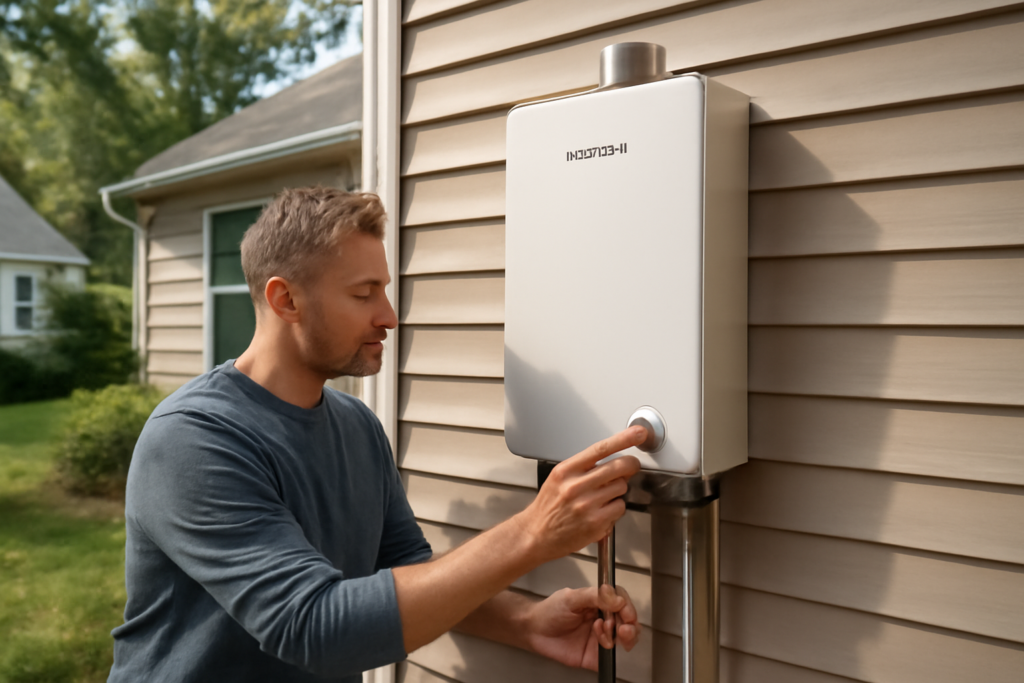
Furrion’s RV models are designed to drop into the same wall opening as many common tank heaters, which makes them a straightforward retrofit for a lot of rigs. Most run on LP gas and use a 12-volt DC connection for the control board and ignition. They are engineered for the vibration, temperature swings, and tight installs that come with mobile living, so the housing and mounting are built around a standard exterior access door.
Key Models and Specs to Know
Furrion’s tankless lineup centers on on-demand gas units rated by flow in gallons per minute. Real-world output typically lands in the range of 2.4 to 3.2 GPM depending on the model and incoming water temperature, which is enough to comfortably run a shower or a kitchen faucet. The colder your incoming water, the lower your effective flow, because the burner has to work harder to raise each gallon to temperature. When you shop, pay attention to these figures:
- GPM rating: higher flow supports running two fixtures, but incoming water temperature reduces it
- BTU output: higher BTUs heat colder water faster and sustain flow better
- Temperature rise: the difference between incoming and output water the unit can achieve at a given flow
- Ignition and power draw: nearly all pull 12V DC, so confirm your battery or converter supplies it
Match the unit to your usage. A weekend camper who showers one at a time is fine with an entry-level model. A full-timer or a tiny home running a shower and a sink at once wants the highest BTU and GPM you can fit and fuel.
Installation Basics and Requirements
If you are swapping out an old tank heater, the retrofit is genuinely doable for a handy owner, but it demands respect for gas and electrical work. You need a compatible exterior opening, an LP gas supply line with the correct fitting and regulator pressure, a 12V DC connection, and inlet and outlet plumbing that lines up with the unit’s ports. Furrion sells trim kits and adapters that bridge the gap where the new unit’s dimensions differ slightly from the old tank.
Gas connections must be leak-tested with soapy water or an electronic detector before you fire the unit, no exceptions. A tankless burner is more sensitive to gas pressure than a tank heater, so a weak or fluctuating LP supply will cause ignition faults. Ventilation is built into the exterior-mounted design, but you must keep the intake and exhaust clear of obstructions and never enclose the unit. If any of the gas or electrical steps are outside your comfort zone, hire an RV tech. A botched gas fitting is not the place to save $150.
Getting the Most From Your Flow Rate
New owners are sometimes disappointed that a tankless unit “isn’t hot enough,” when the real culprit is flow and temperature rise. Every tankless heater trades flow for temperature: open the tap wide with very cold incoming water and the output cools; throttle the flow slightly and the water gets hotter. In winter or with cold well or campground water, you may need to reduce your shower flow to hold a comfortable temperature.
Water-saving showerheads help here because they lower the demand the burner has to satisfy, letting it maintain temperature more easily. If your model has an adjustable temperature or a summer/winter setting, use it. And remember the cold-water sandwich: with any tankless unit, a burst of cooler water can arrive between two hot draws because the burner needs a moment to relight. It is normal, not a defect.
Winterizing to Prevent Freeze Damage
The fastest way to destroy any tankless water heater is to let water freeze inside the heat exchanger. A cracked exchanger is not covered by warranty and often totals the unit. Before temperatures drop below freezing in storage, drain the heater completely. Most Furrion models have a low-point drain or a drain plug on the unit itself, plus the standard RV low-point drains in the plumbing system.
For thorough winterizing, drain the fresh tank and lines, then run RV-grade antifreeze through the system until it appears at every fixture, including the hot side. Do not run antifreeze through the heater’s burner, just fill the water passages. If you camp in cold weather rather than storing the rig, insulate the exterior access door area and keep the water moving during hard freezes. A few minutes of prep each fall prevents a several-hundred-dollar spring surprise.
Troubleshooting Common Problems
Most service calls on these units trace back to a handful of causes. When the burner will not ignite, suspect the gas supply first: a nearly empty LP tank, a tripped excess-flow safety in the regulator (often caused by opening the tank valve too fast), or air in the line after a refill. Cycle the LP tank valve slowly and purge the air by running a stovetop burner for a moment.
Weak or no power at the 12V connection stops ignition cold, so check the fuse, the ground, and the battery voltage. If the water runs lukewarm and never gets hot, look at flow rate and incoming temperature before assuming the unit is faulty. Mineral scale inside the heat exchanger reduces efficiency over time, especially on hard water, so periodic descaling with a vinegar or descaler flush keeps output strong. A Furrion tankless water heater that is fed clean fuel, adequate power, and reasonable flow will run for years, and knowing these basics keeps you from replacing a unit that only needed a slow valve turn and a bled gas line.
Descaling and Routine Maintenance
Hard water is the silent enemy of every tankless heater, and RVers who fill from many different sources see a wide range of water quality. As mineral-laden water flows through the heat exchanger, it deposits scale that narrows the passages and insulates the metal from the burner’s heat, which forces the unit to work harder and eventually causes temperature swings and error codes. Descaling once or twice a season, more often if you frequently fill with hard water, keeps the exchanger clear and the output steady.
The process is straightforward. Isolate the heater, connect a small submersible pump and a bucket of white vinegar or a manufacturer-approved descaling solution to the inlet and outlet service ports, and circulate the solution through the unit for 30 to 45 minutes. This dissolves the scale buildup. Flush with fresh water afterward to clear any residue before returning the heater to service. Also periodically clean the inlet water filter screen, which catches sediment before it reaches the exchanger, and inspect the exterior exhaust and intake for insect nests or debris, since a blocked vent causes ignition and combustion faults.
Is a Furrion Tankless Right for Your Rig?
Before you commit, weigh the tankless design against your travel style. The strengths are clear: endless hot water, a lighter and more compact unit, and no reheat wait. Those benefits shine for full-timers, families who want back-to-back showers, and anyone frustrated by draining a small tank in one wash. The trade-offs are equally real. Tankless units are more sensitive to gas pressure and water flow, they can deliver a brief cold-water sandwich between draws, and their output drops in cold climates where incoming water is frigid.
If you camp mostly in warm weather, shower one at a time, and want the simplest possible system, an old-fashioned tank heater may actually suit you better and cost less. But if you value continuous hot water and are willing to manage flow in winter, keep the battery charged, and descale on schedule, a Furrion tankless is a genuinely upgrade-worthy appliance. Match the model’s GPM and BTU rating to how many fixtures you run at once and how cold your typical water source is, and the unit will reward you with the kind of hot water you expect at home, right there in your rig.


