Most homeowners obsess over the durability of a garage floor coating and then pick the color in five minutes, only to regret it the moment the floor cures. Garage epoxy colors deserve more thought than that, because the shade and flake blend you choose affect how the space looks, how well it hides dirt, and how bright it feels. From classic grays to bold custom flake blends, the options are wide. This guide helps you choose a color you will be happy with for years.
How Garage Epoxy Color Works
A garage epoxy floor usually gets its color two ways: from the pigmented base coat and from decorative vinyl flakes broadcast over it. The base sets the overall tone, while the flakes add specks of contrasting color, texture, and depth.
That layering is why two floors with the same base color can look completely different. A gray base with subtle gray-and-white flakes reads clean and modern, while the same base with bold blue or red flakes feels energetic. Understanding both layers helps you visualize the final result.
If you’re running out of room even with a clean garage floor, a backyard shed takes the overflow — seasonal gear, tools, lawn equipment. And if you’re parking outside while the garage doubles as a workshop, a carport keeps your car covered without needing a second garage.
We may earn a commission when you purchase through our links.
Most Popular Garage Epoxy Colors
Certain shades have become go-to choices because they balance looks and practicality.
- Gray: The most popular by far, neutral, modern, and excellent at hiding dust and minor stains.
- Tan and beige: Warm and forgiving with dirt, pairing well with light-colored homes.
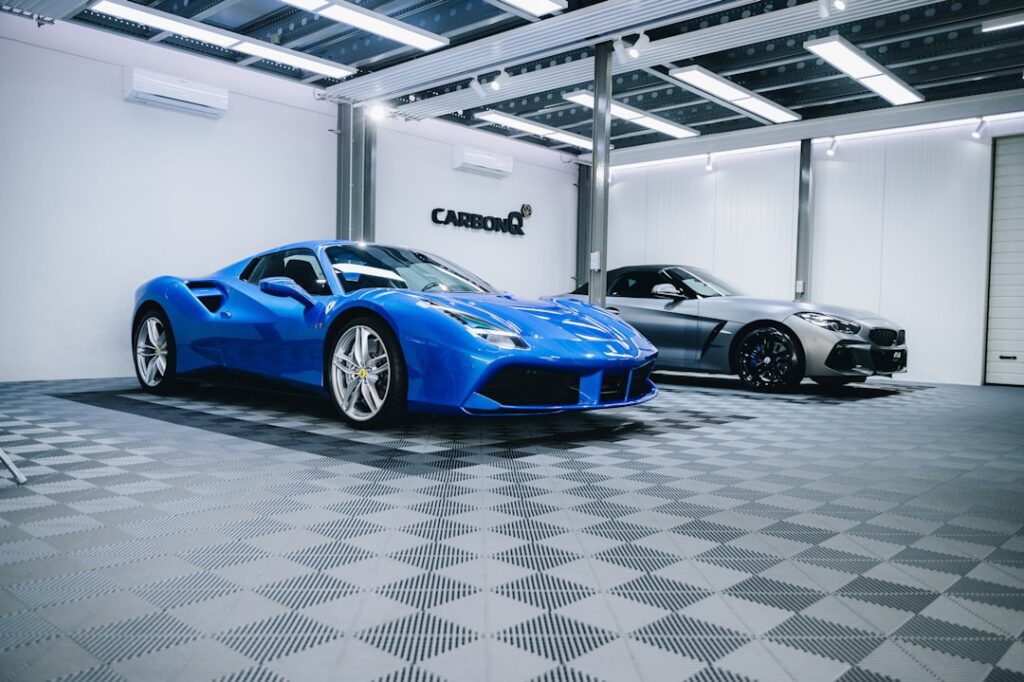
- Blue: A clean, garage-shop feel that contrasts nicely with flake accents.
- Black or charcoal: Sleek and dramatic, though it shows dust and tire marks more readily.
- Terracotta and brown: Earthy tones that disguise dirt and feel grounded.
Flake Blends and Custom Looks
The flakes are where you can really personalize a floor. Manufacturers offer pre-mixed flake blends in countless combinations, and you can lean toward subtle or bold.
Subtle Blends
Tonal blends, like gray flakes on a gray base or earth tones together, create texture without drawing attention. These suit homeowners who want a clean, understated look.
Bold and Themed Blends
High-contrast flakes, including team colors, bright accents, or metallic chips, make a statement and turn the floor into a feature. Some homeowners match their flake blend to a car, a brand, or a sports team.
Choosing a Color That Hides Dirt
Practicality should weigh heavily, because a garage floor gets dirty fast. Solid, dark, and very light colors all show grime, dust, and tire marks more than a flecked surface does.
Flake systems are the secret weapon here. The speckled, multi-tone surface visually breaks up dirt, leaves, and small stains so the floor looks clean far longer between sweepings. If low maintenance is a priority, a medium-tone base with a varied flake blend is the most forgiving choice. The size of the flake matters too: larger one-inch chips read bolder and hide bigger flaws, while quarter-inch flakes give a finer, more granite-like speckle. Denser broadcast coverage, where flakes nearly cover the base, hides dirt better than a light scatter that leaves the base color dominant, so lean toward fuller coverage if a clean-looking floor between cleanings is your goal.
Lighting and Brightness Considerations
Color does more than set a mood; it changes how bright your garage feels. Lighter colors like tan, light gray, and beige reflect more light and make a dim garage feel open and airy, which is a real benefit if you work in the space.
Darker floors absorb light and can make a garage feel smaller and dimmer, so if you go dark, plan on good overhead lighting. A glossy clear topcoat over any color also boosts reflectivity and brightens the room, while a matte finish tones it down.
Matching Your Home and Style
Think about how the garage connects to the rest of your home. A floor color that complements your exterior, your cabinets, or your overall aesthetic feels intentional rather than random.
If the garage doubles as a workshop, gym, or hangout, lean toward a color that suits that use; a clean light gray for a flexible space, or a bolder blend for a dedicated hobby garage. For a simple, resale-friendly look, neutral gray with a tasteful flake blend pleases nearly everyone.
Tips Before You Commit
A few small steps prevent color regret. Take your time choosing, because changing the color later means recoating the entire floor.
- Order sample chips or view large swatches in your actual garage light before deciding.
- Look at flake blends in person, since photos rarely show the true mix and scale.
- Consider the gloss level; high gloss looks vibrant but can show scratches, while satin hides them.
- Think long term and favor a color you will still like in five years over a trendy pick.
Color and Resale Value
If there is any chance you will sell the home, treat the floor color as a decision a future buyer also has to live with. A finished epoxy garage floor is a genuine selling point that signals a well-cared-for home, but a highly personalized color can work against that broad appeal. Bright team colors, a custom logo flaked into the slab, or a vivid red base may delight you and puzzle the next owner, who then sees a recoat in their future. Neutral grays, tans, and tasteful multi-tone flake blends photograph well in listings and read as a clean upgrade to nearly everyone. The safe move is to keep the base and flakes in broadly liked neutral tones and express personality through things that move with you, like cabinets, mats, and wall storage, rather than baking a niche taste into the floor itself. Neutral does not mean boring; a well-chosen flake blend over a gray base still looks custom and high-end.
Gloss and Finish Options
Color is only half of the final look, since the topcoat finish changes how that color reads underfoot. A high-gloss clear coat deepens and saturates the base color, bounces light around the room, and gives the showroom shine many homeowners want, but it also highlights every scratch, swirl, and tire scuff and can get slick when wet. A satin or matte topcoat tones the color down a notch, hides fine scratches far better, and offers a more understated, modern look that many people now prefer. Slip resistance is worth weighing alongside appearance: adding a fine anti-slip aggregate to the topcoat, or relying on the texture of a heavy flake broadcast, gives wet tires and feet more grip than a glassy gloss surface. Think about how the floor will actually be used. A glossy show-garage and a working shop where you hose the floor down call for different finishes even if the color is identical.
The Bottom Line
Picking from the range of garage epoxy colors comes down to balancing looks, brightness, and how well a shade hides everyday dirt. Neutral grays and tans paired with a varied flake blend give the most forgiving, timeless result, while bold flakes let you personalize the space. Sample before you commit, factor in your lighting, and you will end up with a floor that looks sharp and stays looking that way.